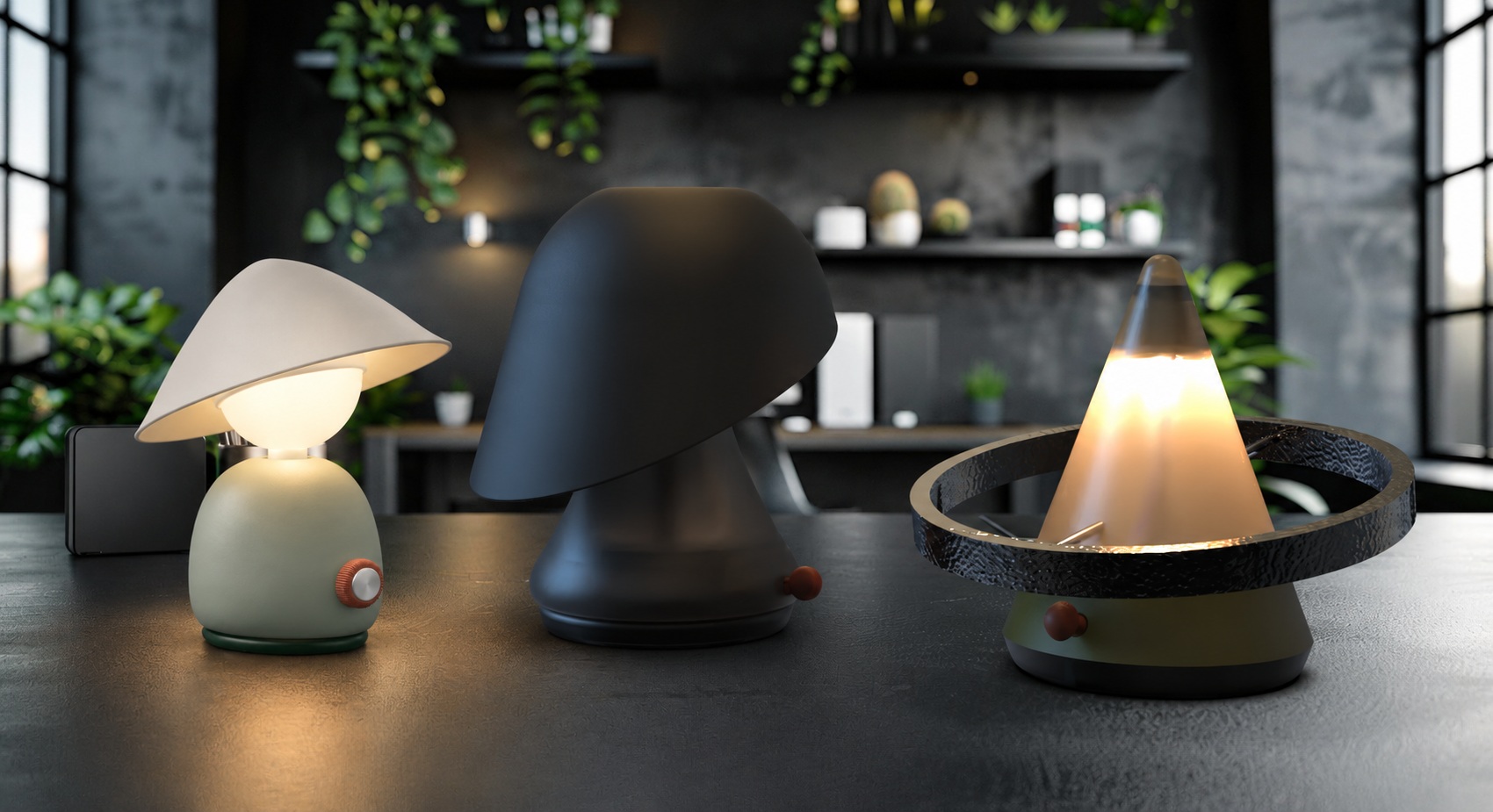
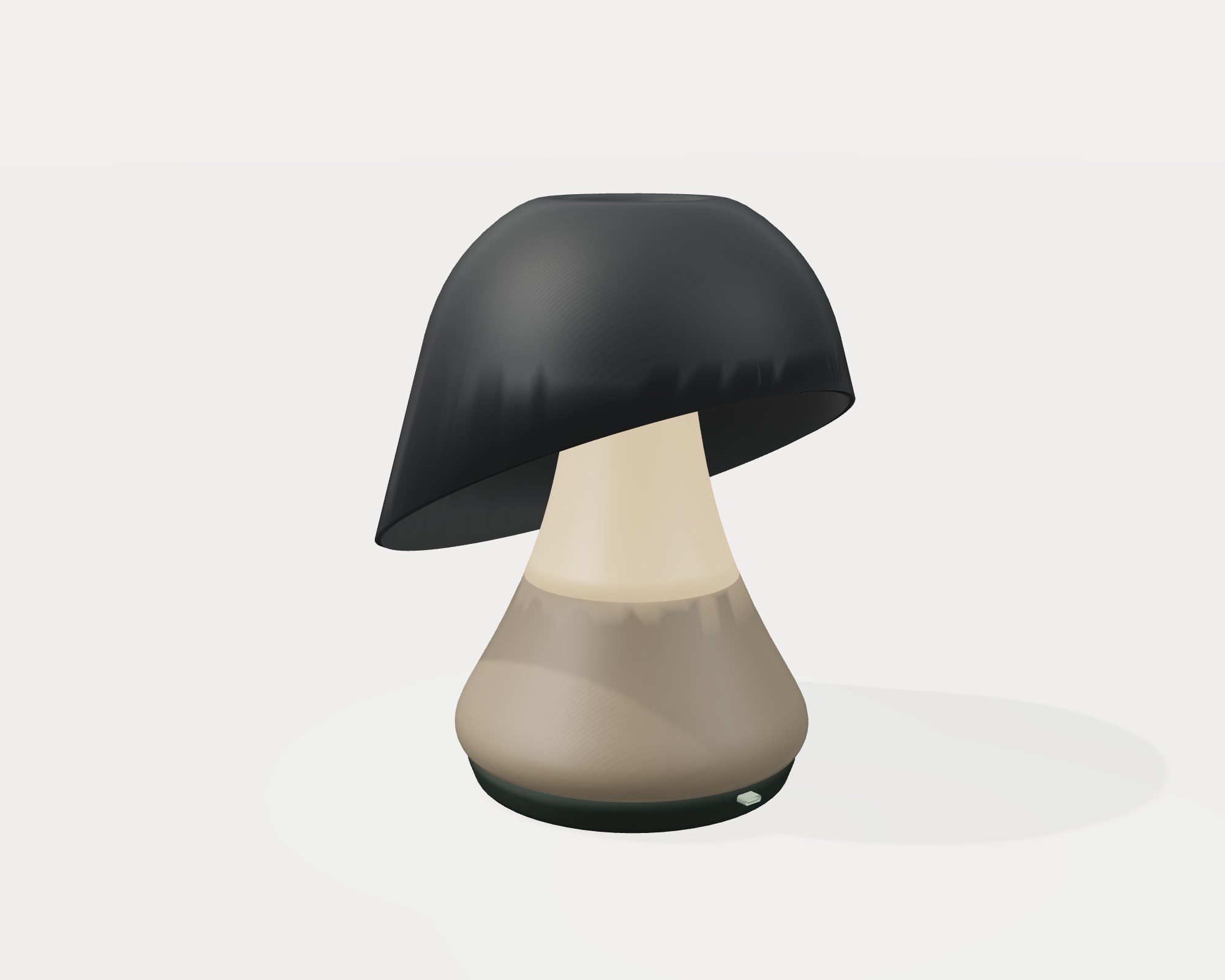
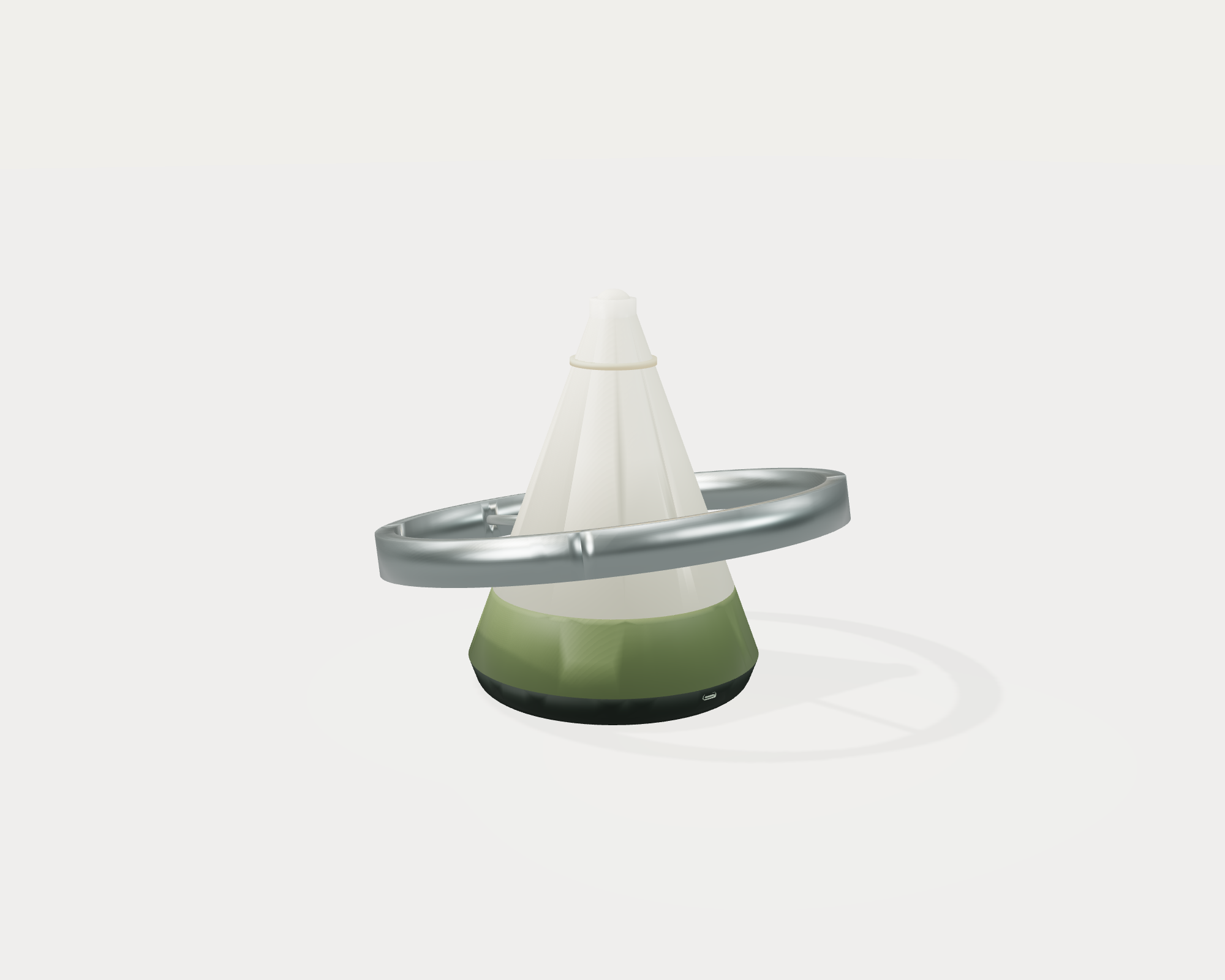
A series of rotating lamps exploring light, movement and our sense of time. Designed to ease the anxiety of planning time and bring attention back to the present.
Role
Individual design
Focus
Product · Interaction · CMF
CONCEPTLIGHT / MOVEMENT / TIME
Less clock watching.
More time in the moment.
Work and study often come with a deadline. A task has to fit into a fixed amount of time, and checking how much is left can become part of the pressure. I began this project by looking at anxiety and our habit of chasing time.
Could a lamp soften the presence of the clock, so that we feel time passing without constantly measuring it?
The starting question
THE DESIGN QUESTION
What happens when we return to the task?
Research into anxiety led me to explore products for stress relief. In that exploration, I kept returning to the gap between feeling better for a moment and returning to the same source of pressure.
My hypothesis was that the way time is presented might be another place to intervene. Instead of a separate break for relief, could a gradual change in light make time feel less insistent while we work?
LIGHT AS AN AMBIENT CUE
Notice the light. Stay with the moment.
Daylight changes without asking us to watch it. Its brightness, colour and shadows give the day a rhythm. I wanted to bring that gradual change into the lamp.
This is the quality of unconscious design I am interested in: a change we can register without deliberately checking. The light offers a sense of duration while precise hours and minutes recede into the background.
Daylight & daily rhythm / inspiration study
A rhythm to begin, become absorbed, and wind down.
Inspired by sunrise and sunset, I imagined a repeating cycle: light gradually spreads as work begins, then slowly recedes as a cue to wind down. Movement follows a preset rhythm on the scale of minutes, closer to a minute hand than a visible sweep. The change becomes apparent over time, rather than demanding attention from moment to moment.
EARLY FORM EXPLORATION
Before the three lamps took shape.
I explored which part of a lamp could move, and how that movement might change the light: a shade, a globe or a ring.
An overview of the first directions
The first motion idea / a turning shade changes the light footprint.
Motion / globes, shades and pivots
One concept, three expressions.
The same idea developed into three lamps: Mori with a moving shade, Halo with a moving ring, and Sway with an adjustable shade angle. Their rotation follows a preset, gradual rhythm; Sway adds a press to change the balance of light and shade.
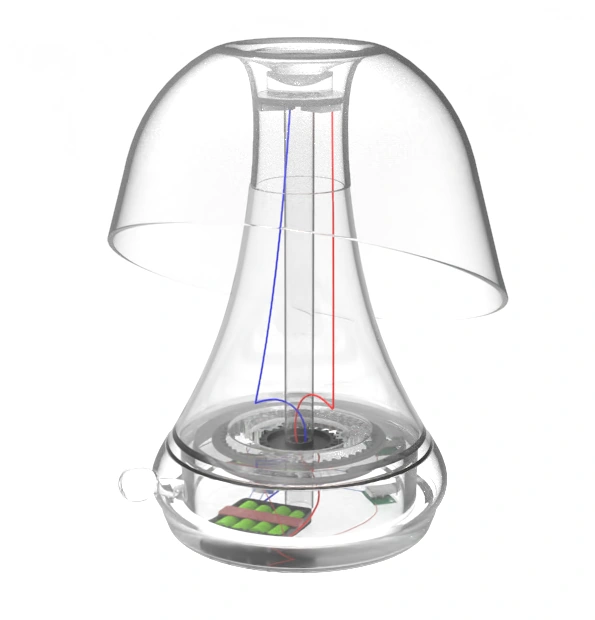
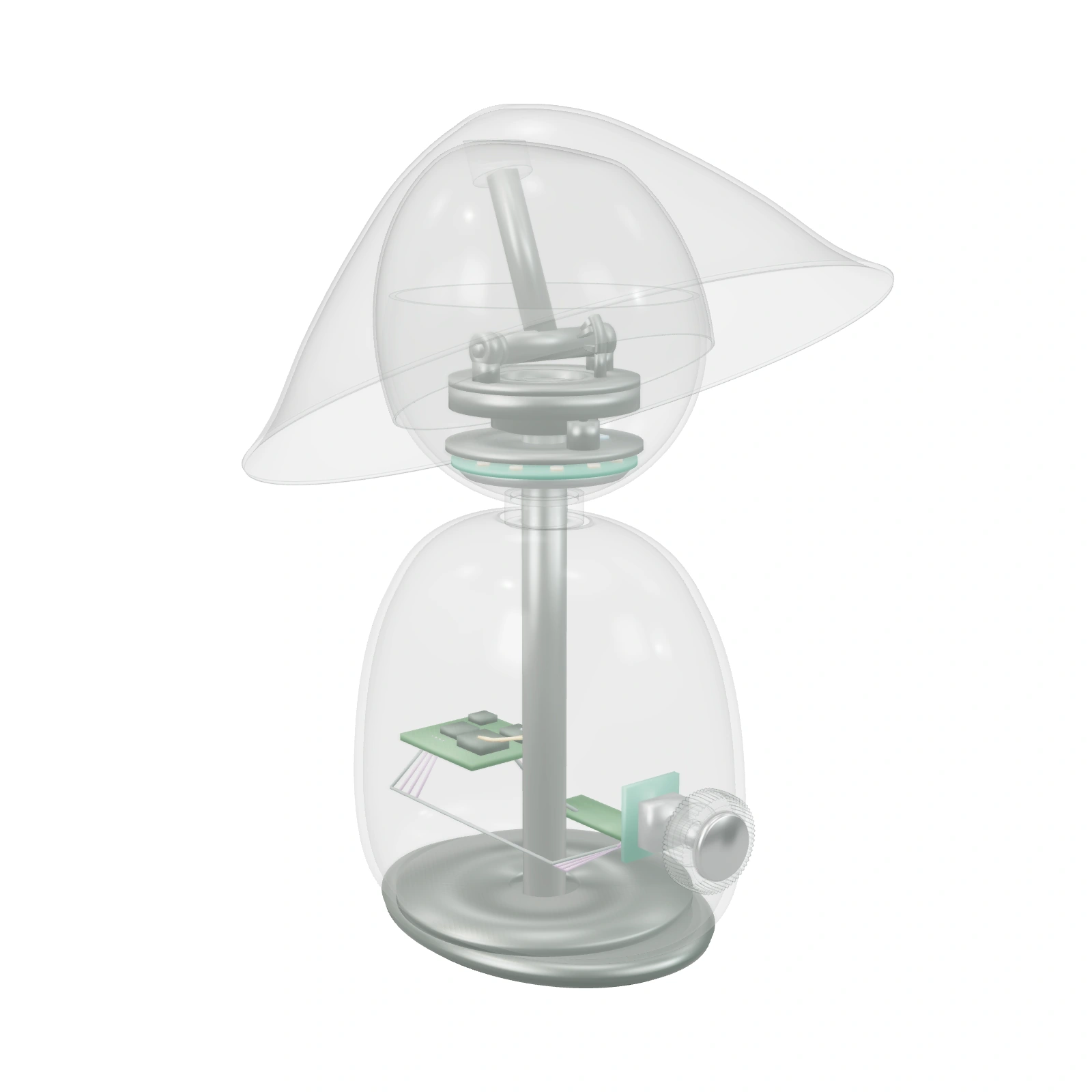
Digital model · internal electronics illustrate the proposed spatial arrangement.
2026
Sway.
A small gesture. A different light.
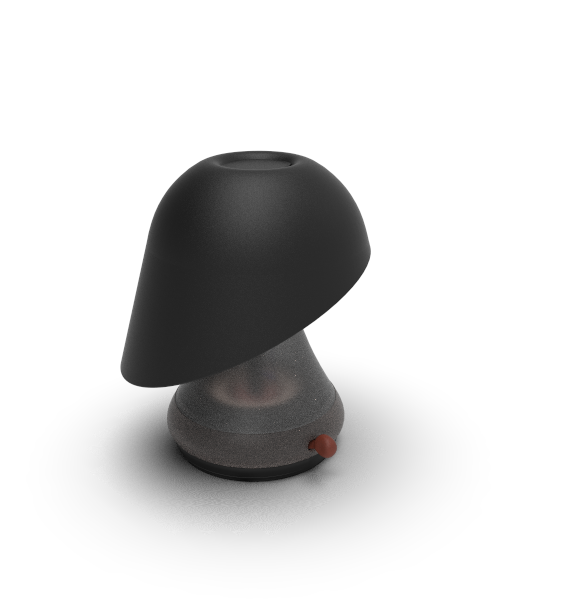
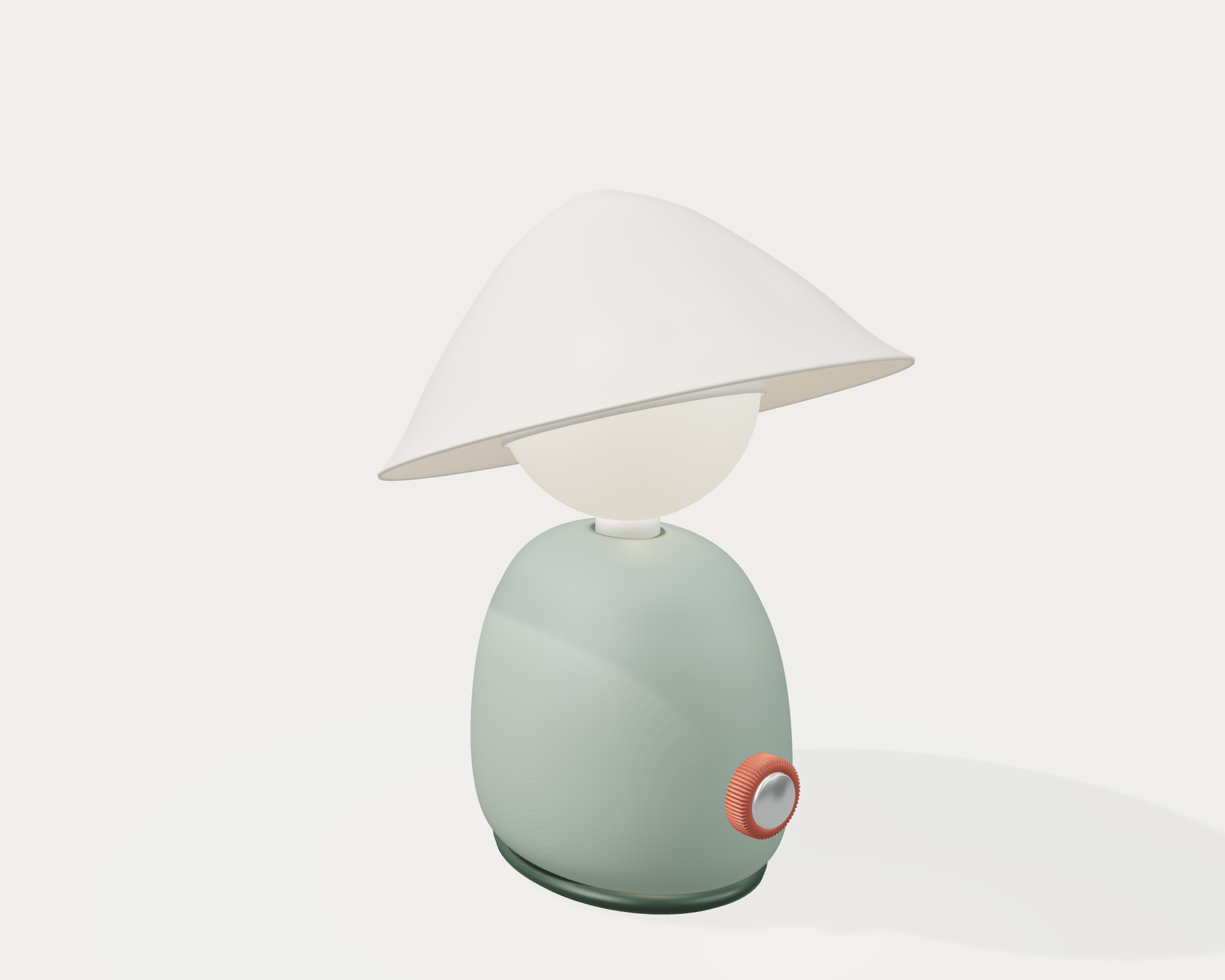
With the shade level, light spreads around the lamp. Press one edge down for a more directional light. The shade then follows its preset, slow rotation.
IN CONTEXT
Light for the desk.
A press changes the shade angle; the dial adjusts brightness. The preset rotation lets the light change slowly as you work.
A pool of light on the desk.
Press one end / change the shade angleRibbed dial / turn to dim, press to switchCharging / a port in the lower rimInside the head / pivot and light assembly
STORY & GESTURE
From watching the clock to staying with the task.
A deadline can pull attention away from the work itself. Sway offers a gentler cue: set the light, return to the task, and let the gradual change mark the session.
A moment with SwayForm & proportionOne sided tilt · −22° → 0°
COLOUR, MATERIAL, FINISH
Soft colour.
Clear gestures.
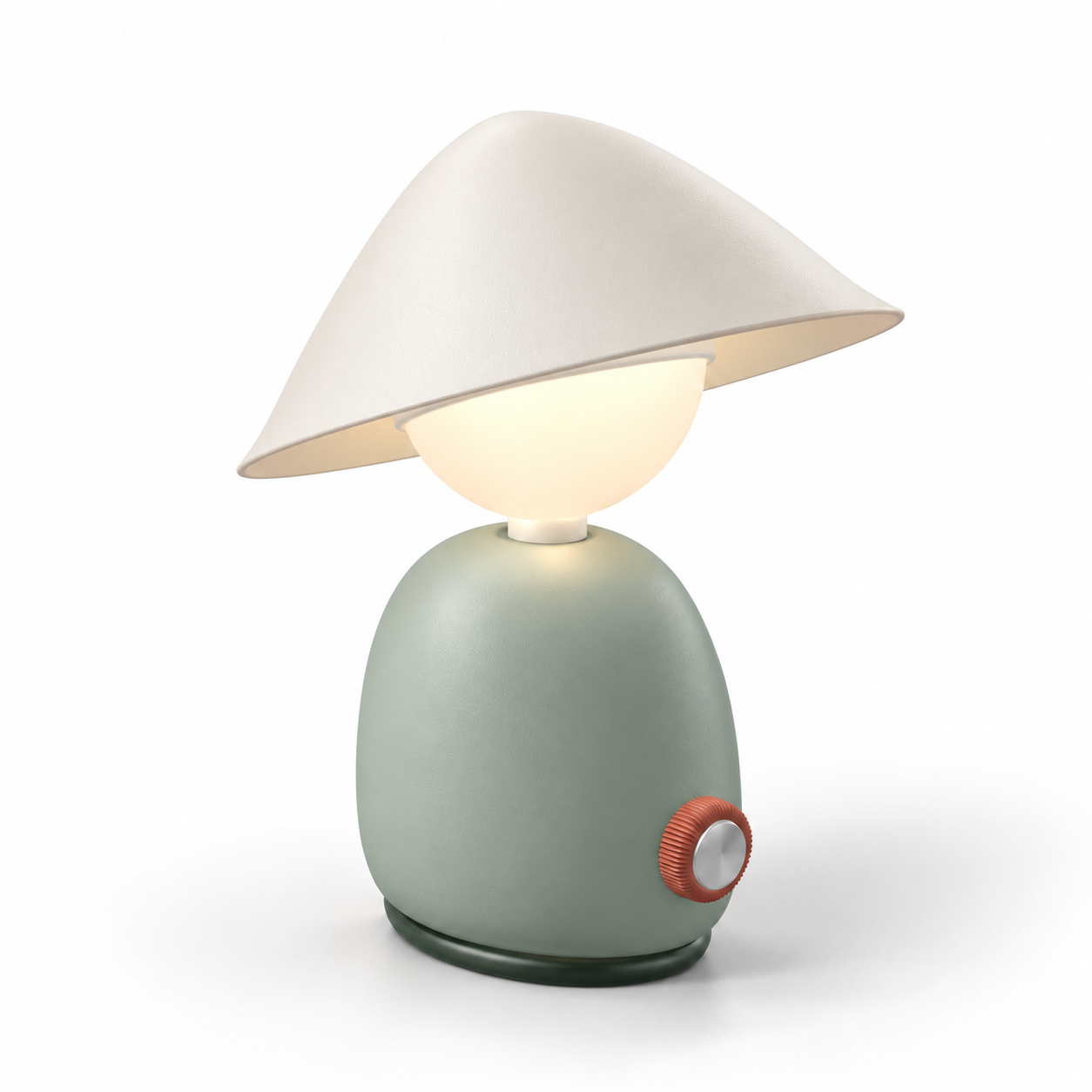
The ribbed ring suggests rotation; the metal centre invites a press. Three digital finish studies.
Direction / Sway
Three expressions
SageGraphite / StoneAmber / Burgundy
THE LIGHT STUDY
How does the shade shape the light?
Three selected directions: return the edge, gather the sides, then balance a regular curved outline with the gesture and the light.
SHAPING THE SHADE
Return the inner edge
Set aside
The curved inner return reduced back side spill in the virtual study.
I set this aside because the returned section raised concerns about local thickness, added mass and how a mould would be split and released. Visually, the inner rim also felt too heavy.
Approx. 3.6:1open / shaded side
Gather the sides
Set aside
The deeper arch produced the strongest directional contrast of these three simulations.
I did not continue with the deeper enclosure: it made the canopy feel bulkier and raised questions about wall thickness, forming direction and the hinge load during repeated pressing. The silhouette felt less light and open.
Approx. 8.3:1open / shaded side
A regular curved outline
Chosen direction
A gentler directional difference, with some light left in the surrounding space.
I chose this direction for its continuous outline and clear pressing gesture. Avoiding the extra return and deep enclosure gives a simpler geometry for the next discussion of wall thickness, mould release and mass distribution.
Approx. 2.1:1open / shaded side
Ratios compare sampled desk regions in the same virtual study, not measured illuminance. Forming and load concerns are design assessments: material, wall thickness, tooling and hinge holding torque still need verification.
THE CHOICE
Light, structure and appearance in balance.
The final direction balances useful light, visual lightness, the pressing gesture and a simpler path towards production. The brightest contrast alone did not decide the form.
Digital model · internal electronics illustrate the proposed spatial arrangement.
2024
Halo.
A circle in motion.
A moving ring explores a more visible rhythm. A different silhouette, with the same interest in light, movement and time.
IN CONTEXT
A changing circle of light.
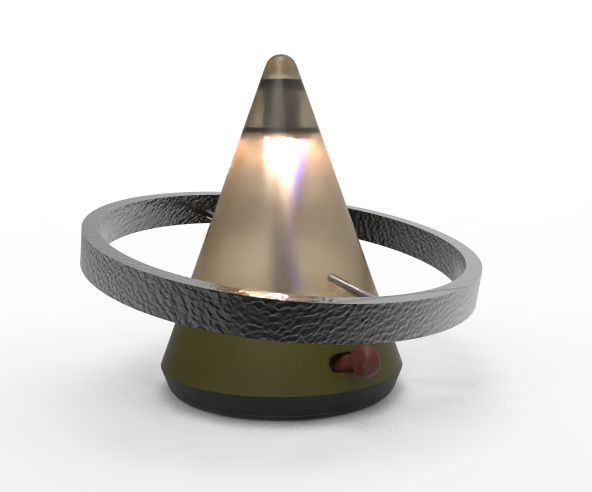
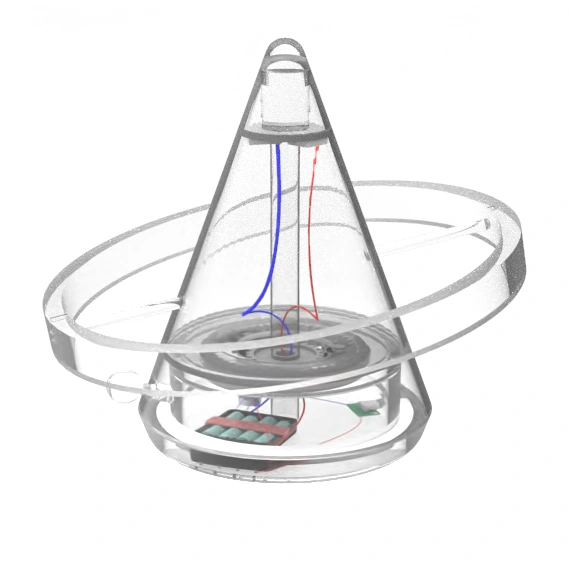
The cone provides light while the ring follows its preset movement. Two rods connect the ring to the central mechanism.
A circle of light beside the work.
Rotation / start or pause the ringCharging / a port in the baseInside / the gear and central shaft
Structure sheet
STORY & DRAWINGS
An idea in drawings.
The shade, controls and proportions developed around one aim: letting the light change gradually while the lamp remains easy to use.
Finding a moving ring / the first silhouettesRefining the relationship / ring, cone and supportAn early projection idea / the ring changes positionConnecting the ring / two radial supports
A ring with a clear connection.
The drawings move from possible outlines to a ring connected by two rods. In the current digital model, the ring and supports move together around the fixed cone. The early projection sketches record the intention; the final light distribution still needs a physical test.
COLOUR, MATERIAL, FINISH
One form, different characters.
A comparison of colour, texture and translucency across three finishes.
The page brings the three generations together. Sway still needs a physical prototype: holding torque, long term hinge wear, stability, temperature and light distribution must be tested. A working prototype will also need to verify the preset, minute scale movement.