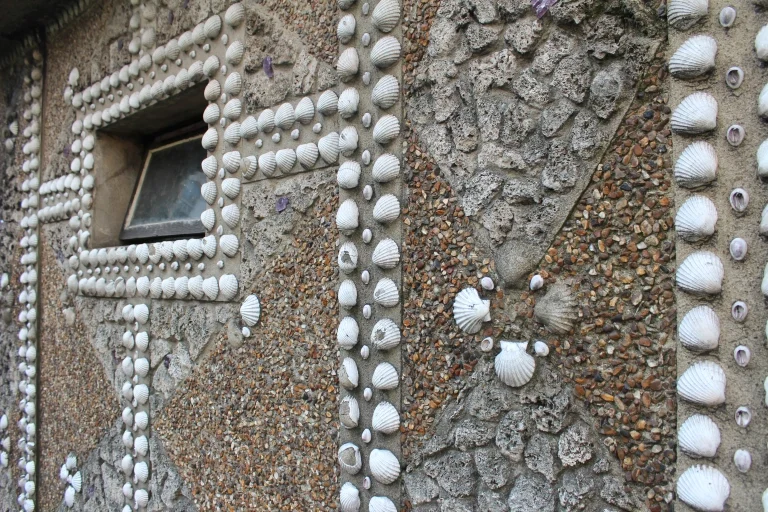
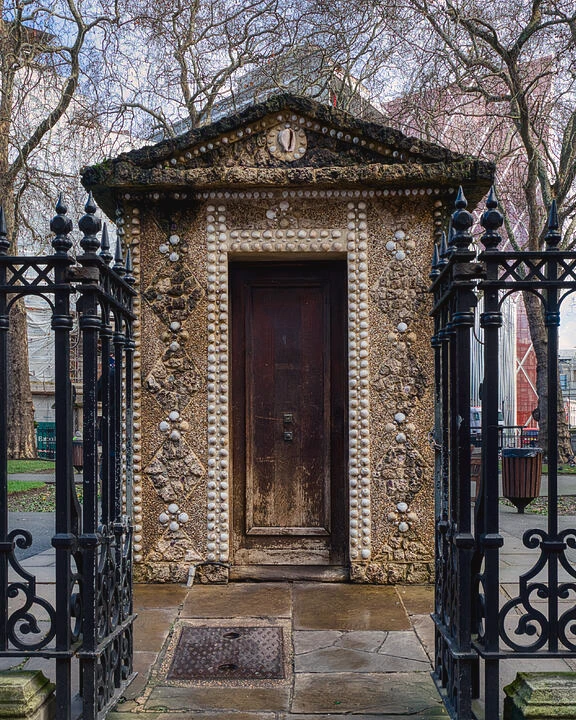
Shell Huts, Grosvenor Gardens
The shell huts brought this research back to London. Their decorated walls enclosed a practical space used to store gardeners' tools.
08 · Furniture · Material
Shell explores how discarded seafood shells can find new value in furniture design.
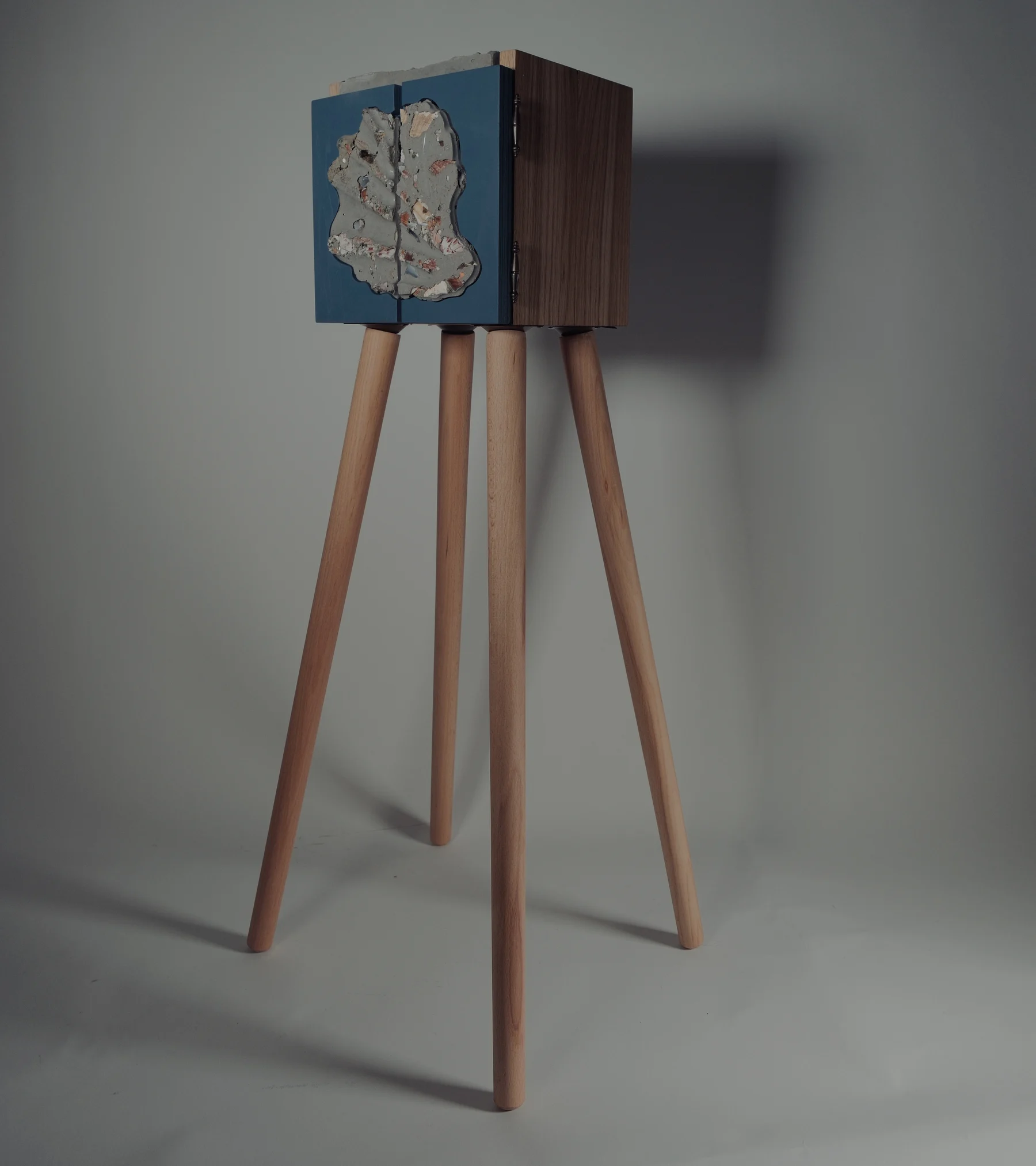
Inspired by London's seafood culture and traditional shell craftsmanship, I experimented with shell-based materials before developing an oak jewellery cabinet with textured shell-concrete surfaces.
Localism · London furniture
Furniture making in London is squeezed by high production costs and cheap imports. I looked for a local answer: London materials, simple making and a sense of place.

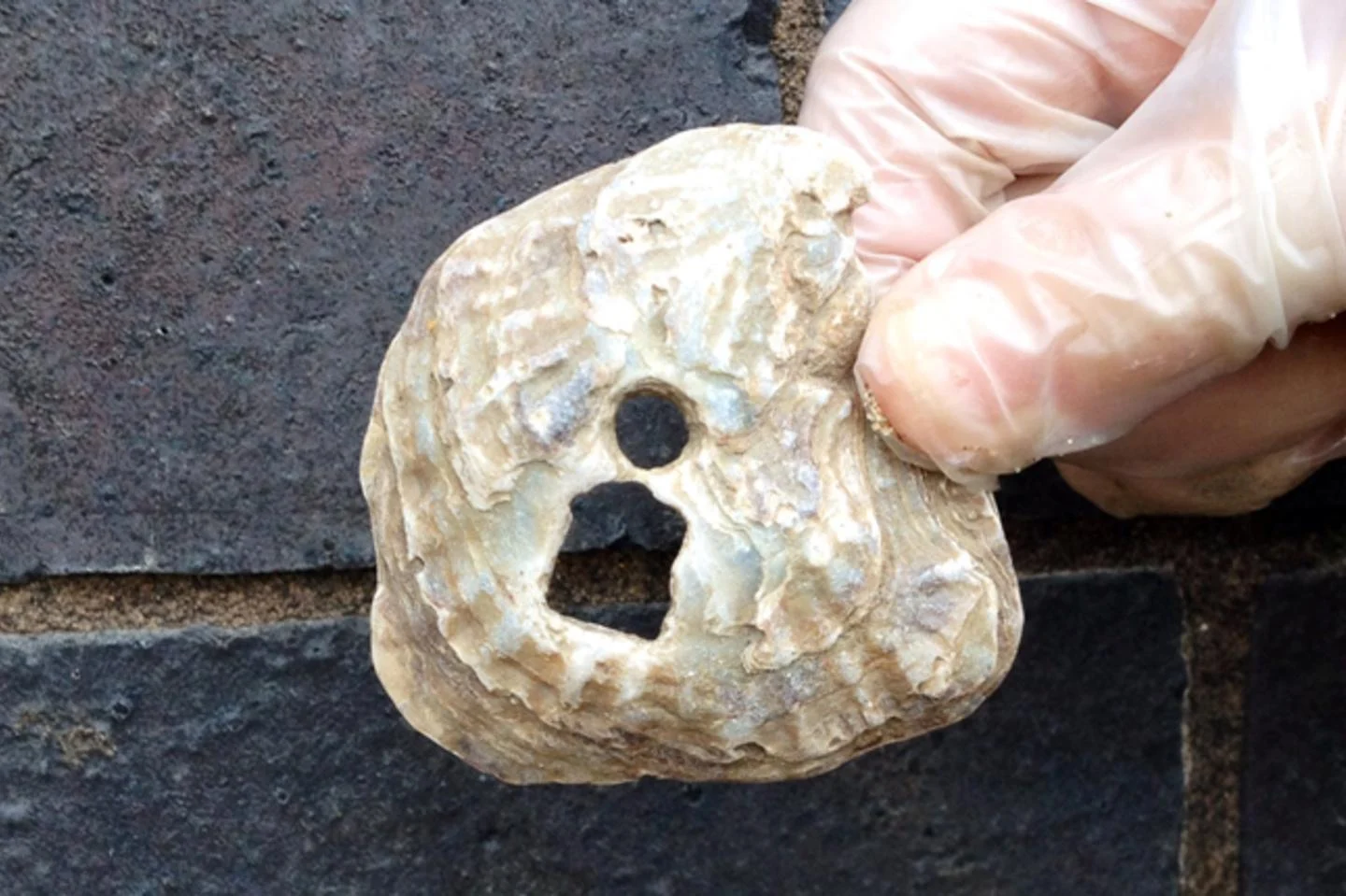

Reference images · by others
So much seafood also means shells. What if they became a resource instead of waste?
The story in three threads
Shell tied the cabinet to London in three ways, and each one shaped a different part of it.
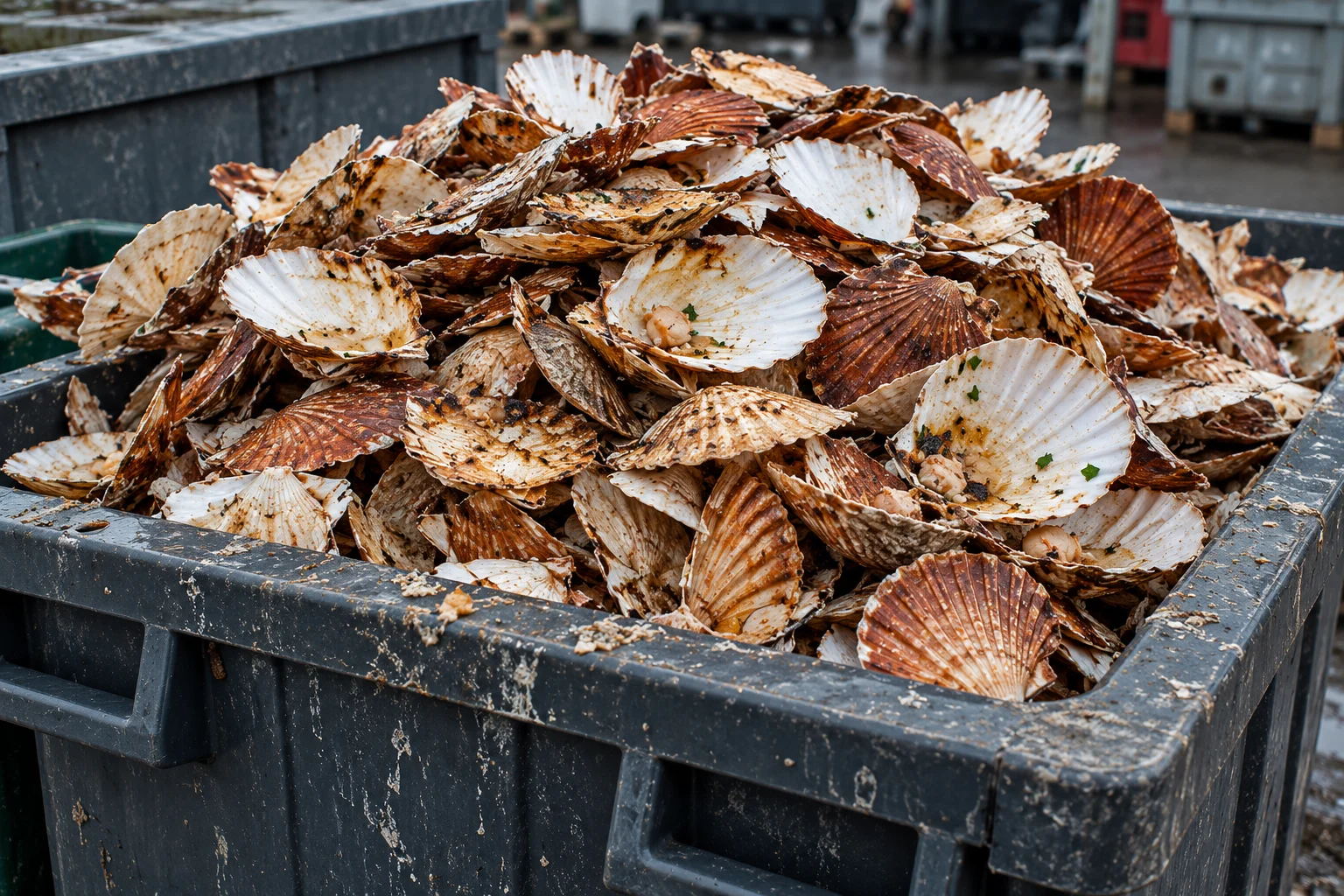 Waste
At London's markets, scallop shells leave as rubbish or fertiliser, never as a material.
 Craft
Shell huts, shellwork and conchology: shells once arranged, decorated and collected with care.
 Form
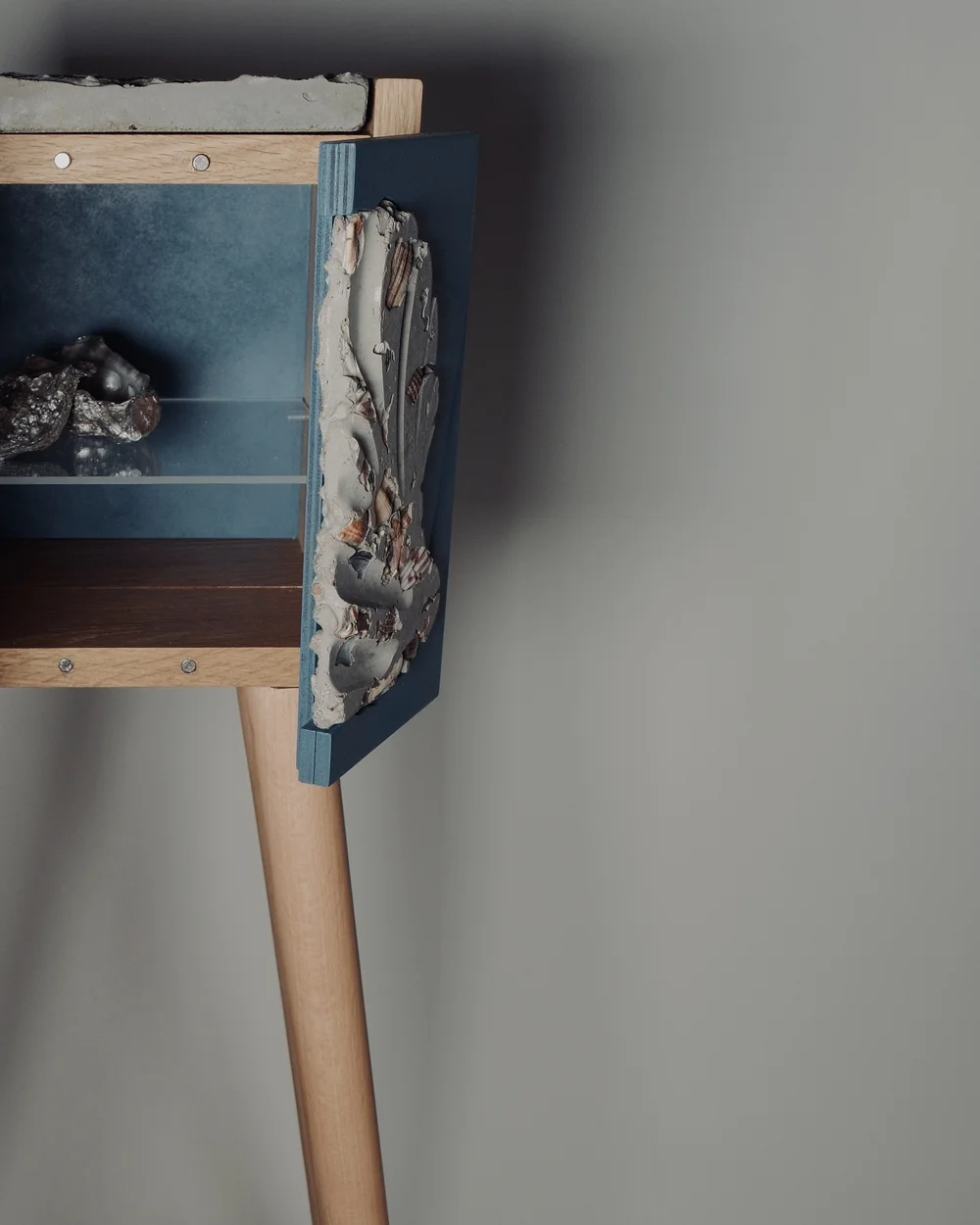
The shell becomes a tile on a familiar long-legged cabinet.
The cabinet sits where the three meet: waste material, precious tradition, everyday furniture.
Waste · the material London throws away
At Borough and Billingsgate I asked where the shells go. They leave with the morning's rubbish or as fertiliser, never as a material.
In London · my market visits
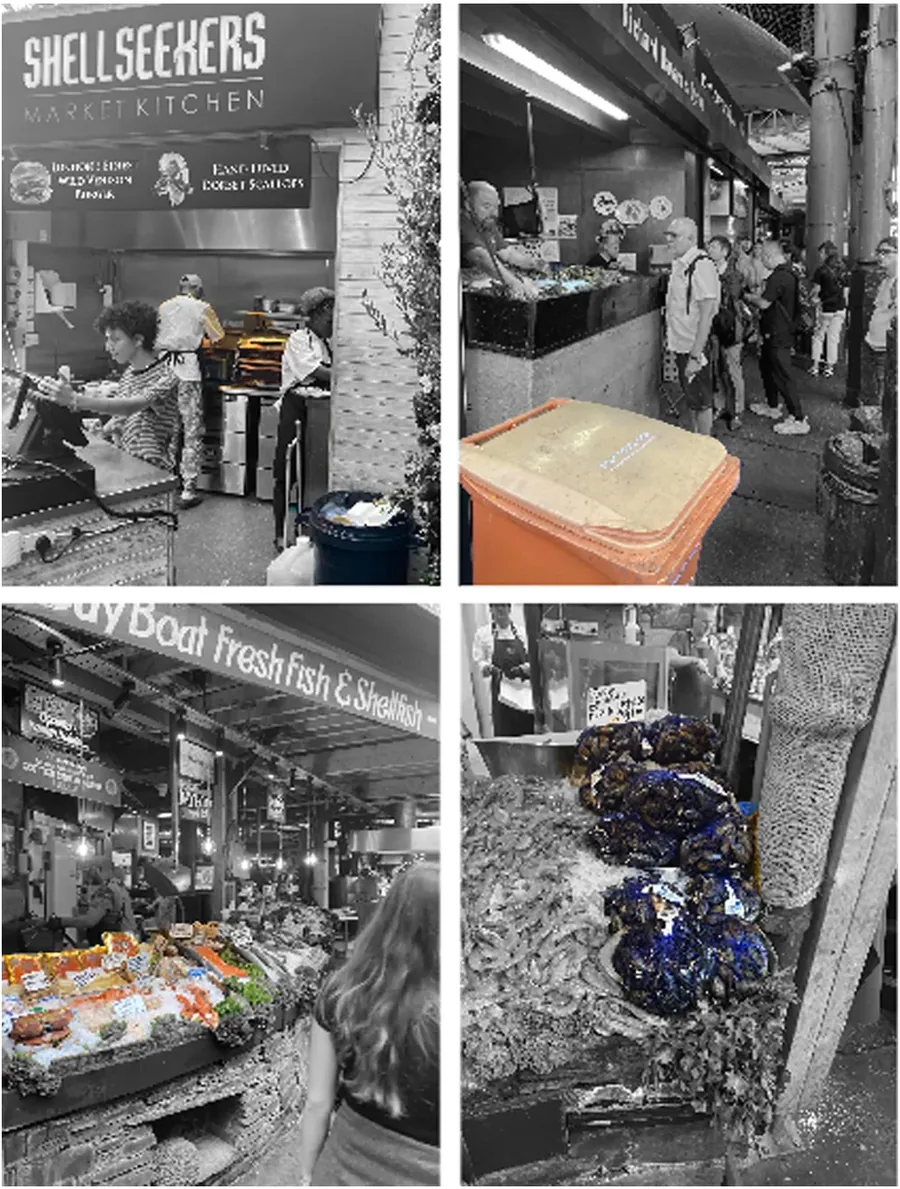
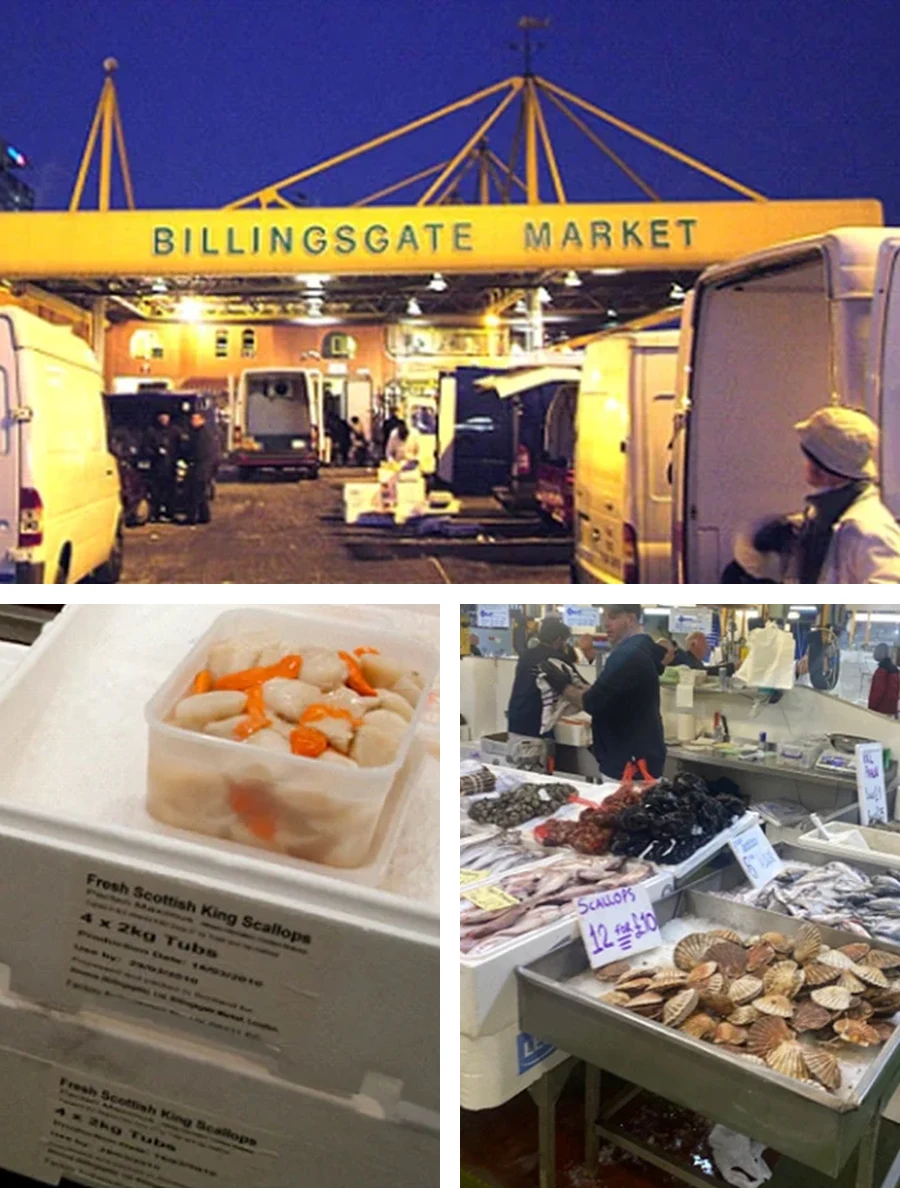
“In the busiest morning market, a lot of rubbish is generated as traders divide and handle seafood such as fish, shrimp and scallops.”
Market Control member
The rubbish is hard to clear from the riverside site, so a waste-clearance company collects it the same day.
“Most of these seafood scraps are used as natural fertiliser in London.”
Market manager
Collect shells from vendors, cast them into tiles, build furniture, and return a share of each sale to the vendor.
Craft · looking at shells beyond the market
After finding discarded shells at London's seafood markets, I began looking at how they had been used and collected. My research took me from shell-covered buildings to decorative objects and natural-history collections.
The shell huts brought this research back to London. Their decorated walls enclosed a practical space used to store gardeners' tools.
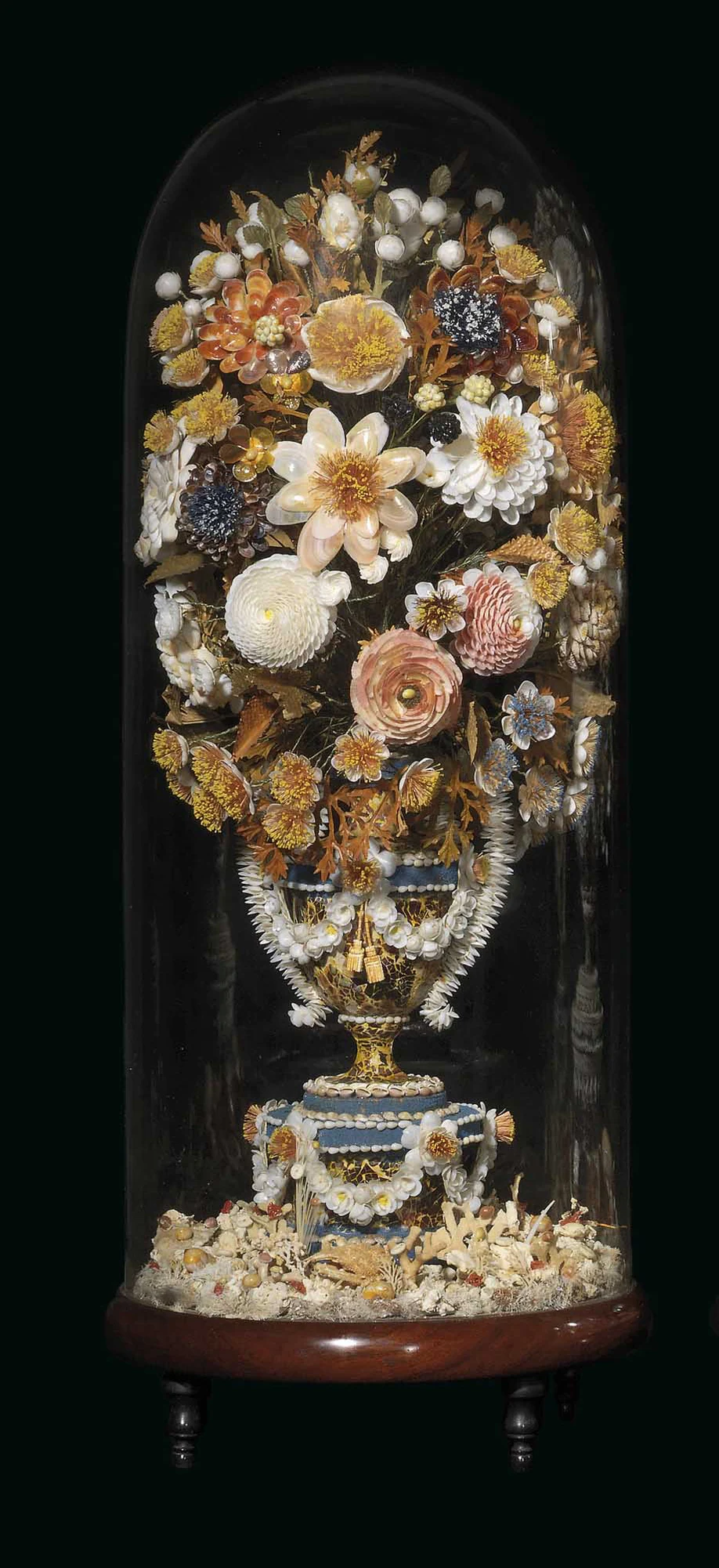
Individual shells were carefully arranged into flowers and decorative patterns. These objects interested me because of the time and craftsmanship given to a material I had encountered as waste.
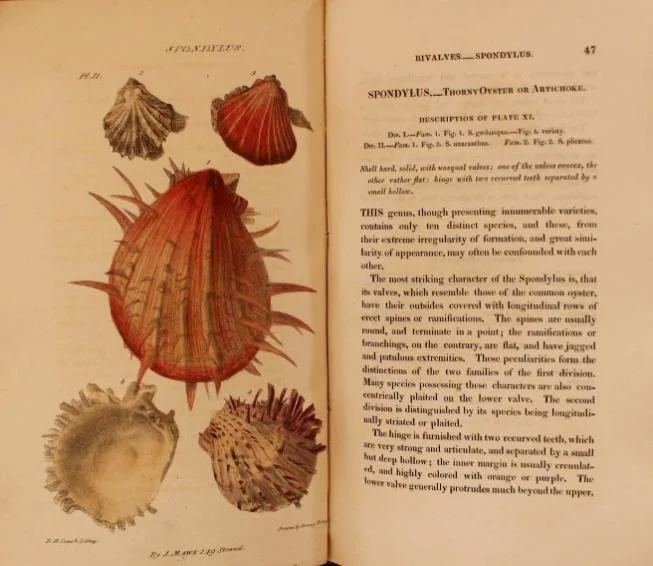
Conchology books recorded the shapes and distinguishing features of shells. They offered another way of looking at the material: as something to examine, identify and collect.

The care given to shells in these references informed my choice to make a jewellery cabinet. I wanted to use discarded shells in an object made to hold things that someone values.
Material · keeping the shell visible
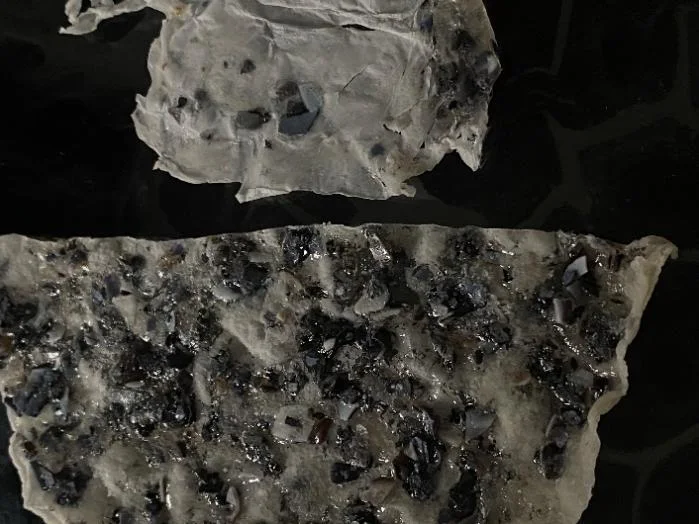
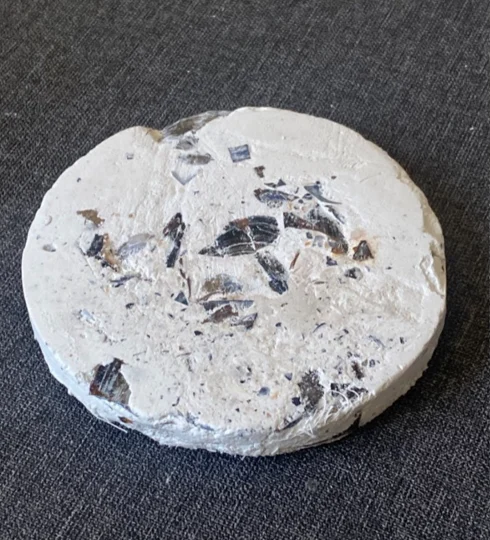
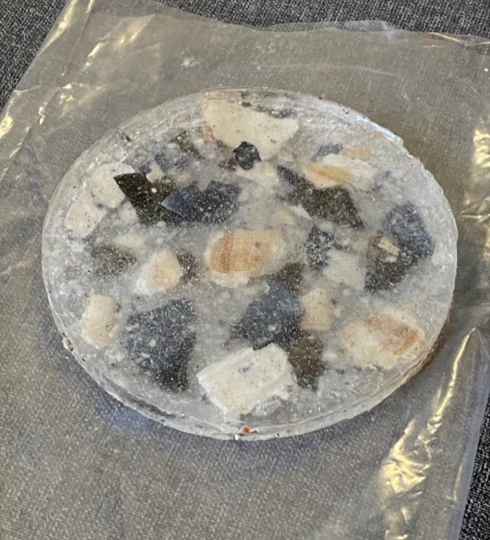
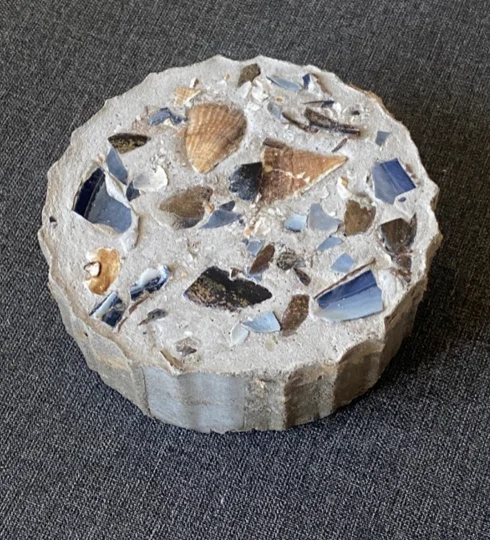
I crushed shells into fragments and tried four binders. Each card shows the sample from that test.
Why concrete
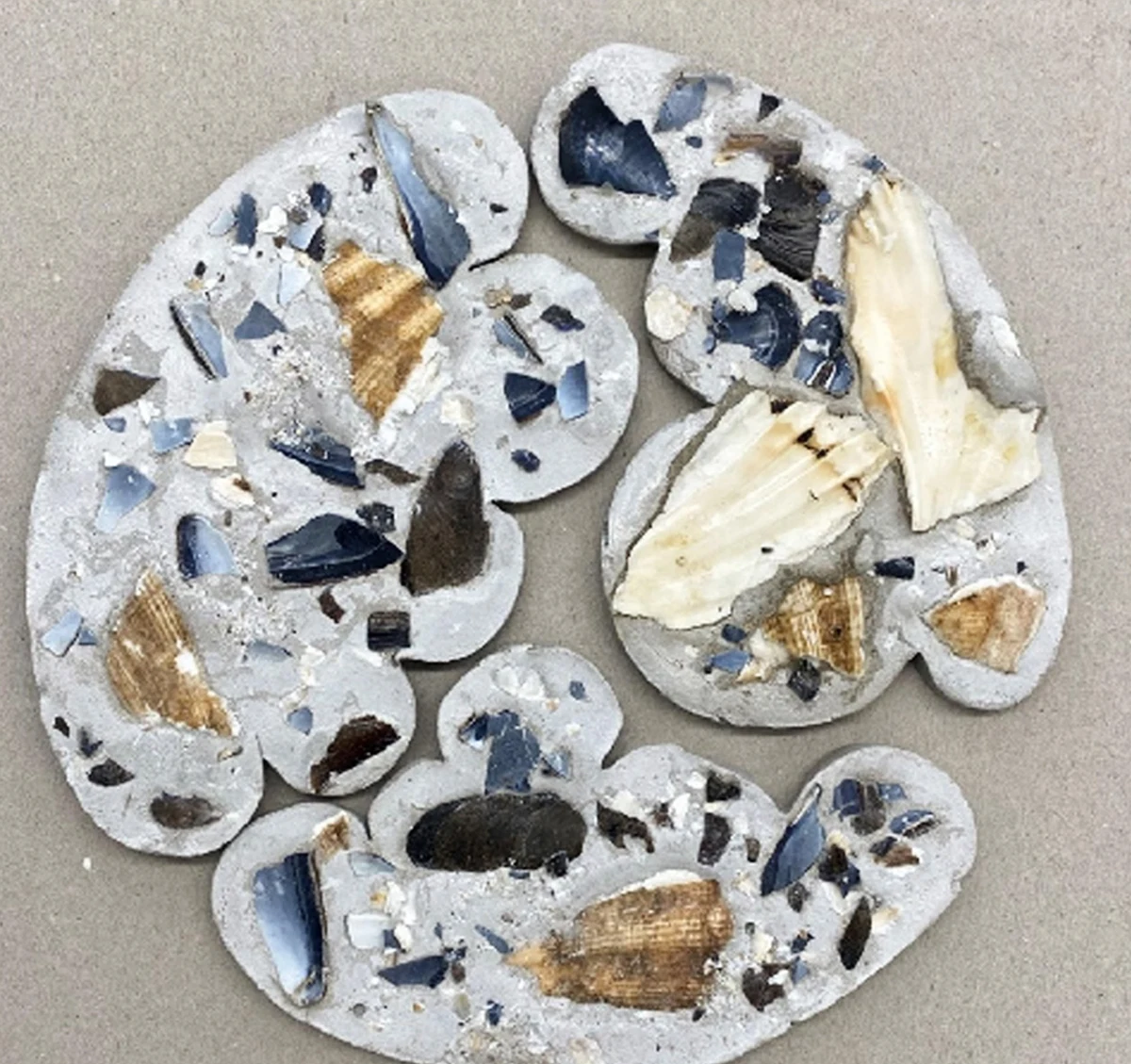
Shell is calcium carbonate, the mineral in cement's limestone. Raw concrete is also London's own surface.The Barbican, Brutalist London

Form · where the shell sits on the furniture
Inspired by the proportions of mid-century long-legged cabinets and the use of embedded materials in furniture surfaces, I explored how shell-concrete tiles could become part of a compact oak jewellery cabinet.
Through sketches and material placement studies, the design evolved into a tall, slender cabinet combining a familiar furniture silhouette with a distinctive surface.
References
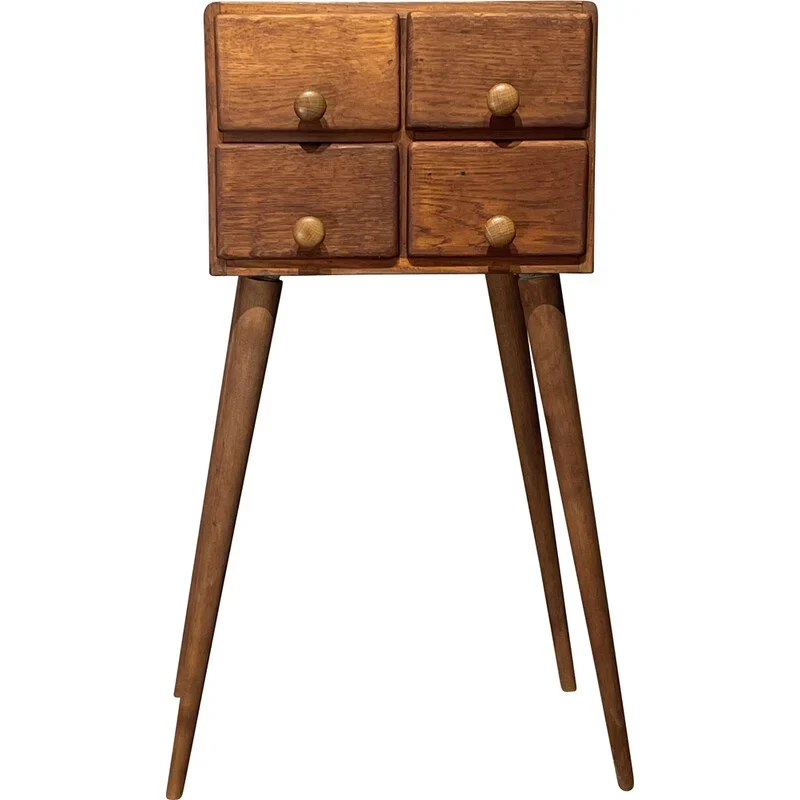
Long legs · Compact body
1960s cabinet reference · by others
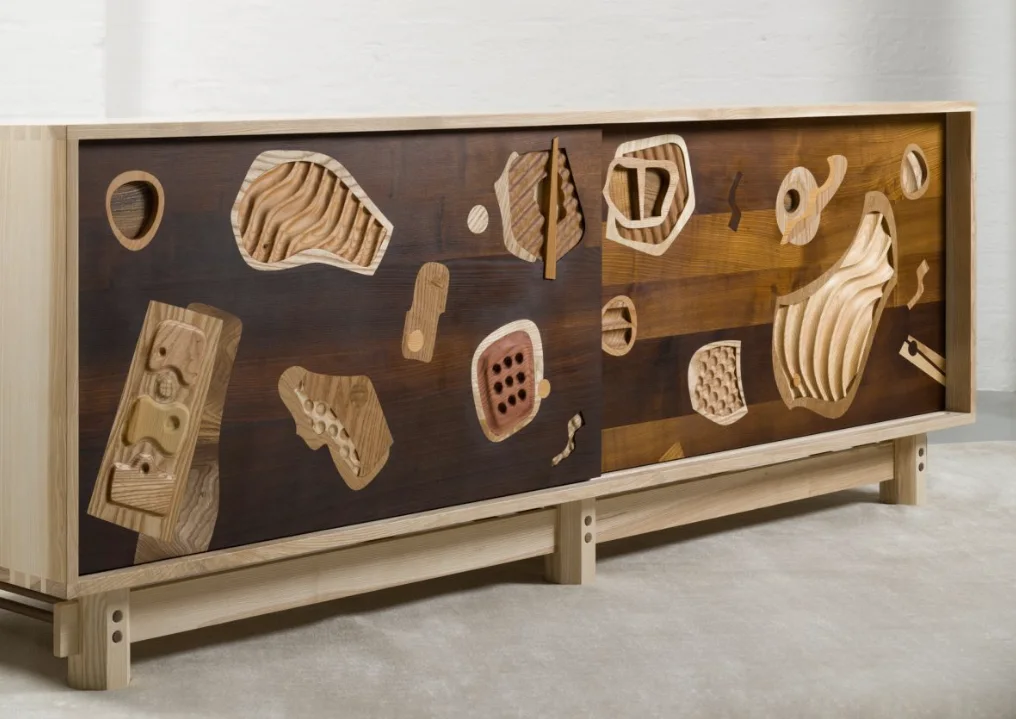
Material · Inlay · Texture
Surface reference · Jan Hendzel, What Lies Beneath Cabinet ’23 · by others
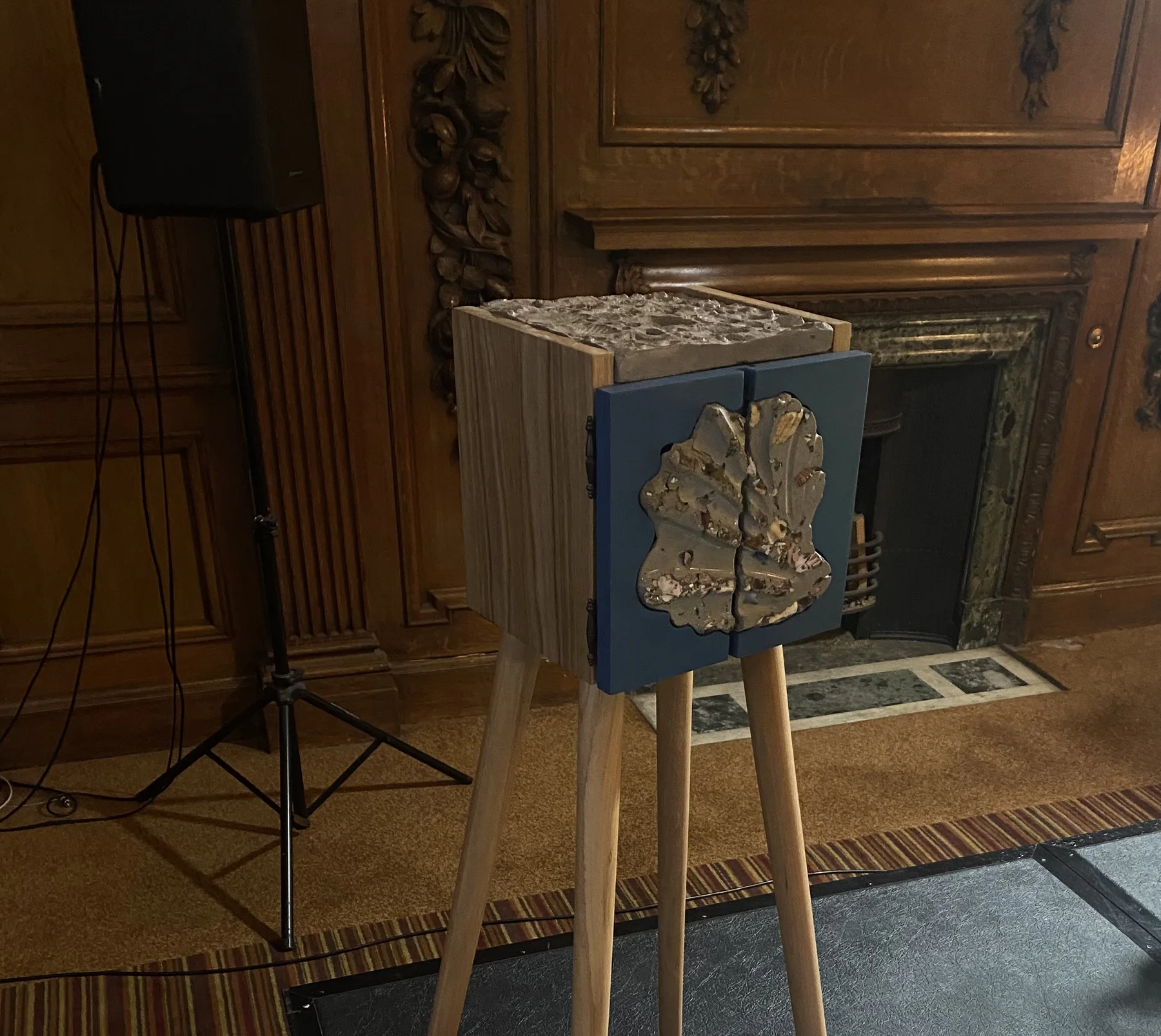
A familiar cabinet form, reinterpreted through shell-concrete surfaces.
Oak carries the structure and the shell stays on the surface. Concrete is heavy and brittle, so as panels it keeps the cabinet light, and a broken tile can be replaced.
My sketches & CAD
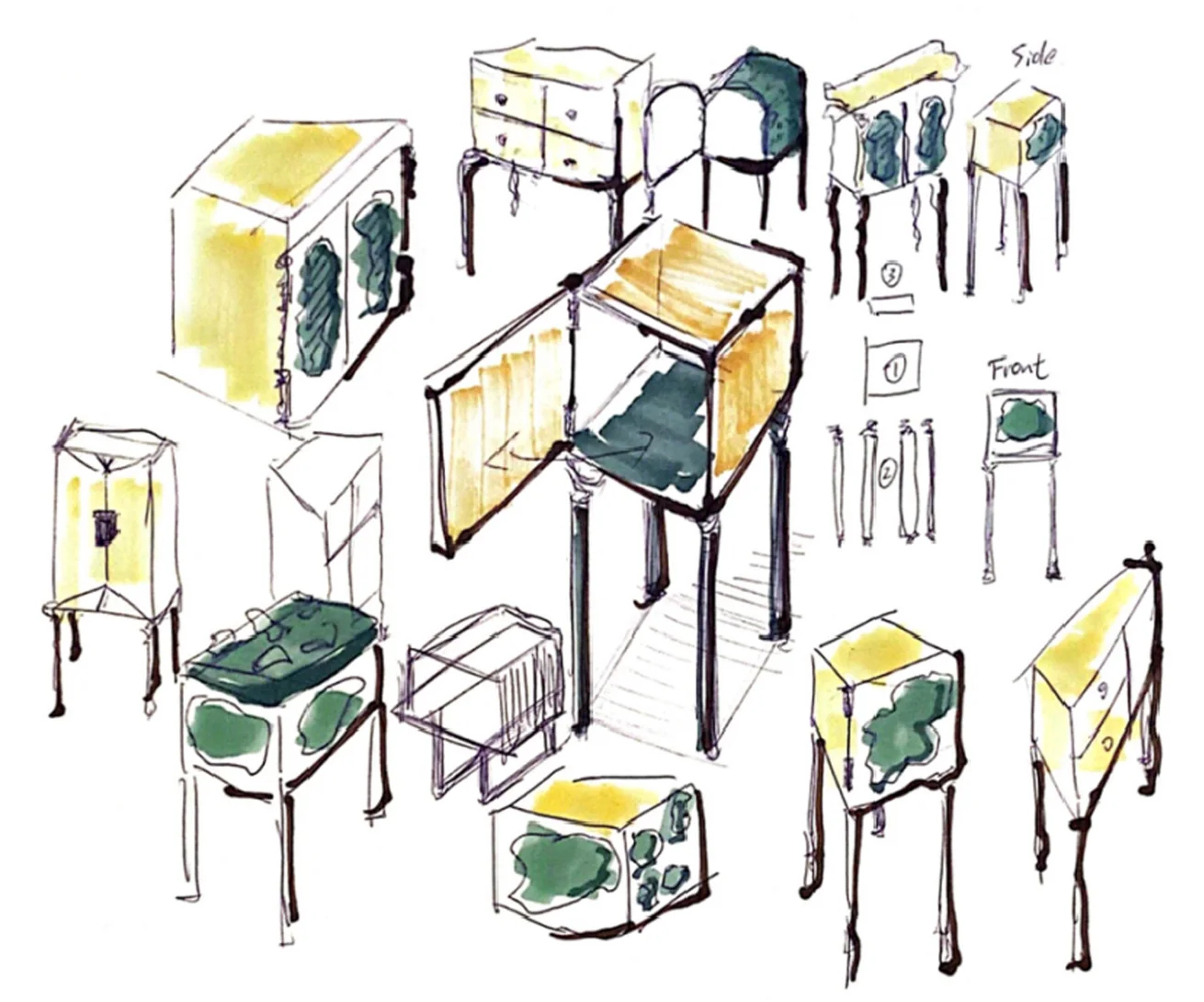
Initial sketches · Proportion studies
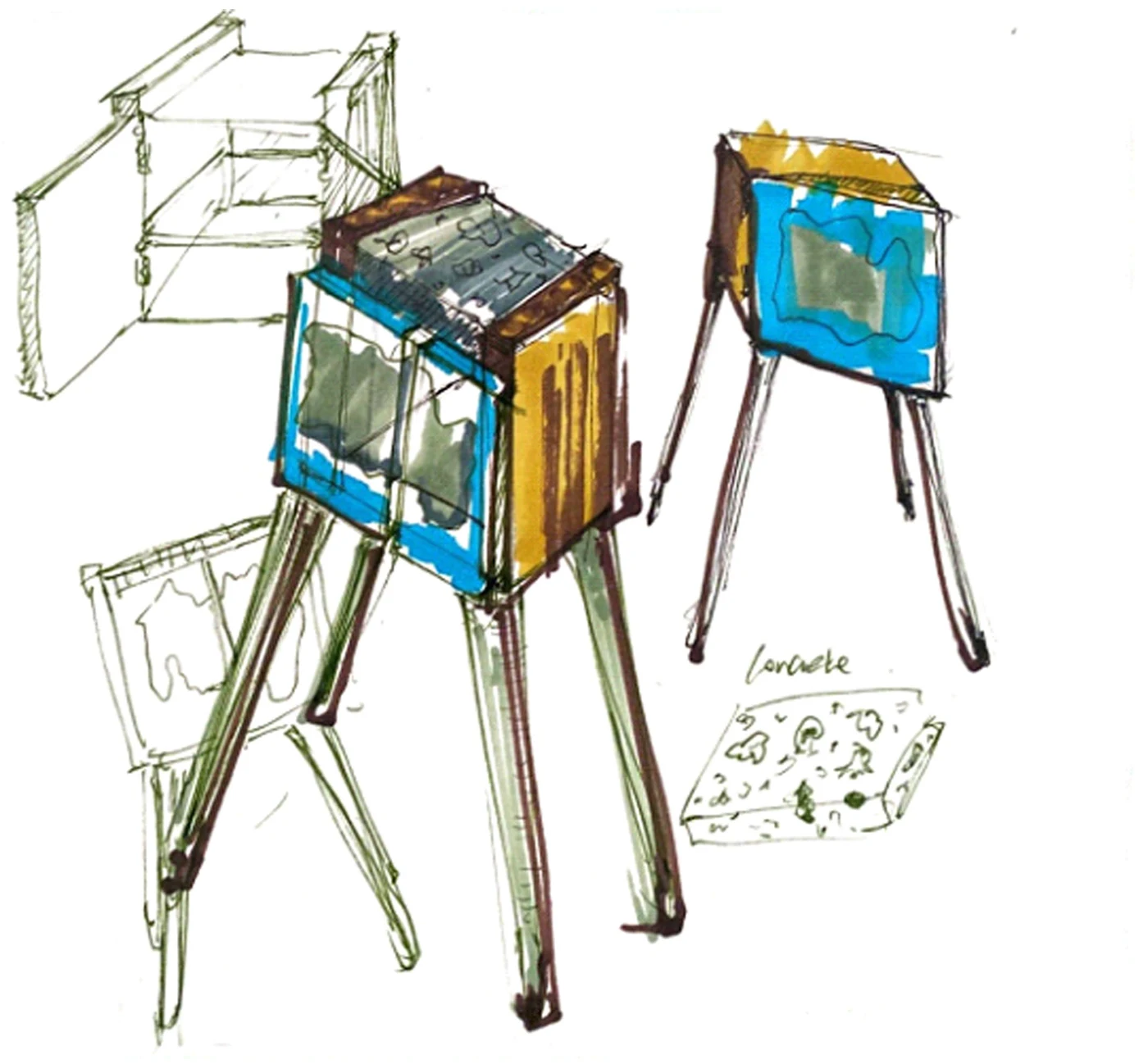
Blue doors · Shell-concrete panels
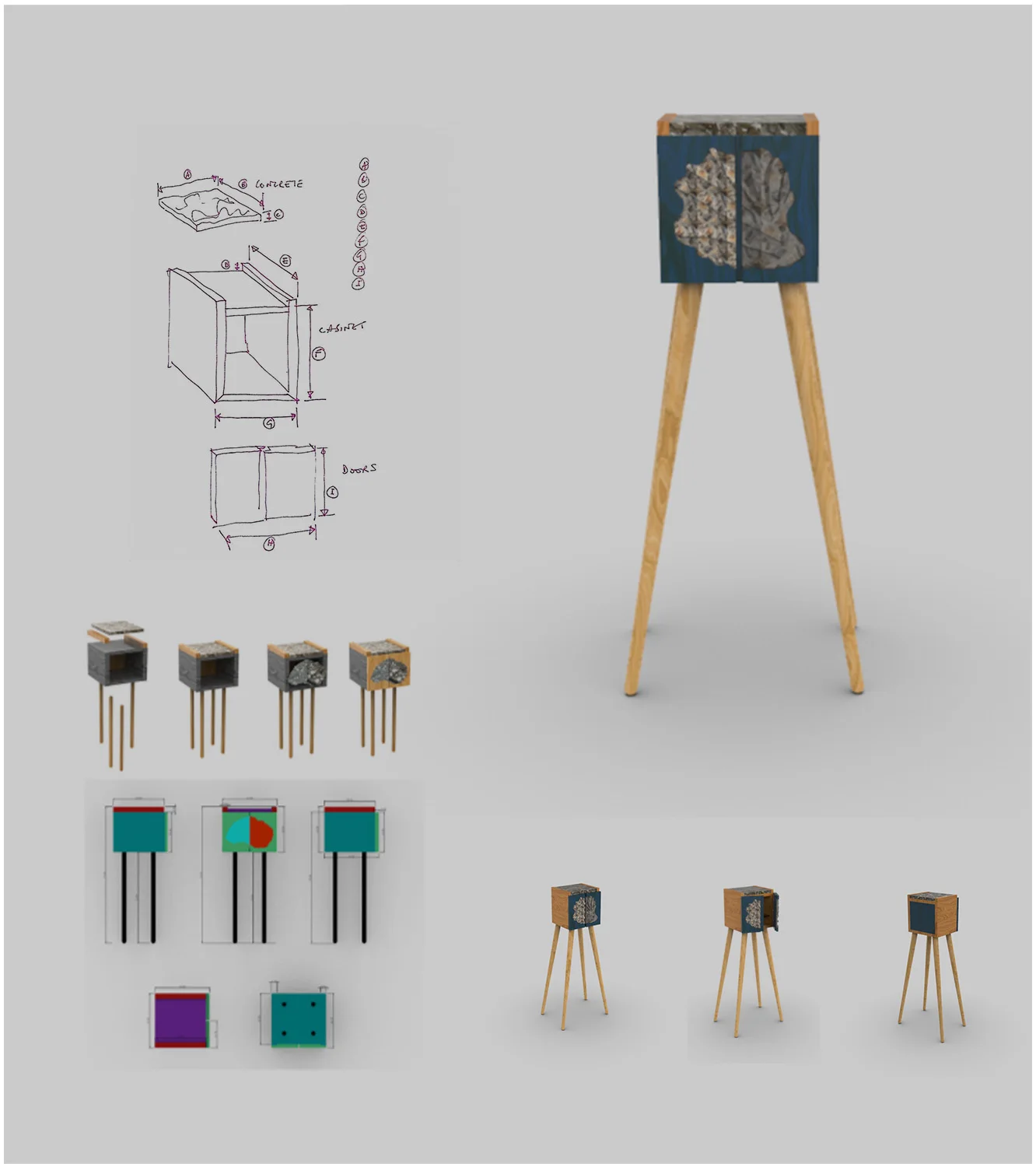
CAD · Dimensions · Material composition
Where each thread ends up
Hover over or tap the points on the photos to see what each part does and which thread it came from.
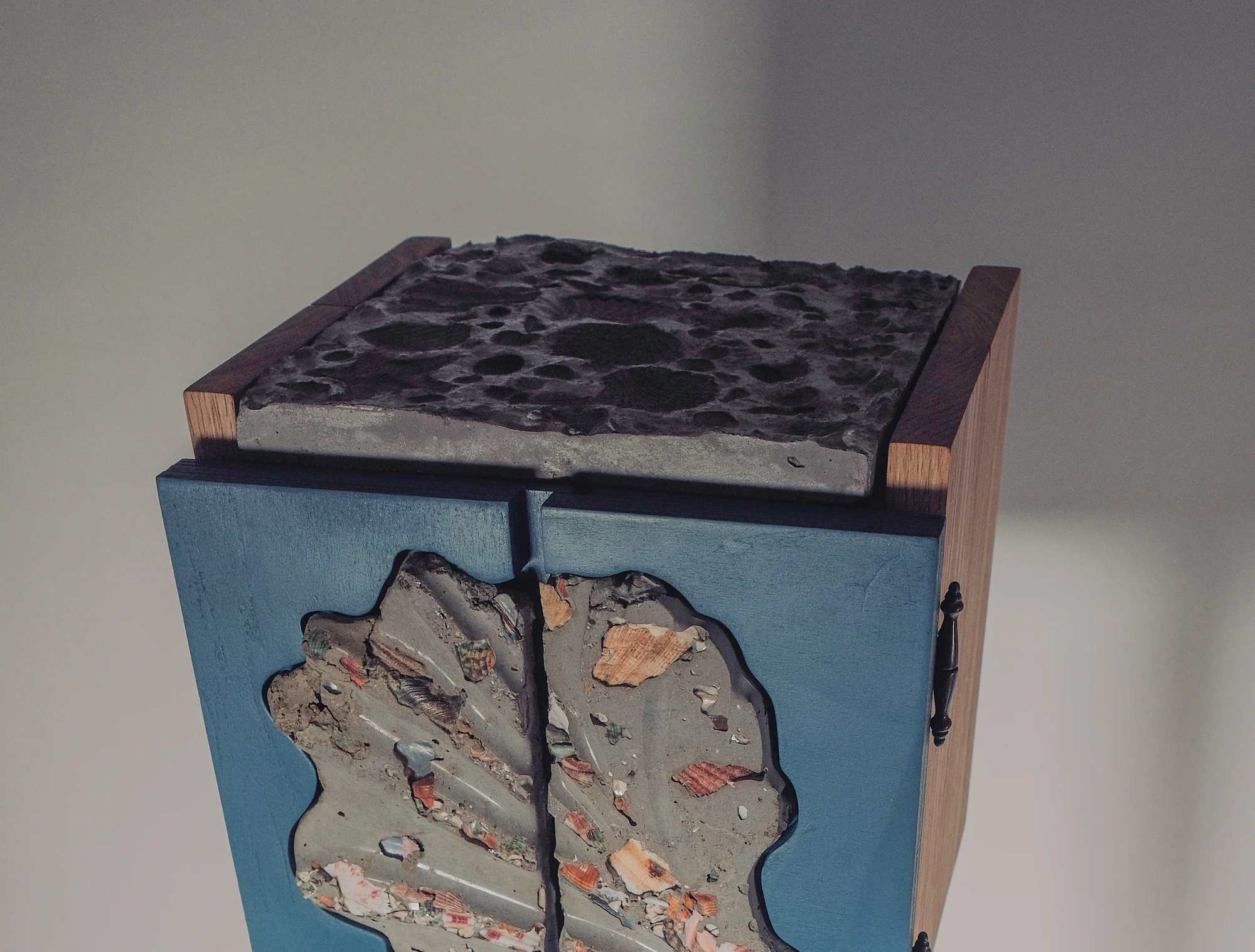
Shells pressed into wet concrete and lifted out, leaving their texture.
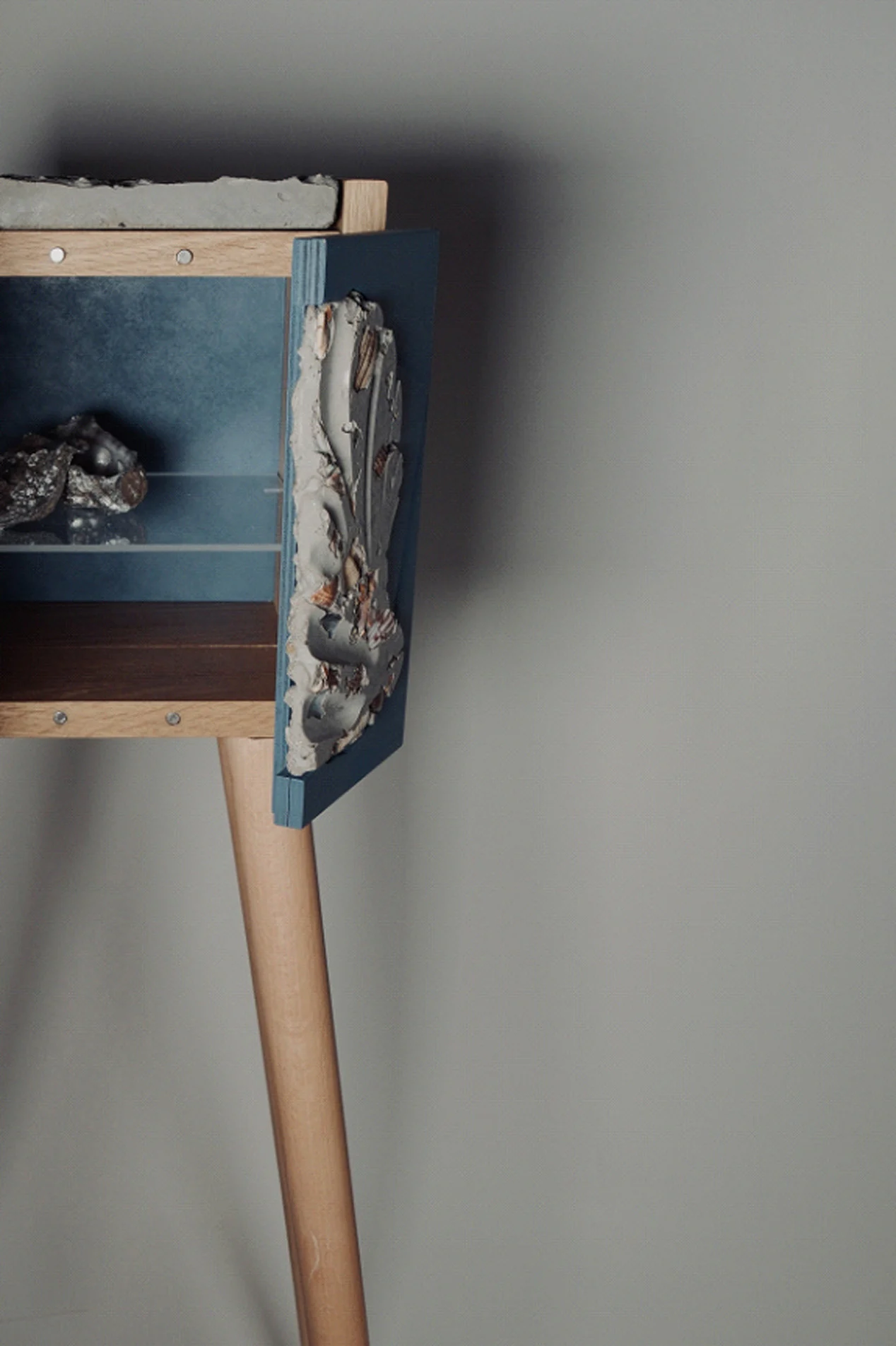
Cast in one piece and split across both doors, so opening the cabinet opens the shell.
Sets the shells back against the sea they came from.
No screws or joints showing, to the standard of cabinets sold at Aram and SCP.
Plain hinges looked flat. These give the cabinet a sense of age.
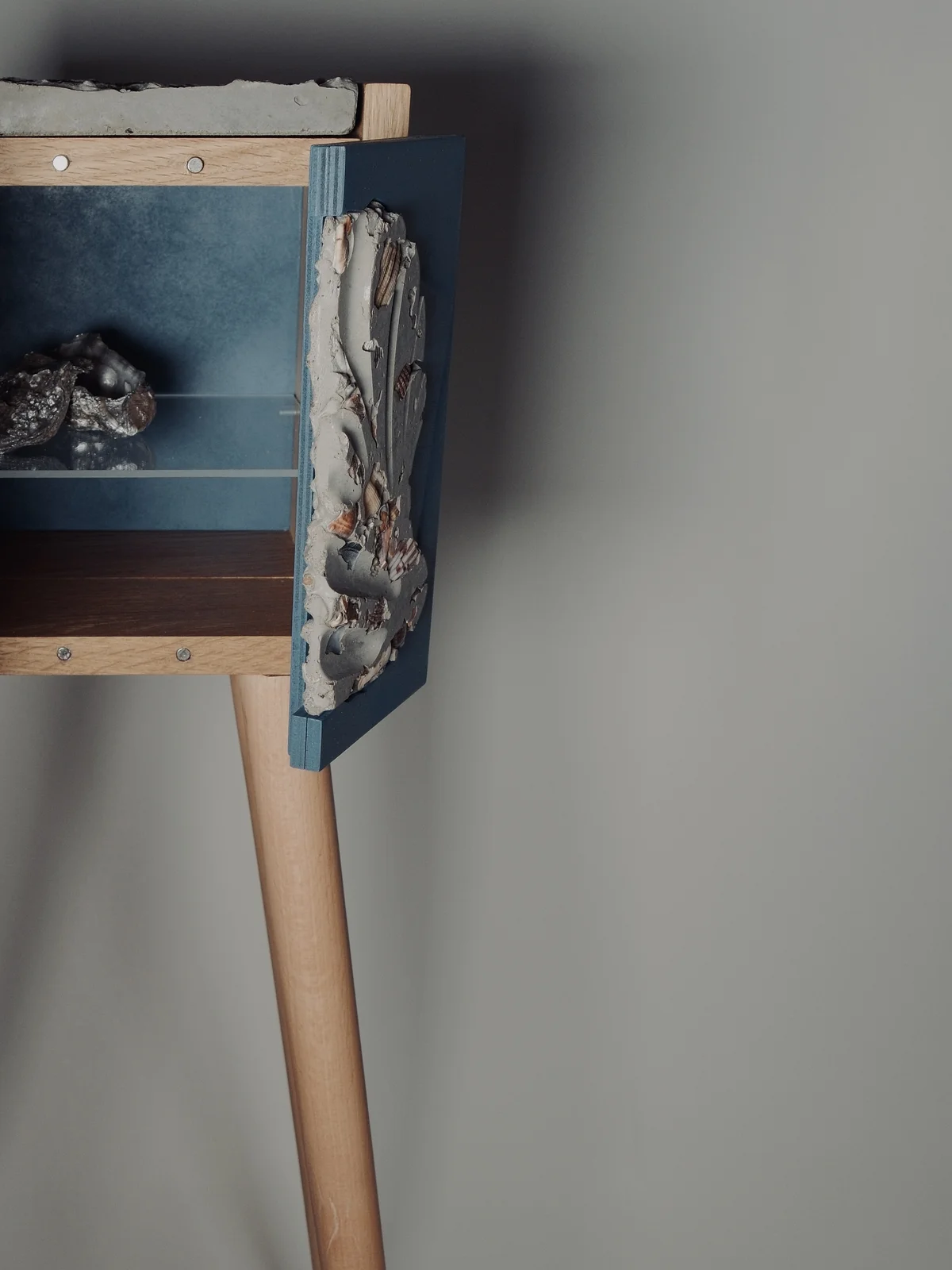
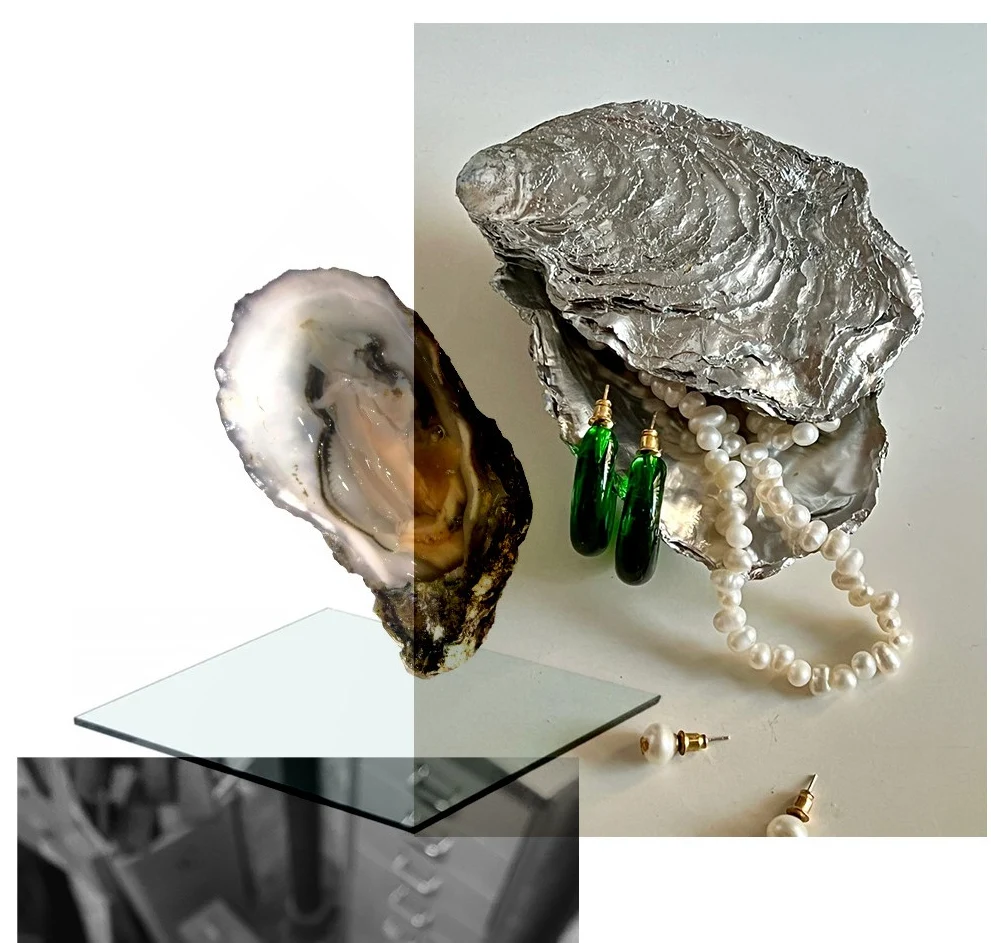
Silver-sprayed oyster shells on a glass shelf hold rings and pearls.
After 1960s long-legged cabinets. They lift the precious contents up to the hand.
Making it saleable
After studying how cabinets are made at Aram and SCP, I rebuilt it to a sellable standard, testing each detail on sample pieces first.
Exposed screws and hinges made the prototype look handmade rather than sellable. During installation a concrete tile fell and broke, so I moved to a harder concrete mix.
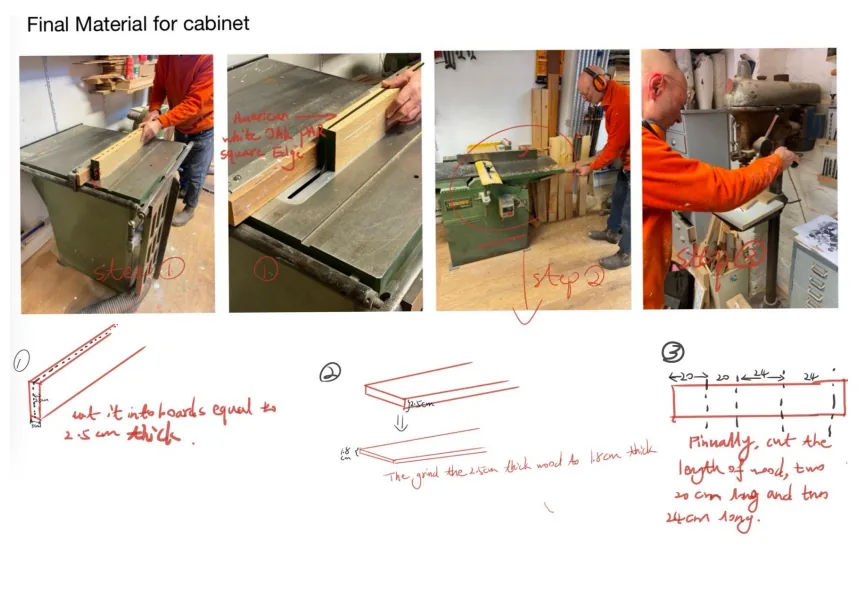
I cut the oak into 2.5 cm boards, planed them down, then cut two 20 cm and two 24 cm lengths. The sides are glued into a box, with no screws showing.
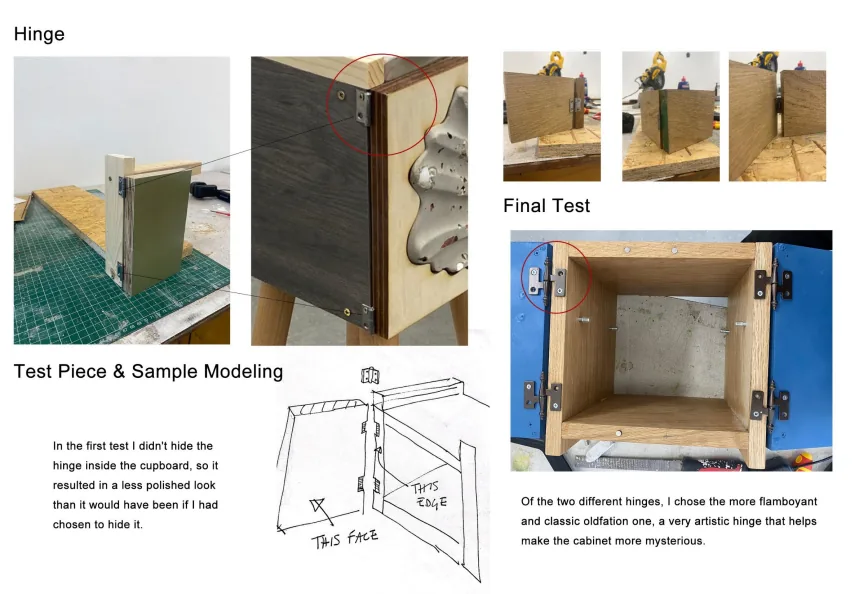
In the first test the hinge sat outside the cupboard and looked unfinished. On the final piece I fitted a more ornate, old-fashioned hinge that adds a sense of age.
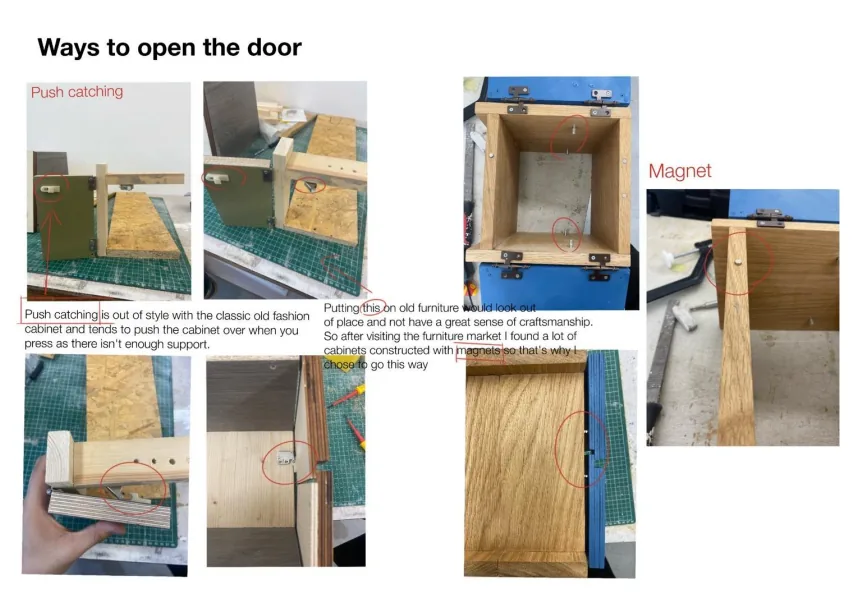
A push catch looked out of place on a classic cabinet, and pressing it tipped the tall cabinet over. Old cabinets at the furniture market used magnets, so I did too.
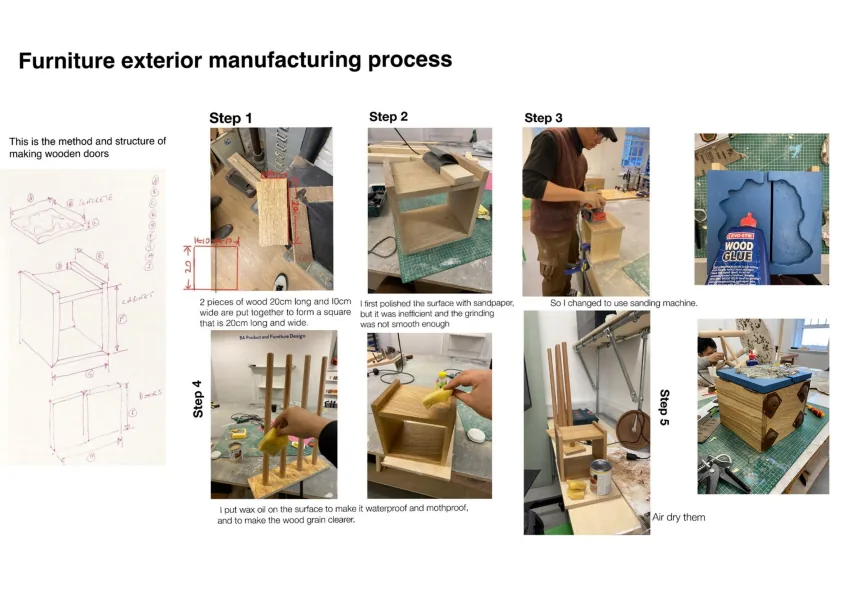
The body was glued and clamped, then sanded. Hand sanding was slow and uneven, so I switched to a sanding machine. Wax oil makes the oak waterproof and mothproof and brings out the grain.
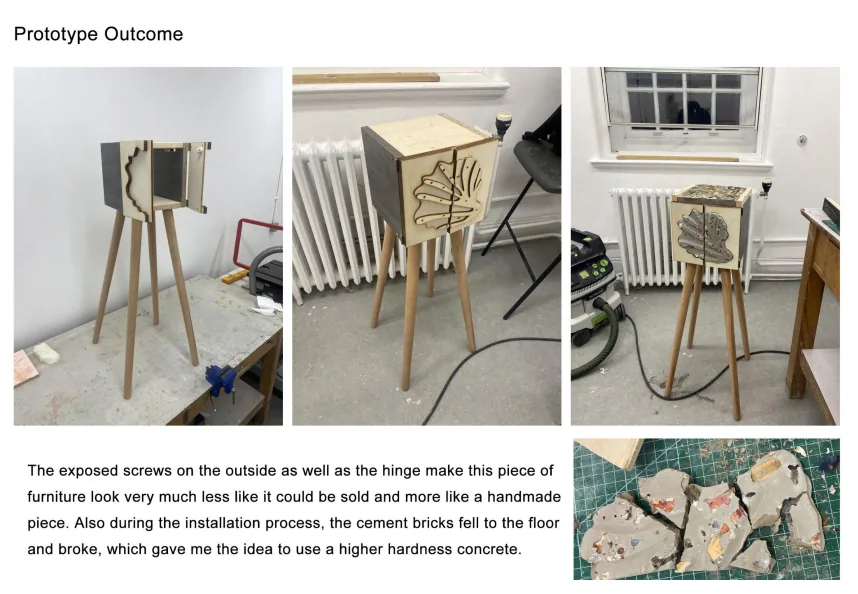
Exposed screws and hinges made the prototype look handmade rather than sellable. During installation a concrete tile fell and broke, so I moved to a harder concrete mix.
I cut the oak into 2.5 cm boards, planed them down, then cut two 20 cm and two 24 cm lengths. The sides are glued into a box, with no screws showing.
In the first test the hinge sat outside the cupboard and looked unfinished. On the final piece I fitted a more ornate, old-fashioned hinge that adds a sense of age.
A push catch looked out of place on a classic cabinet, and pressing it tipped the tall cabinet over. Old cabinets at the furniture market used magnets, so I did too.
The body was glued and clamped, then sanded. Hand sanding was slow and uneven, so I switched to a sanding machine. Wax oil makes the oak waterproof and mothproof and brings out the grain.
Finished piece
My part
Looking back: I started from which binder to use. Starting from the shell's own ridges and texture might have opened more forms. I also proposed returning part of each sale to the vendors who supply the shells, which stayed untested.