Private-sector uniforms
Closest to the existing apparel expertise, with recurring bulk orders and an organisational purchasing decision.
Recommended as the first setting in which to test the service.
07 · Internship · Apparel Genetics, US
A body-data service concept for workplace uniforms.
Developed during a Goldsmiths internship project with Apparel Genetics. I led industry exploration and prioritisation, then contributed to the service blueprint and procurement and factory journeys.
01 The brief
Apparel Genetics, a fit-technology company in Austin, asked how body data might support applications beyond its existing apparel context. Our team explored industry opportunities and proposed an enterprise uniform service.
My starting point
I focused on choosing a useful first application. A persistent body profile could support several products, but its value had to justify the effort of introducing it into an organisation.
Evidence and scope
The proposal draws on the report’s literature-informed research, industry comparison and service modelling. The journeys describe proposed service scenarios. Employee adoption, fit performance and operational improvements were not measured in a live deployment.
02 Choosing a first market · I led this work
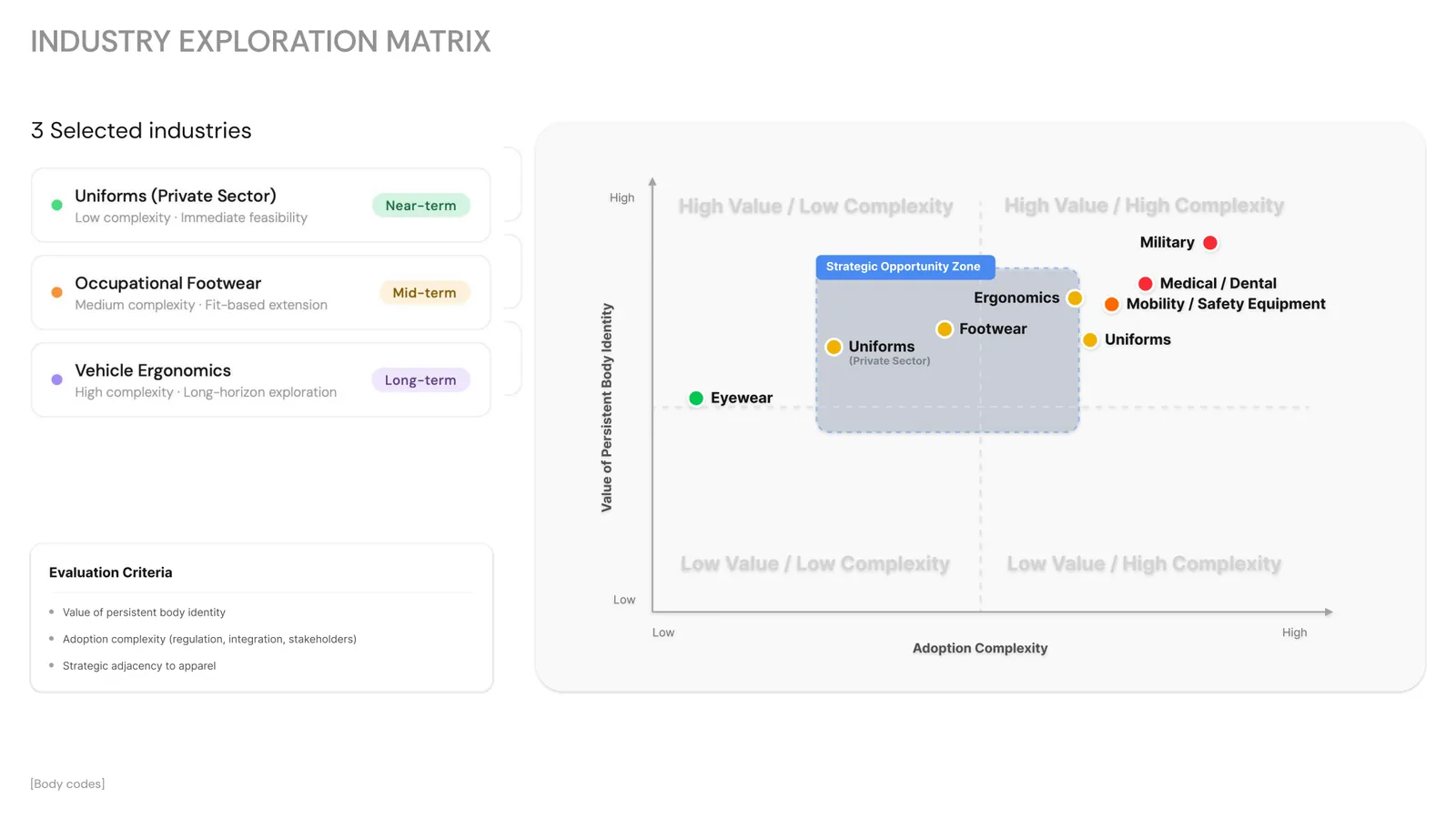
I structured the industry exploration around two questions: how much value could a reusable body profile add, and how difficult would adoption be? That comparison narrowed the field before we developed the service in detail.
We considered eight sectors, including uniforms, footwear, vehicle ergonomics, eyewear, military and medical applications. The matrix compared the value of persistent body identity with adoption complexity, considering regulation, integration and stakeholder coordination.
The shortlist was then compared on feasibility, regulatory intensity, adoption complexity, strategic value and time horizon. These were qualitative judgements for an early recommendation, rather than measured market performance.
Closest to the existing apparel expertise, with recurring bulk orders and an organisational purchasing decision.
Recommended as the first setting in which to test the service.
An adjacent fit problem, with a possible later extension of the profile and matching service.
Additional foot-specific data and supplier requirements would need checking.
Body dimensions could inform seating and workplace comfort.
More integration and coordination made this a longer-term direction.
Eyewear offered less value from a persistent whole-body identity, while military and medical applications brought greater adoption constraints. The recommendation gave the team a narrower brief: design a uniform procurement service first, and treat footwear and ergonomics as later possibilities.
03 Defining the service problem
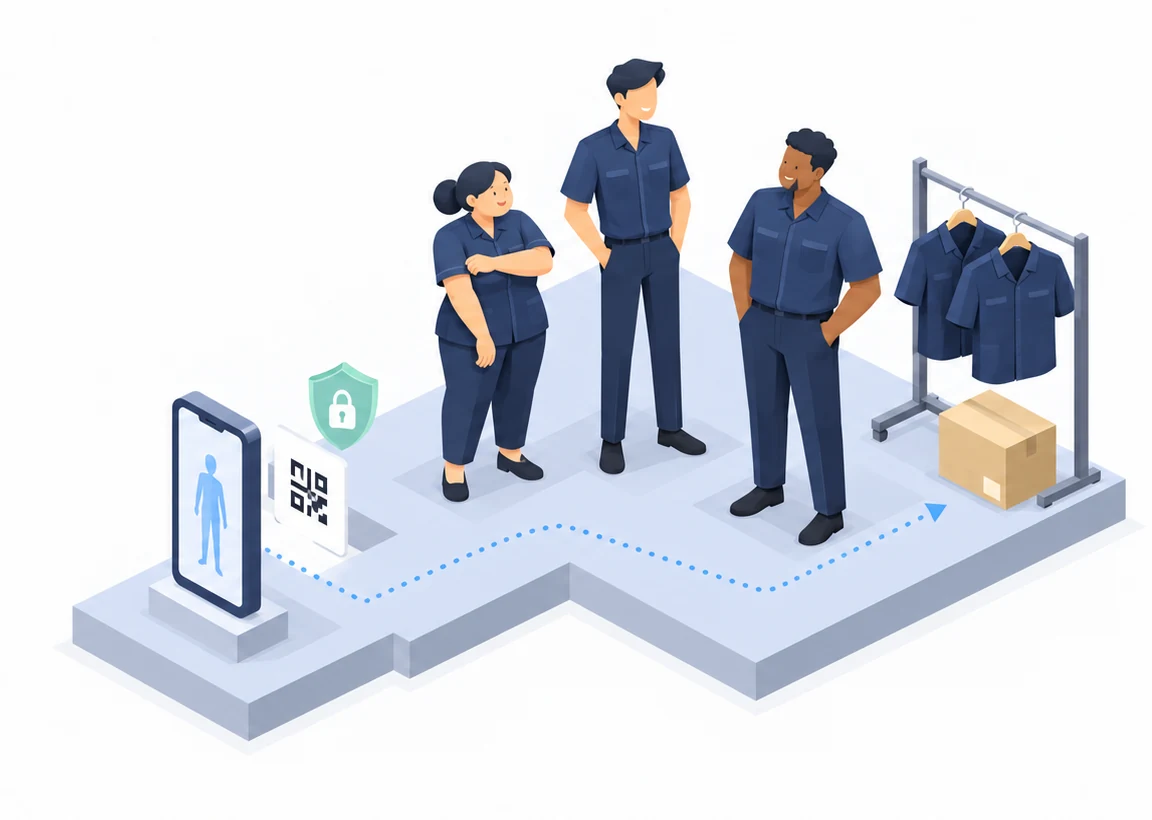
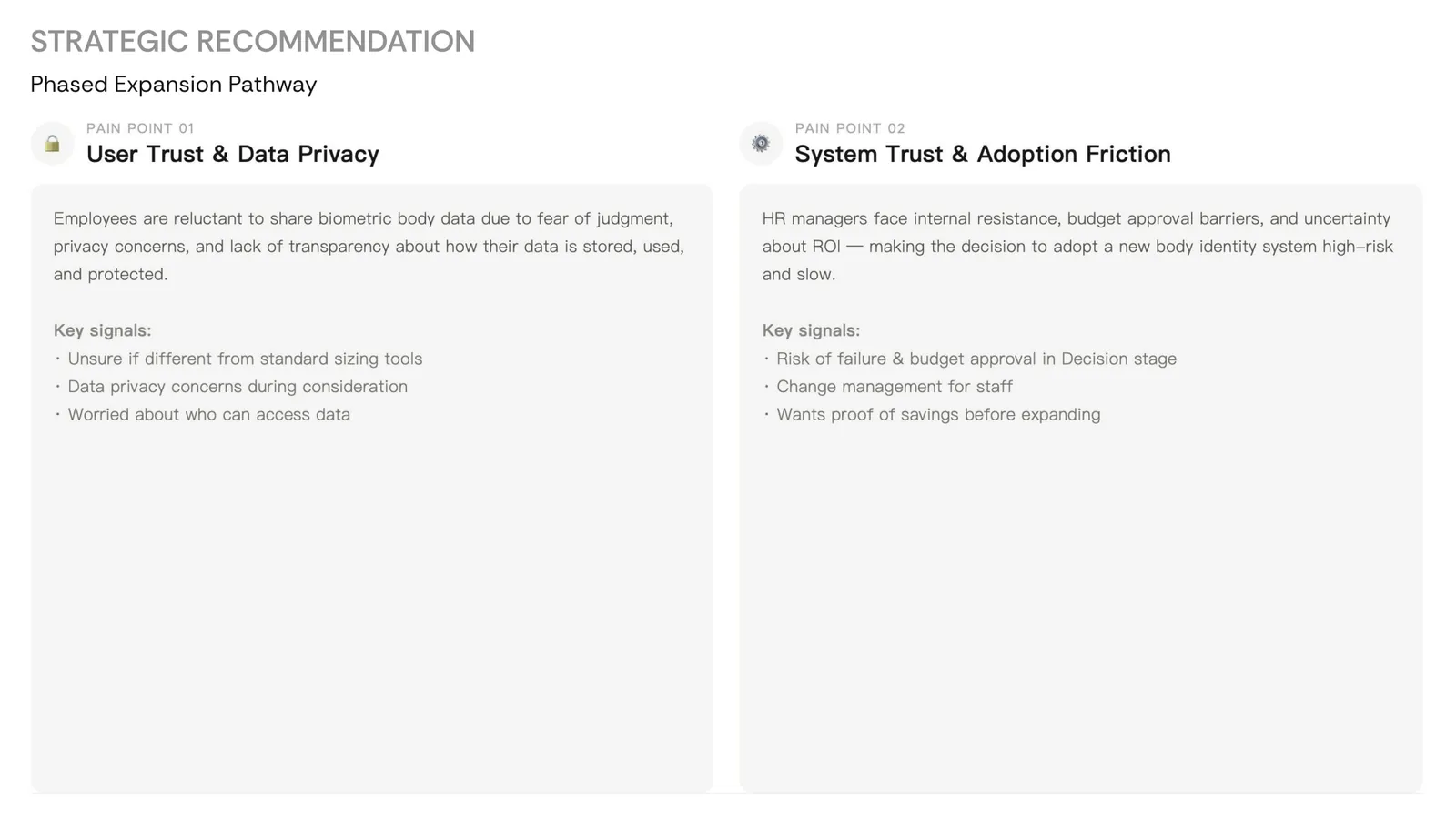
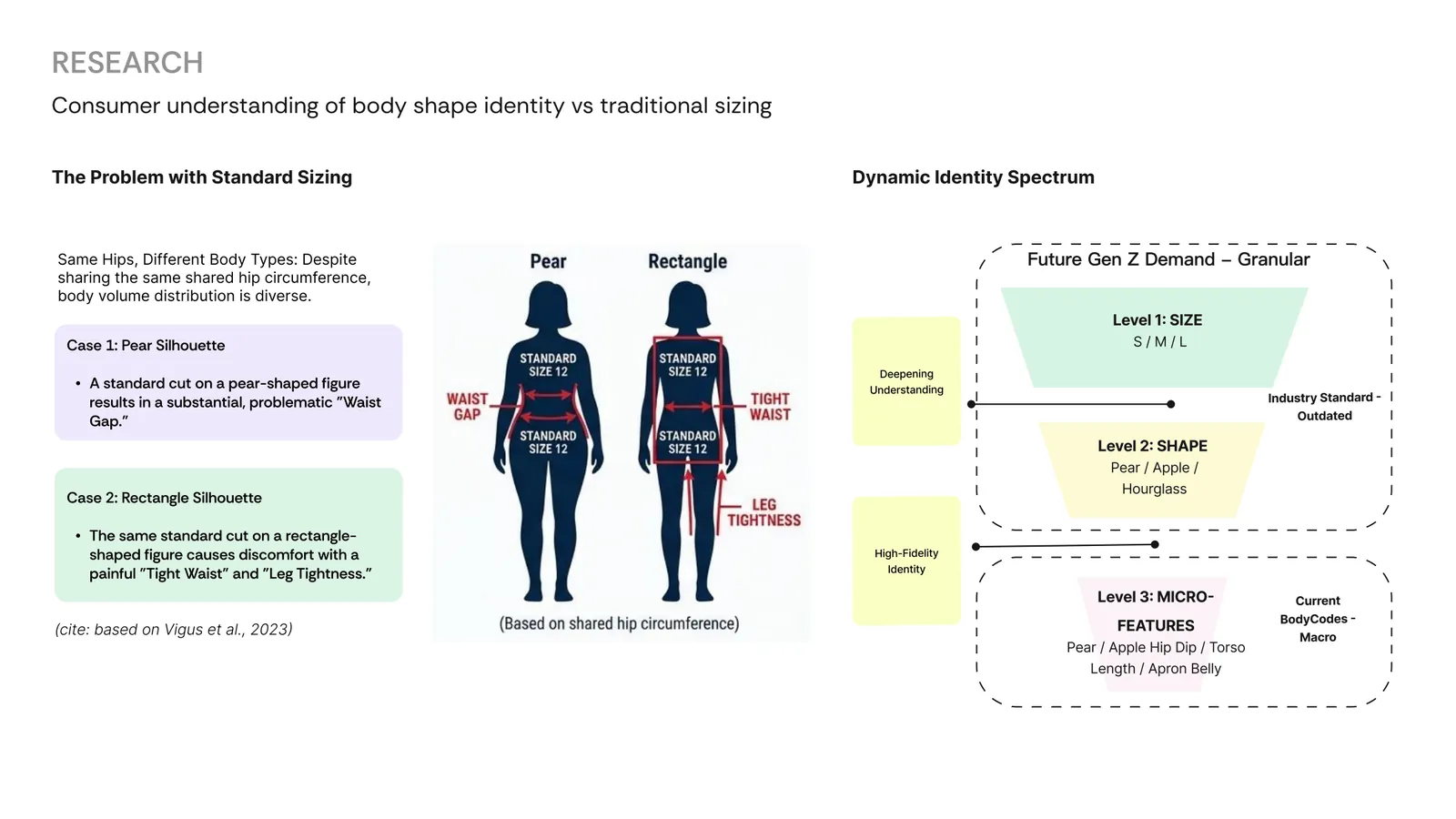
The uniform scenario connected two concerns: coordinating orders across employees and suppliers, and asking employees to disclose body information at work. The service had to address both.
The report identified standard sizing, repeated size checks, returns and manual coordination as problems to address. Its literature review also raised the possibility that body classification can feel evaluative, making the data-collection experience part of the design problem.
This became a service question: how could an employee provide the information needed for matching, while procurement and production receive only what they need to do their jobs?
04 From concerns to service decisions
The team translated the trust concerns into proposed touchpoints and access rules. These are design requirements for the service, rather than implemented guarantees.
| Concern | Service response | Where it appears |
|---|---|---|
| Feeling judged by size labels | Use functional, value-neutral language about fit. | Invitation and profile form |
| Unclear sharing permissions | Explain purpose, recipients and authorisation duration before collection. | Consent and profile review |
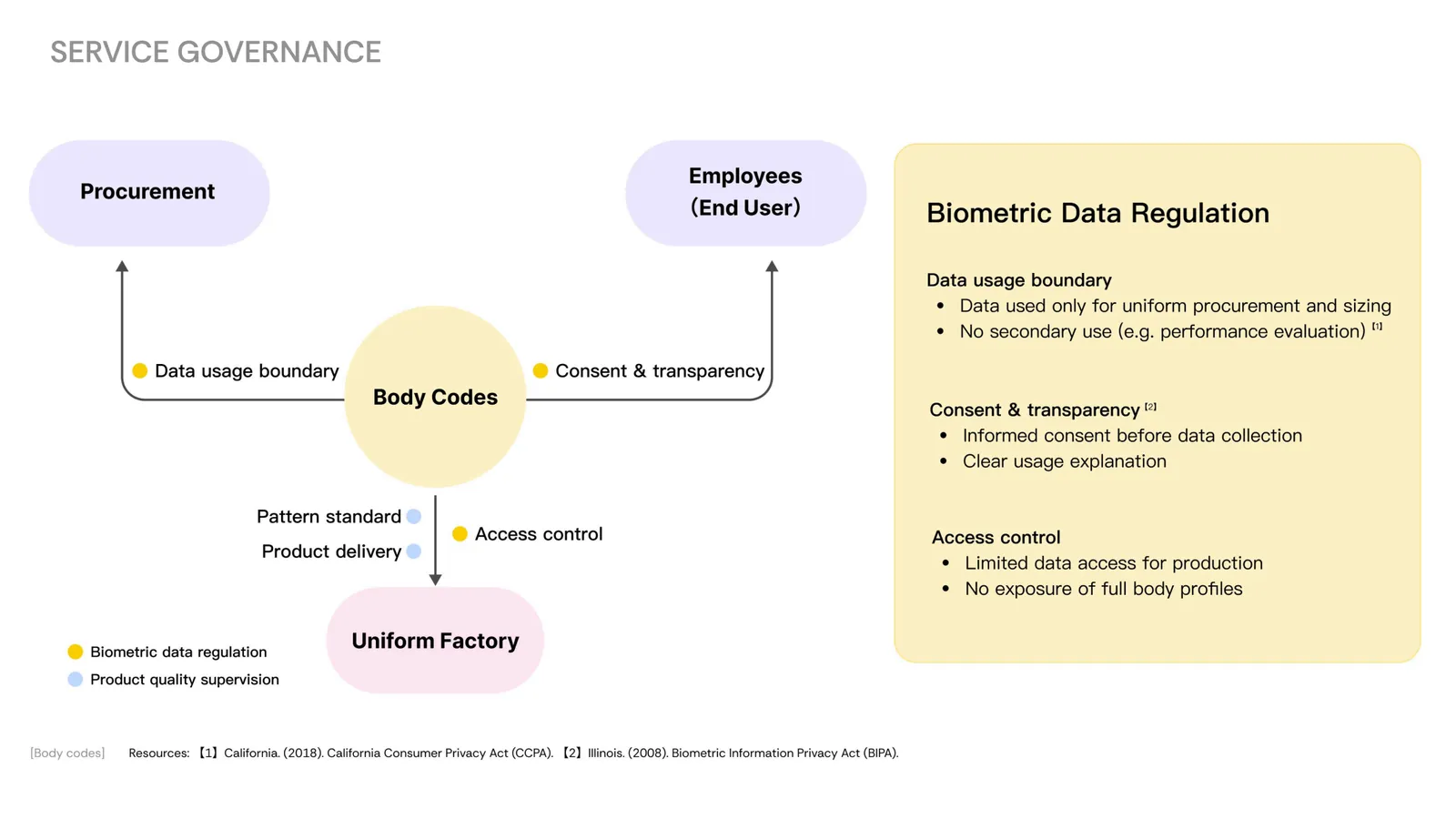
| Employer access to body information | Separate body-profile access from procurement tasks. | HR ordering and order approval |
| Production still needs usable fit information | Share required production specifications, with restricted access to full profiles. | Platform-to-factory handover |
| Losing control after submission | Provide permission review, revocation and deletion controls. | Employee account management |
05 Connecting the service · I contributed to this work
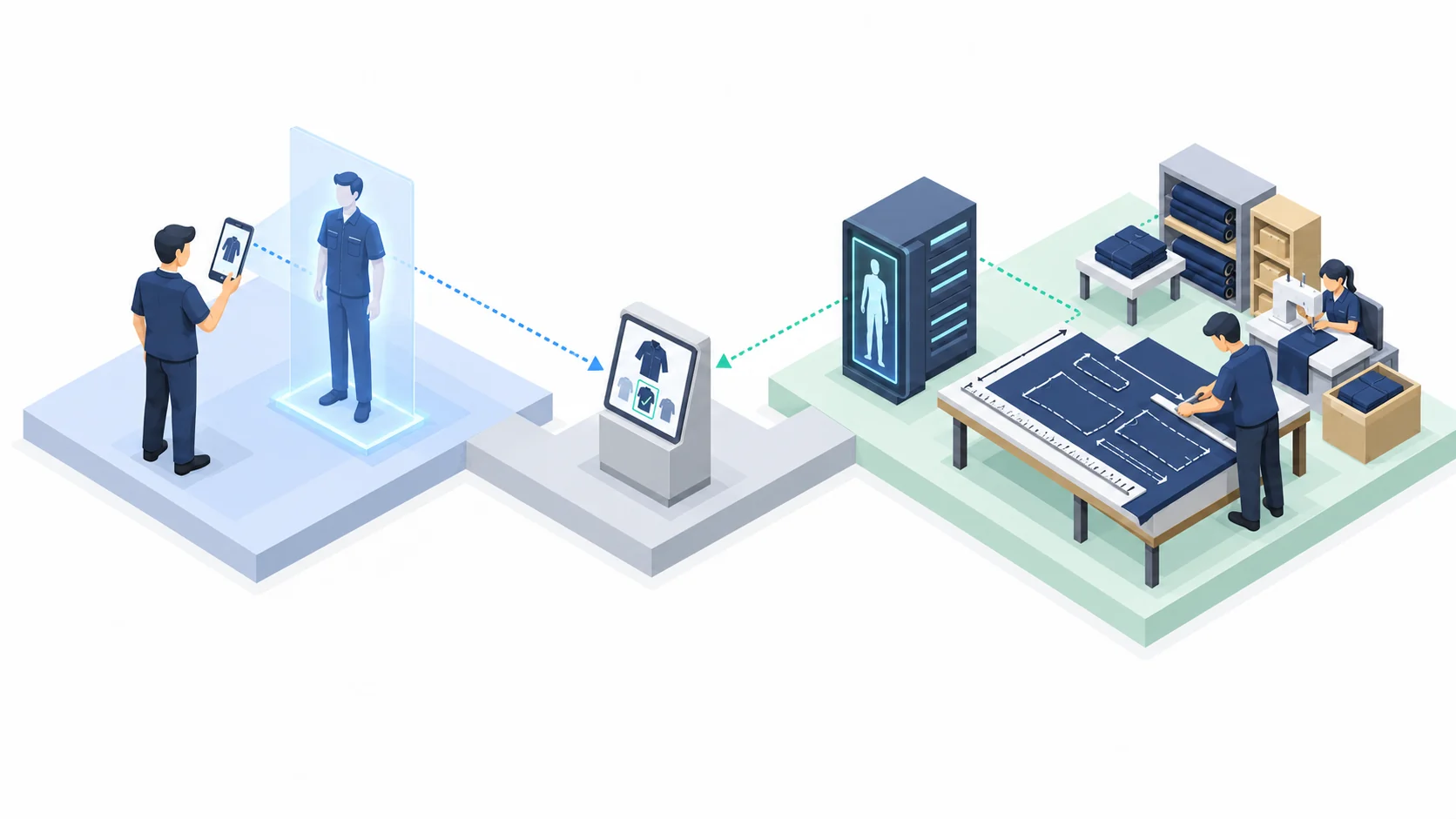
I contributed to the service blueprint and the procurement and factory journeys with my subgroup. The proposed platform coordinates profile collection, matching, ordering and fit feedback, with different information available to each role.
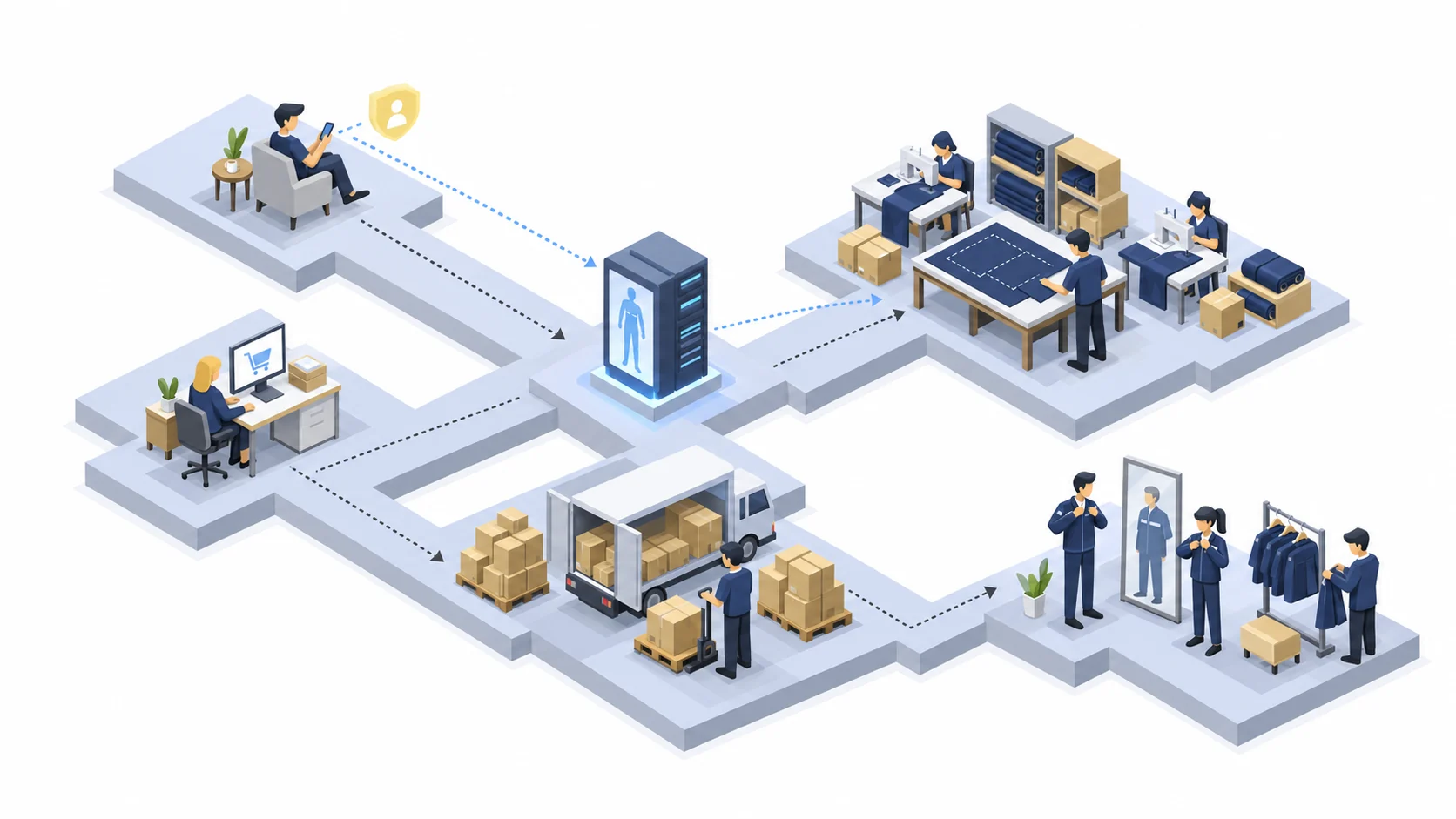
The employee receives an invitation and reviews why body information is requested and who can access it.
The proposed collection combines a questionnaire with photos or scanning and platform processing to generate a BodyCode. Matching accuracy remains to be evaluated.
Procurement handles the enterprise order. The platform supplies the factory with the production information it needs, without granting access to the employee’s complete body profile.
Employees try on the uniform and submit fit or return feedback. The platform connects that feedback to the order and follow-up process.
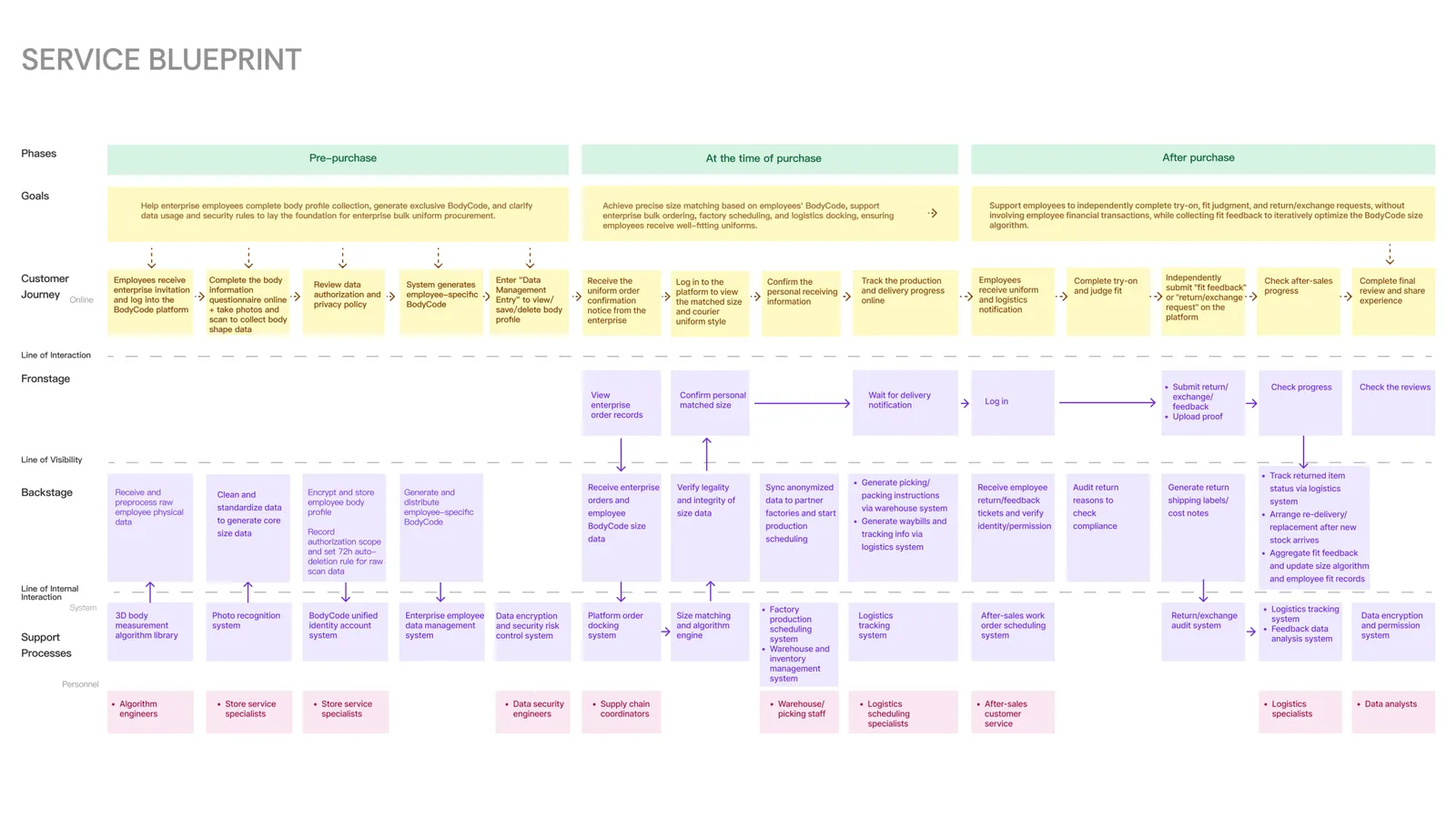
At order approval, procurement needs an order status and purchasing information. The platform handles matching and sends production specifications to the factory. Delivery and fit feedback then return through the same service. The blueprint makes those dependencies visible, so privacy rules and operational responsibilities can be considered together.
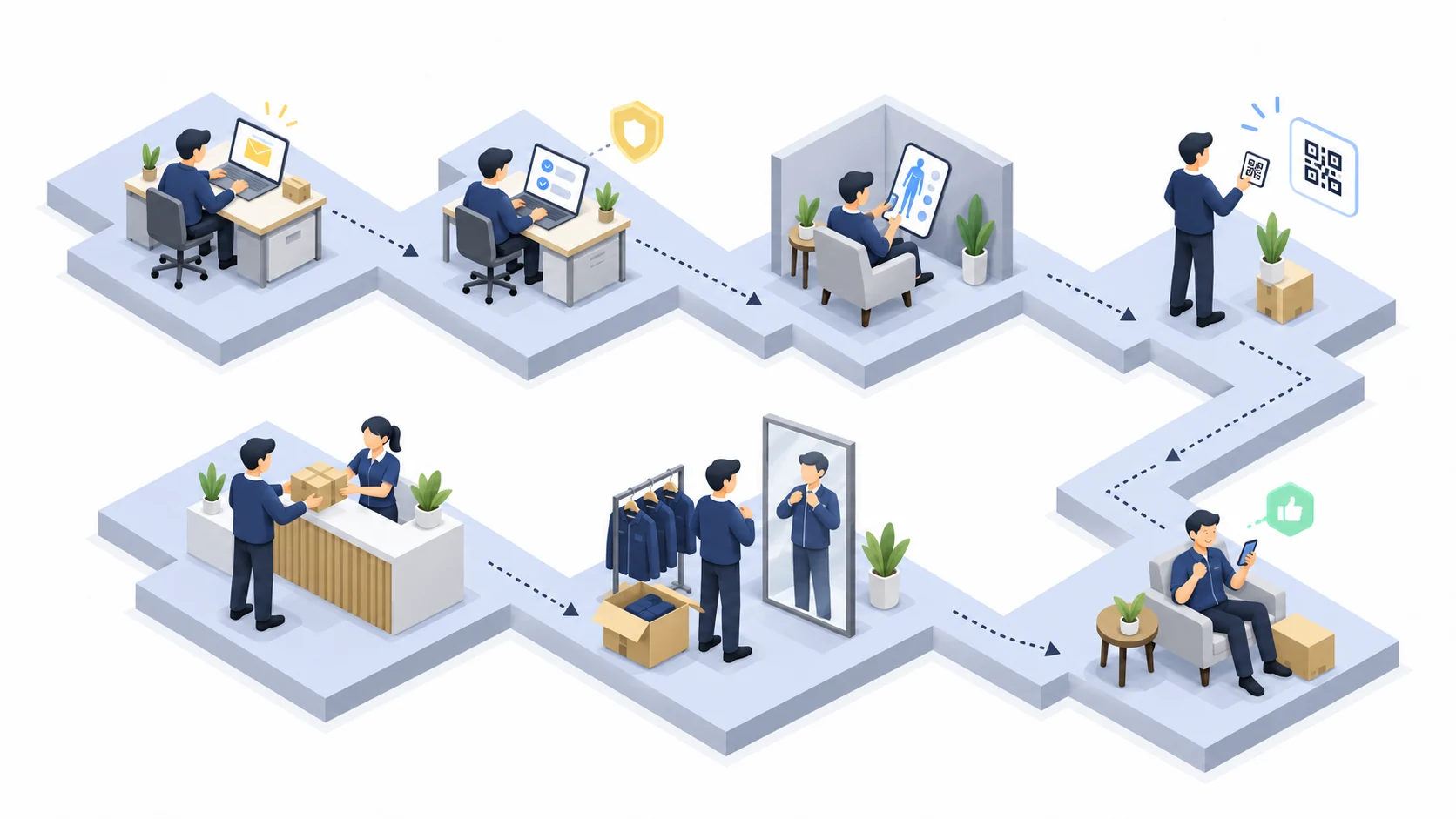
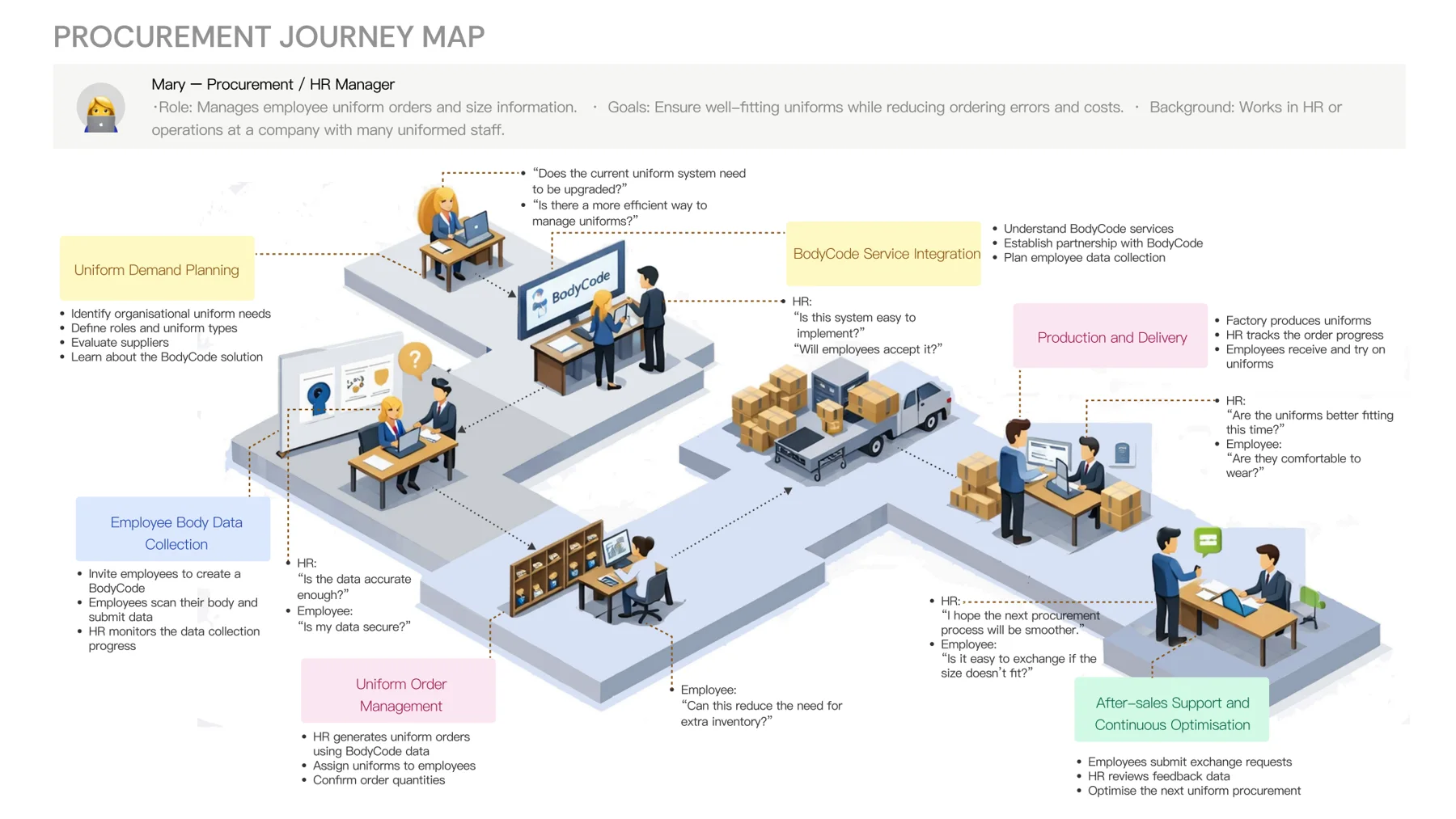
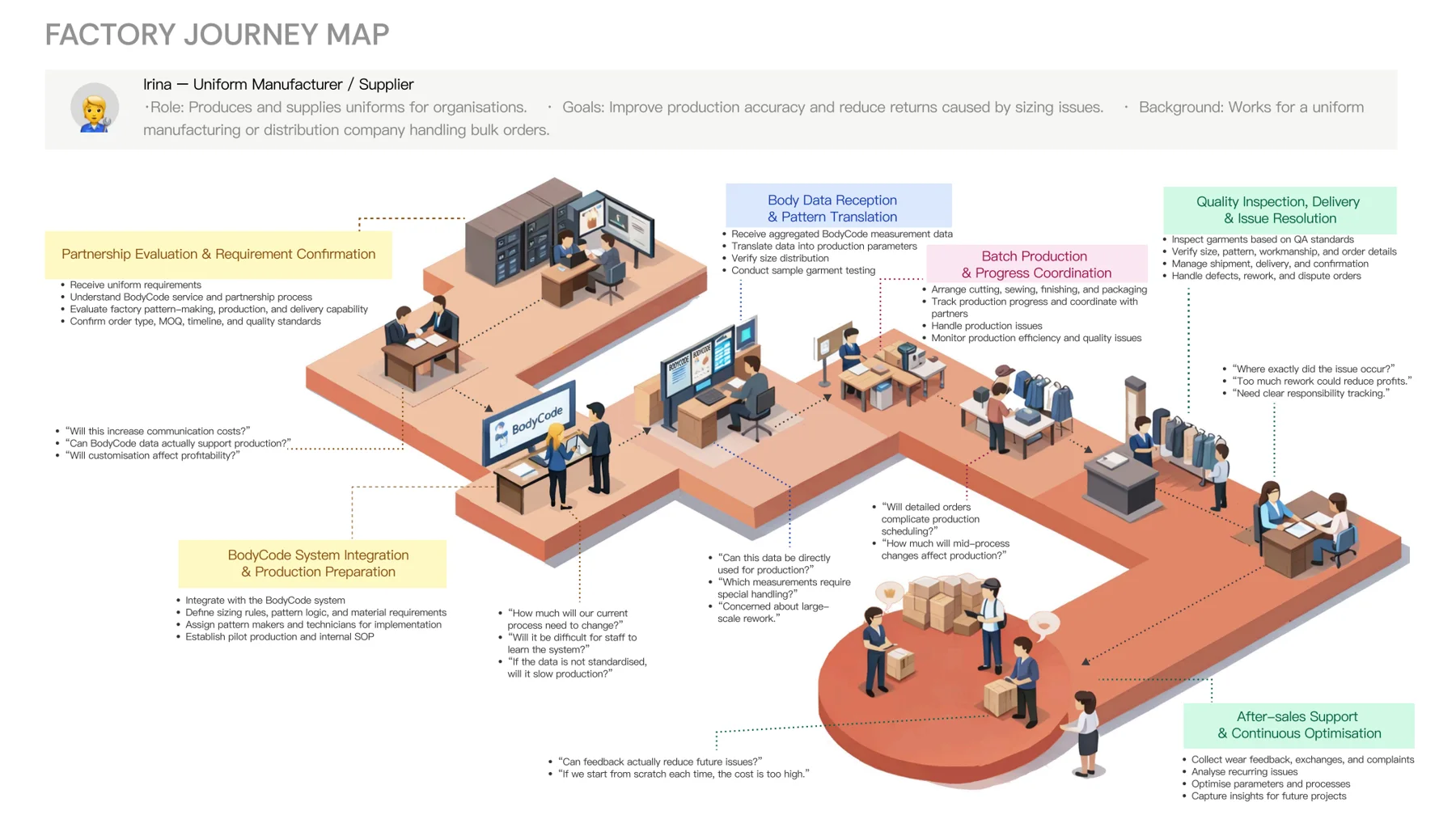
The journey maps describe roles and proposed interactions within the service concept. They are not evidence of a deployed workflow.
06 Deliverables and validation
The project produced a report and presentation covering the industry recommendation, service journeys, blueprint, governance and evaluation plan. These form a proposal for the company, rather than measured evidence of operational impact.
The governance proposal limits use to uniform procurement and sizing, explains consent and restricts access by role. A pilot would need to check that these rules are understood by employees and workable for procurement and production.
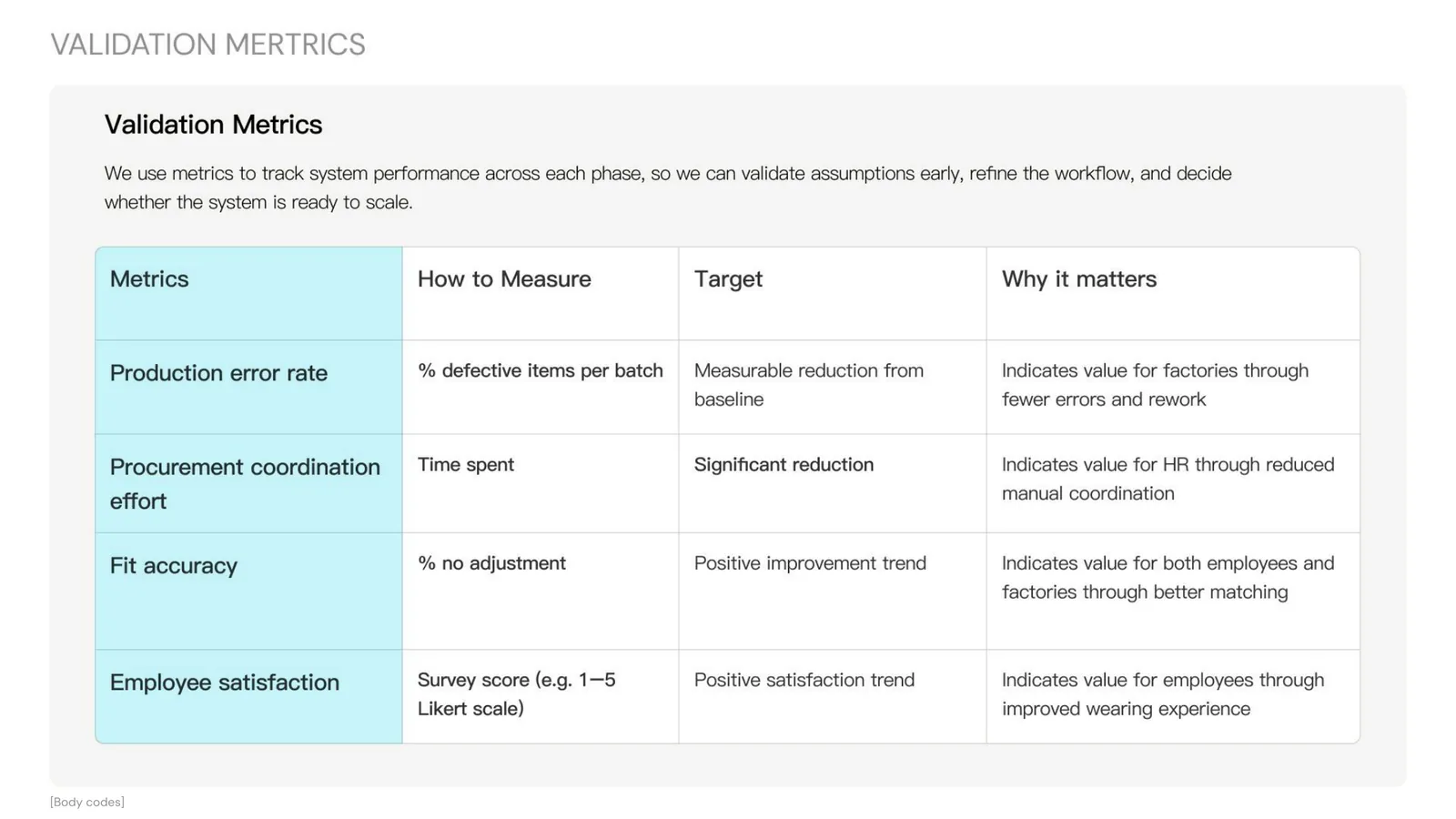
Production error rate, procurement coordination time, fit accuracy and employee satisfaction would provide evidence from different parts of the service. The plan needs baseline measurements and agreed success criteria before a pilot. These measures have not yet been collected.
07 My contribution and reflection
The project involved 14 students in three subgroups. My main contribution was industry exploration and prioritisation, alongside service design work with my subgroup and co-presenting the final proposal.
My next priority would be to test one complete procurement cycle before extending the service. Can employees understand and control sharing? Can the factory use the specifications? Does the delivered uniform fit? The industry framework helped choose where to start; these questions would determine whether that choice holds up in use.
Limitations: this is conceptual service modelling, primarily in a U.S. context. The project did not establish production-level matching performance, implementation costs, employee uptake or measured business improvements.
I also explored a visual try-on concept to help employees preview a uniform. In that proposal, appearance preview and fit matching have separate roles. It remains a future direction, dependent on validating the core service first.