RuiDesign
Download CV ↗

04 · 2023 · Designed for the museum shop

Craft Kit.

A museum stone you can take apart.

A 1:5 resin copy of a carved stone from St John's Priory, cut into twelve magnetic slices. The stone's history is printed on the slices, so you read it while you rebuild it.

Year
2023
Context
BA, UAL Chelsea
Type
Individual project
Output
Souvenir craft kit and packaging
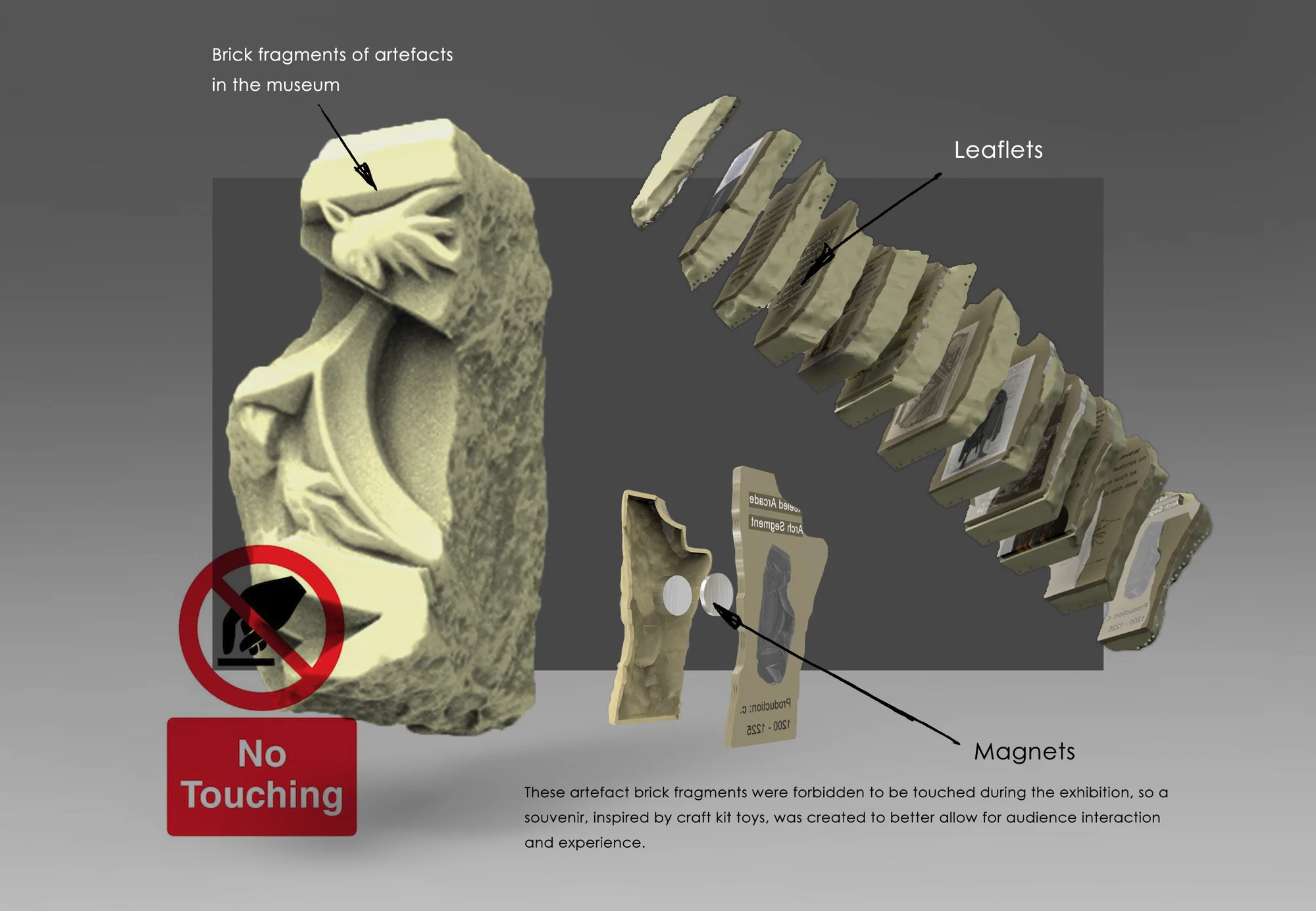
Exploded render of the kit: the stone fragment behind a No Touching sign, its slices fanned out, and the magnets between two slices

01 The kit

A stone in twelve pieces, with its story on them.

I took a carved fragment from the museum, scaled it down to a 1:5 resin copy and cut it into twelve slices. A magnet sits inside each slice, and each face carries text and drawings about the stone and the church it came from.

The rest of this page explains why it is built this way.

From the scanned stone to the kit, about 4 cm tall Click to play again

How to use the kit

02 The original

Why this stone.

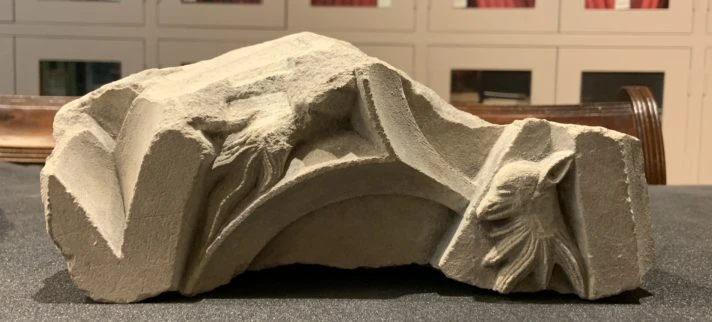
The fragment had no catalogue number. By matching it against numbered stones from the same dig, it is most likely a Keeled Arcade Arch Segment, carved around 1200–1225 for the priory church. Four things about it shaped the design.

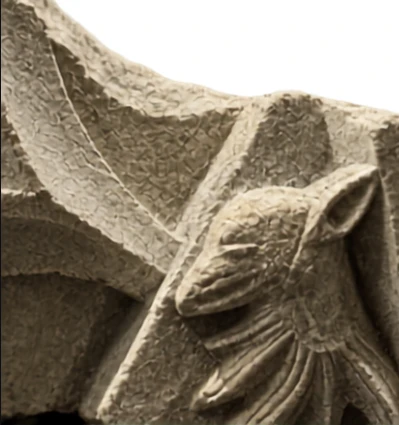
  • CarvingA creature with long, fox-like ears and a bird's beak. I traced it to the Crocotta, a mythical beast also described in 12th-century English books.
  • FormA fairly regular, solid block, so it could be cut into even slices and keep its outline.
  • ColourTraces of red, black and blue paint: a hint of how bright the church once was.
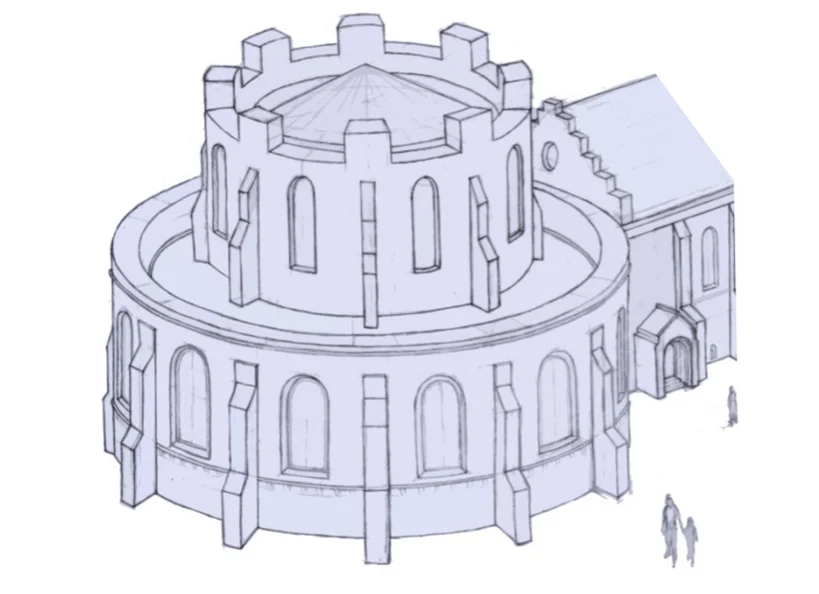
  • BuildingPart of an arch from the priory church, whose round nave was modelled on the Church of the Holy Sepulchre in Jerusalem.
The carved stone fragment on a table in the museum
The fragment in the museum store Click to enlarge
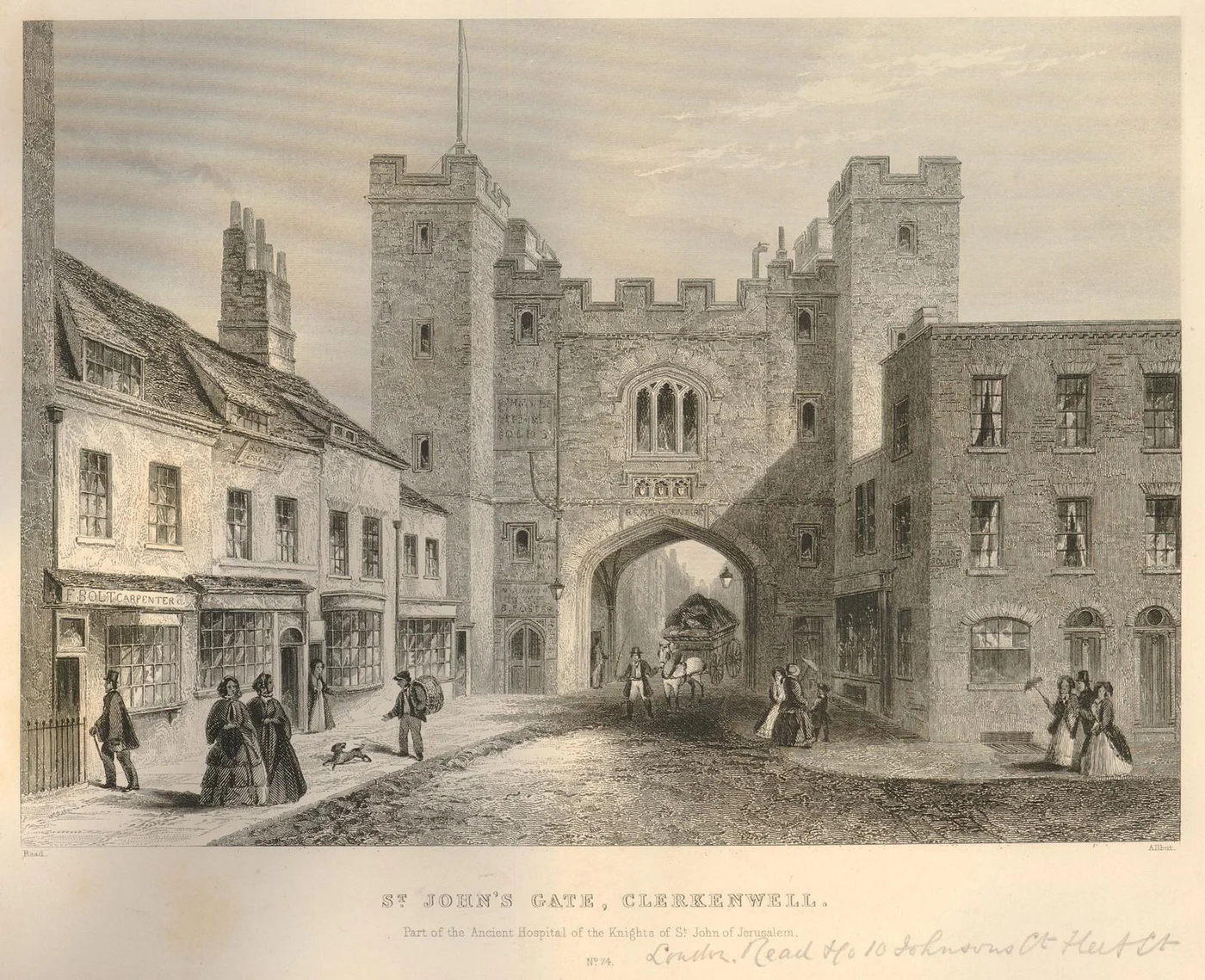
Engraving of St John's Gate, Clerkenwell
St John's Gate, Clerkenwell
Line drawing reconstructing the round priory church
The round church, reconstructed

Tracing the carving

A bird's beak on a fox's head.

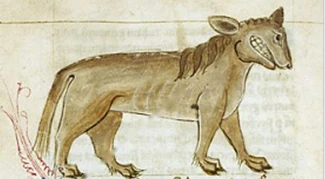
When I asked the museum staff about the stone, they told me it was an unnumbered fragment and no one knew what the creature was. Its carving was the best lead: long, pointed ears like a fox, but a beak like a bird. I searched for "an animal with a bird's beak and pointed ears", and it led to the Crocotta, a beast from medieval bestiaries.

Crocotta

Medieval bestiary drawing of the Crocotta, a dog-like beast with a wide grin
Crocotta, as illustrated in a medieval bestiary

The crocotta or corocotta, crocuta, or leucrocotta is a mythical dog-wolf of India or Aethiopia, linked to the hyena and said to be a deadly enemy of men and dogs.

Ancient accounts

Strabo describes the beast as the mixed progeny of a wolf and a dog. Pliny, in his Natural History, variously described it as a combination between dog and wolf or between hyena and lion.
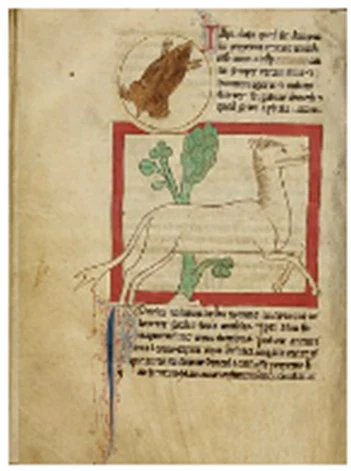
Page of the Northumberland Bestiary showing a crocotta
A crocotta, Northumberland Bestiary, England, c. 1250–1260
Close-up of the carving: the creature's head, ear and feathered body on pitted stone

Up close

What the copy had to keep.

At 1:5, these are the details that make it read as this stone and not just a rock.

  1. The ear. Long and pointed, the first sign it is not an ordinary animal.
  2. The beak. A bird's face on a fox's head, the clue that led to the Crocotta.
  3. The feathered body. Deep, parallel cuts that need to survive slicing.
  4. The keeled moulding. The sharp ridge of the arch, which places the stone in the building.
  5. The surface. Pitted, tooled stone, the texture foam board could not hold.

03 Design decisions

The original must be protected. A copy can be touched.

Visitors stay about 20 minutes, and the biggest group is young people, many of them teenagers. The stone itself cannot leave its case. So the question became how a copy could give them something the glass does not.

Why cut it into slices?

“Fragment” means something broken into parts. The church survives only as fragments, and this stone can be made of fragments too. Slicing turns one object into a sequence you can follow, a little like turning pages.

Why magnets?

I first threaded the slices on a stick. It looked clumsy and the pieces swung loose. A small magnet in each slice holds the stone firmly but lets it come apart again, so it can be rebuilt as often as you like.

What does each slice carry, and when is it read?

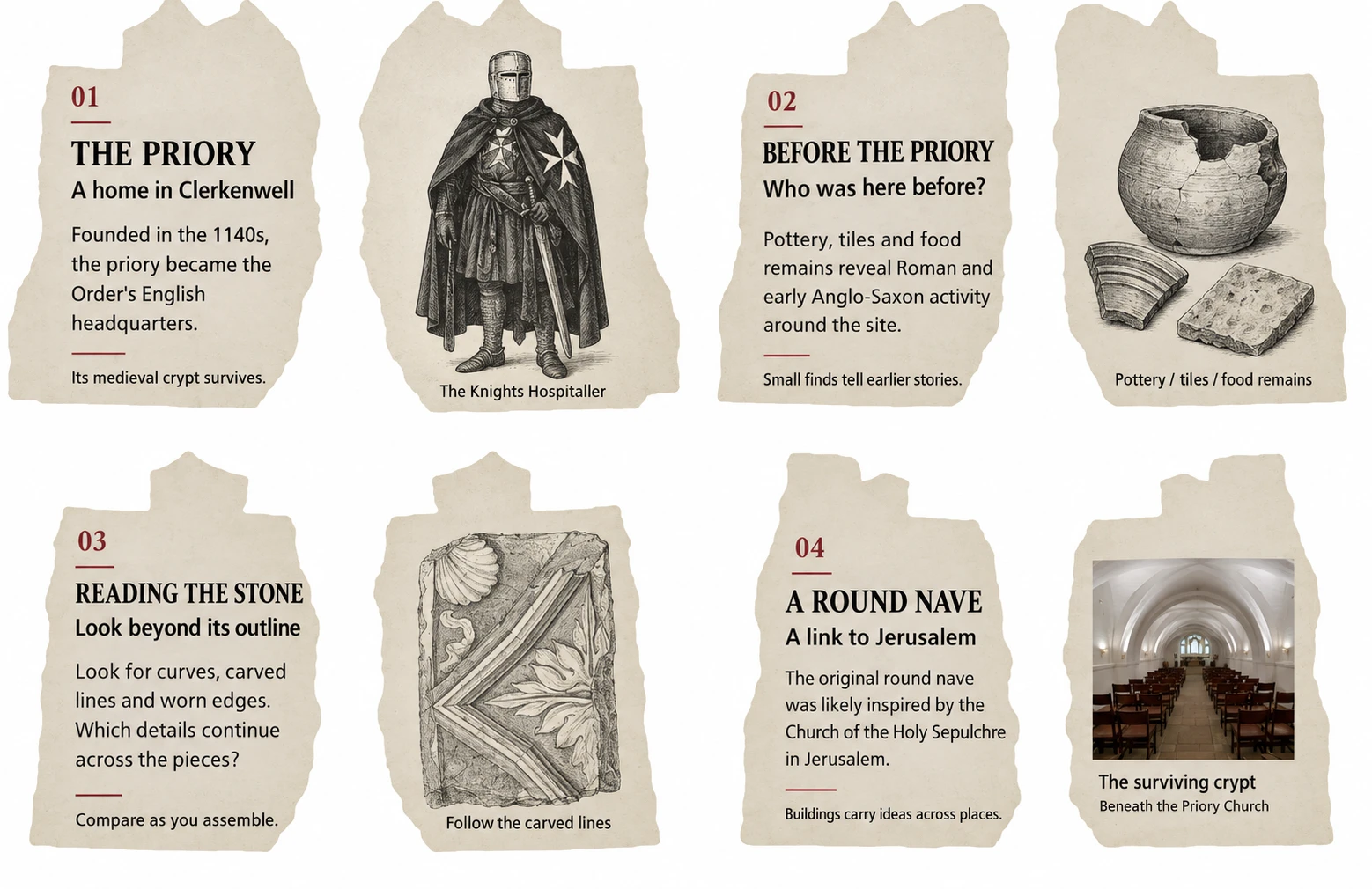
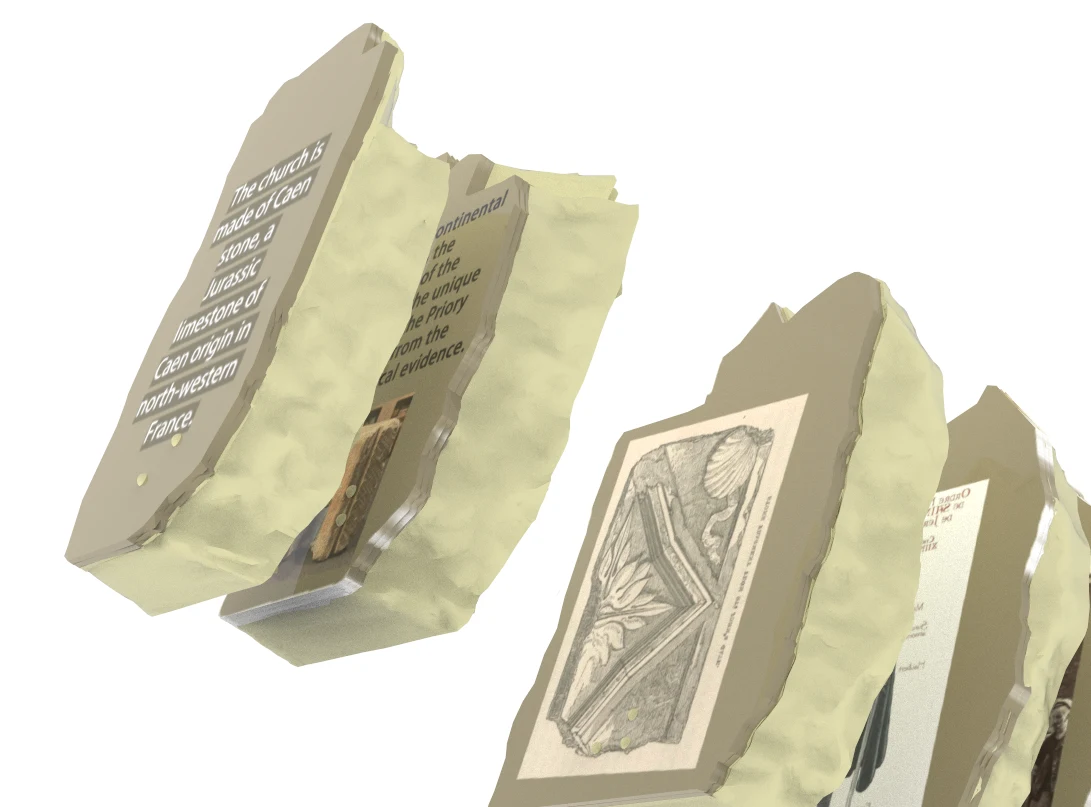
Each slice pairs a short text with a picture: the priory and its knights, who was here before them, how to read the carving, and the round nave that linked the church to Jerusalem. You read a slice while it is in your hand, just before it goes into the stone.

Why on the slices, not on a separate card?

A card is read once and put aside. On the slices, each piece of the story sits on the piece of stone it belongs to, and you cannot finish the stone without passing through the story.

Eight slice faces in four pairs: the priory and a Knight Hospitaller, finds from before the priory, reading the carved stone, and the round nave with the surviving crypt
The slice faces, in story order Click to enlarge

Rebuilding it is how you understand it.

You go from part to whole, slice by slice, the same way this stone is one part of a church that is now gone. By the last slice you hold the full fragment and know where it came from.

04 Making

From scan to resin.

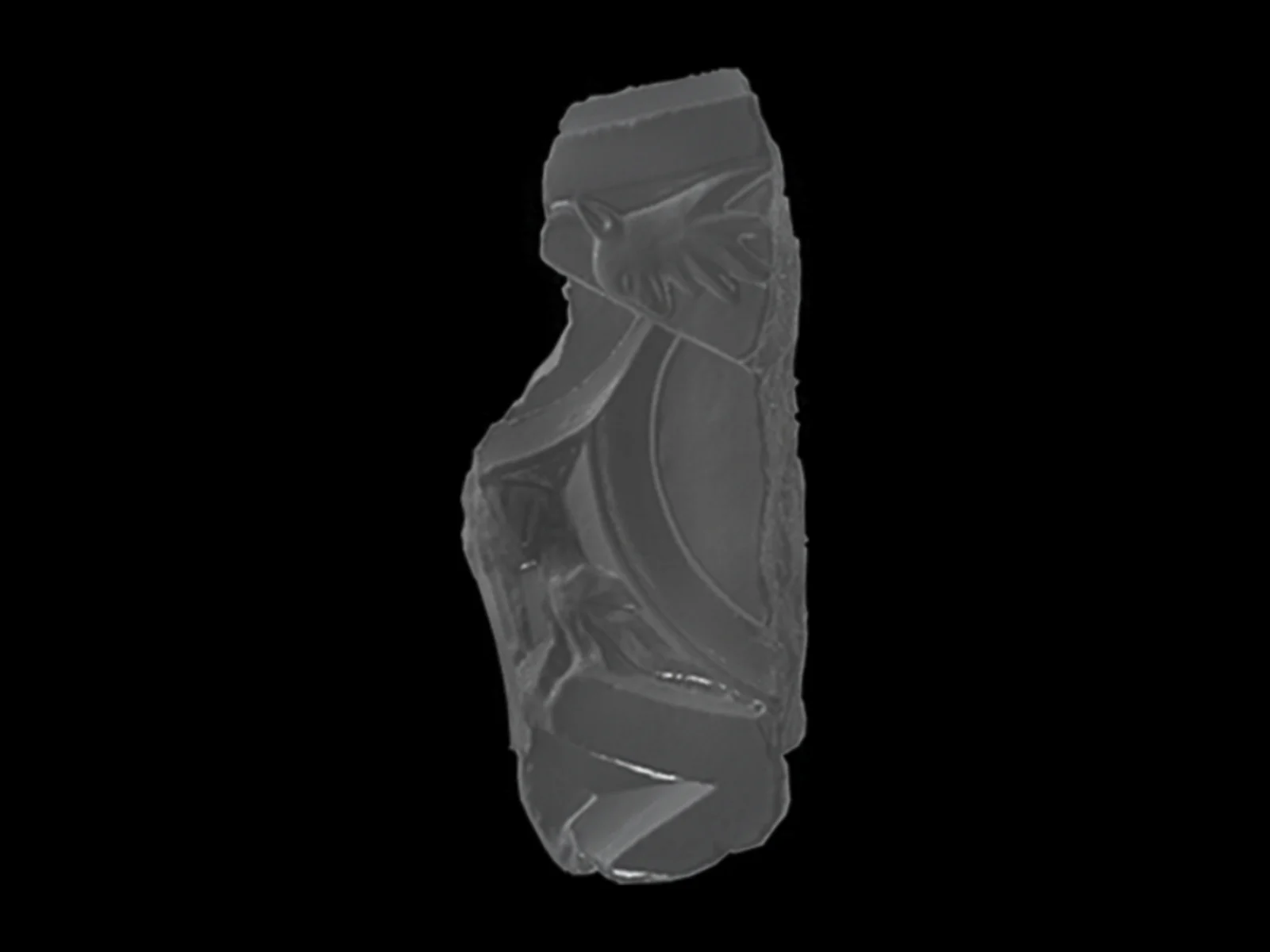
  • Scan3D scanned and rebuilt digitally to keep form, texture and carving.
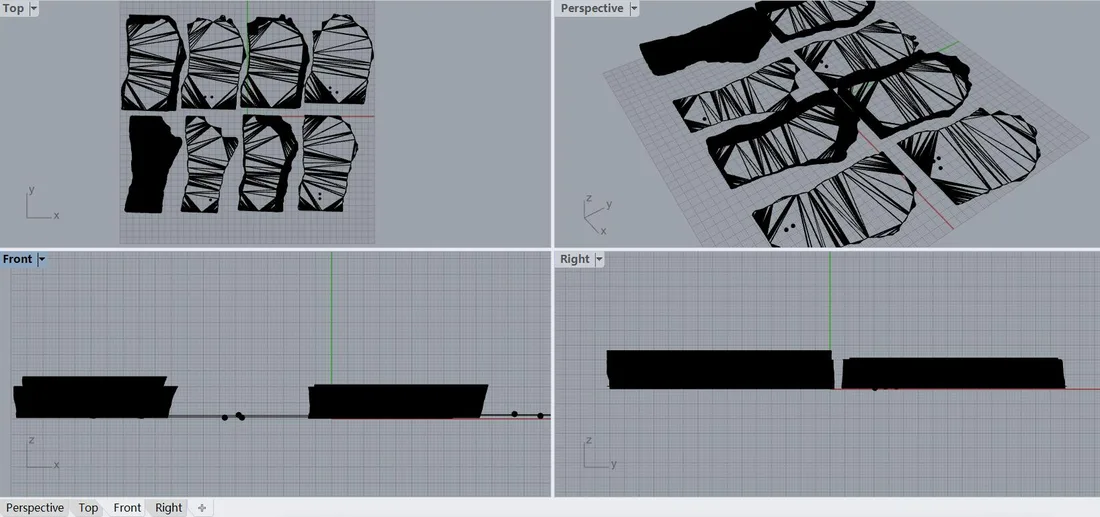
  • SliceCut into twelve equal slices in Rhino.
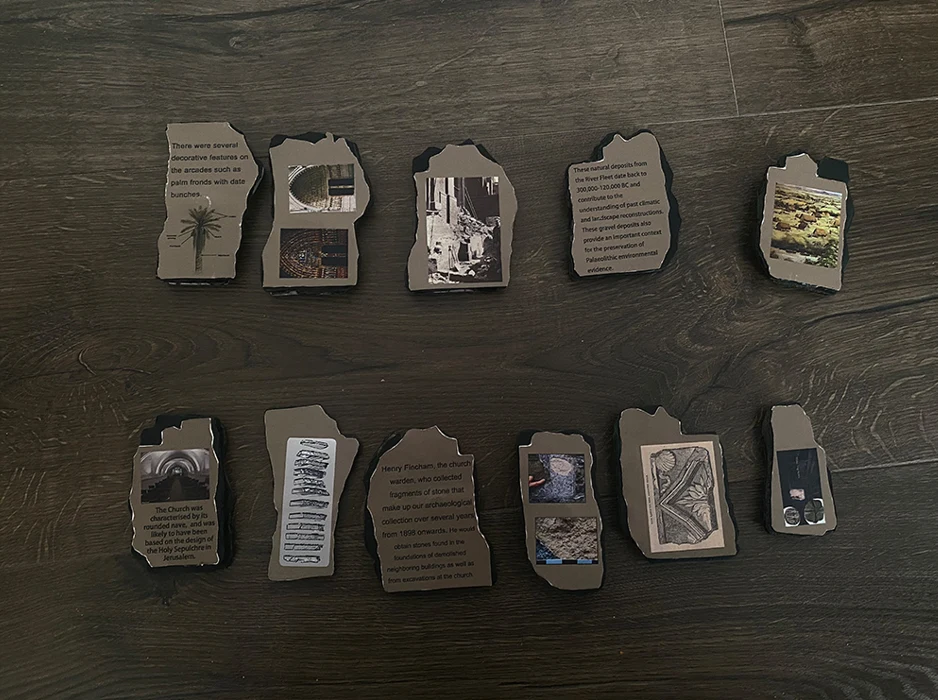
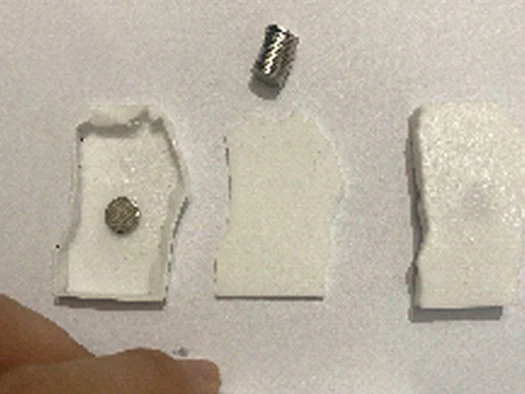
  • Foam boardThe first full set: twelve foam board slices with the story printed on each face. It proved the reading order, but the edges came out flat and the carving was lost.
  • Print testSmall 3D printed slices to check the outline, the fit, and an 18 × 5 mm magnet set into each joining face.
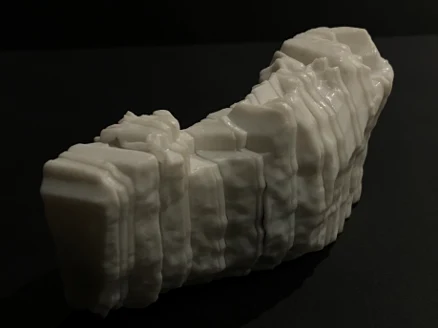
  • ResinThe final 1:5 print in white resin, which holds the carving and the pitted surface, and costs less than plastic.

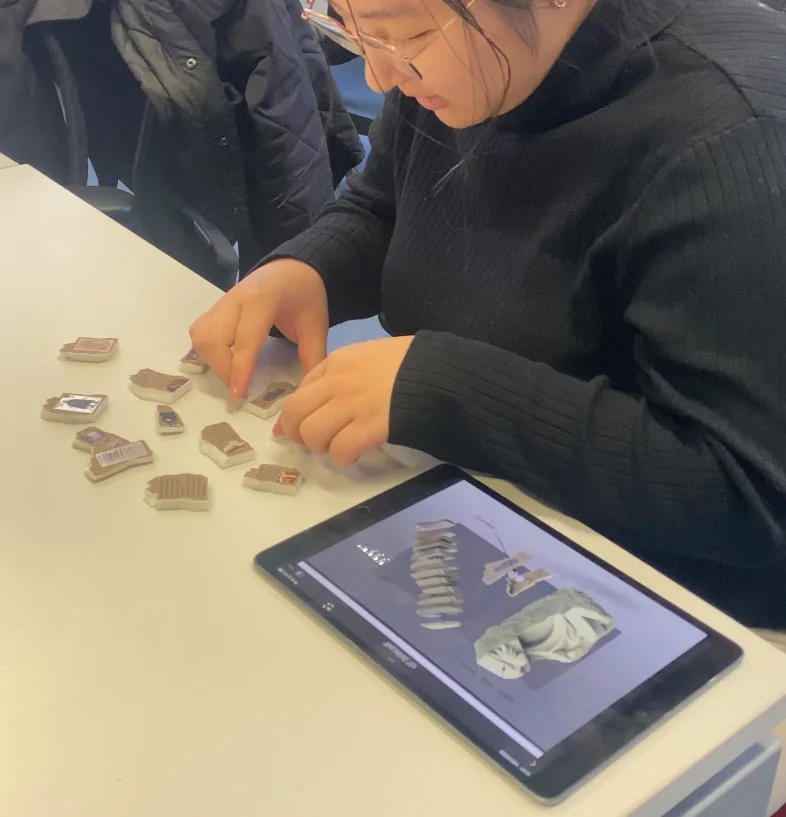
Testing changed the plan. Three students who had never seen it tried to build it alone. Few could finish twelve slices without help, and the text was too small to read. So it moved from a gallery exhibit to a take-home souvenir, with a guide sheet.

Grey 3D scan of the fragment, with the carved creature near the top
3D scan
The fragment sliced into outlines in Rhino
Slicing in Rhino
Twelve foam board slices laid out, each face printed with a short text or picture
Foam board set
White 3D printed test slices, one with a magnet set into its face
Print and magnet test
The assembled white resin print on a black background
Final resin print
A student who had never seen the kit tries to assemble the slices, with the rendering on a tablet beside her
User test

05 Outcome

More than a model.

The souvenir is the stone plus everything that explains it.

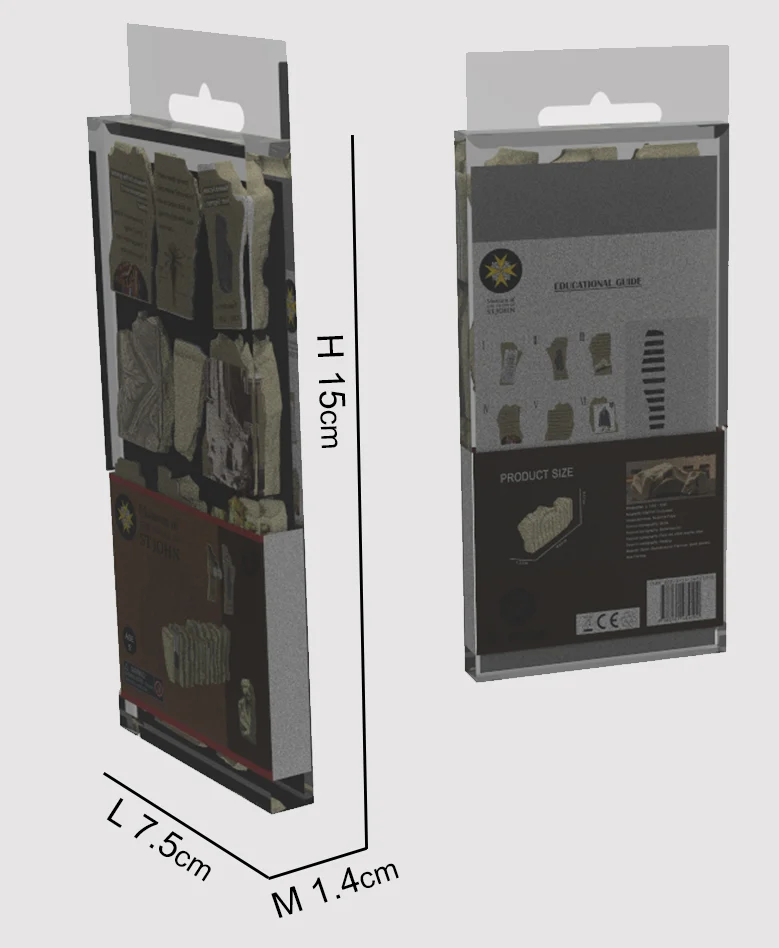
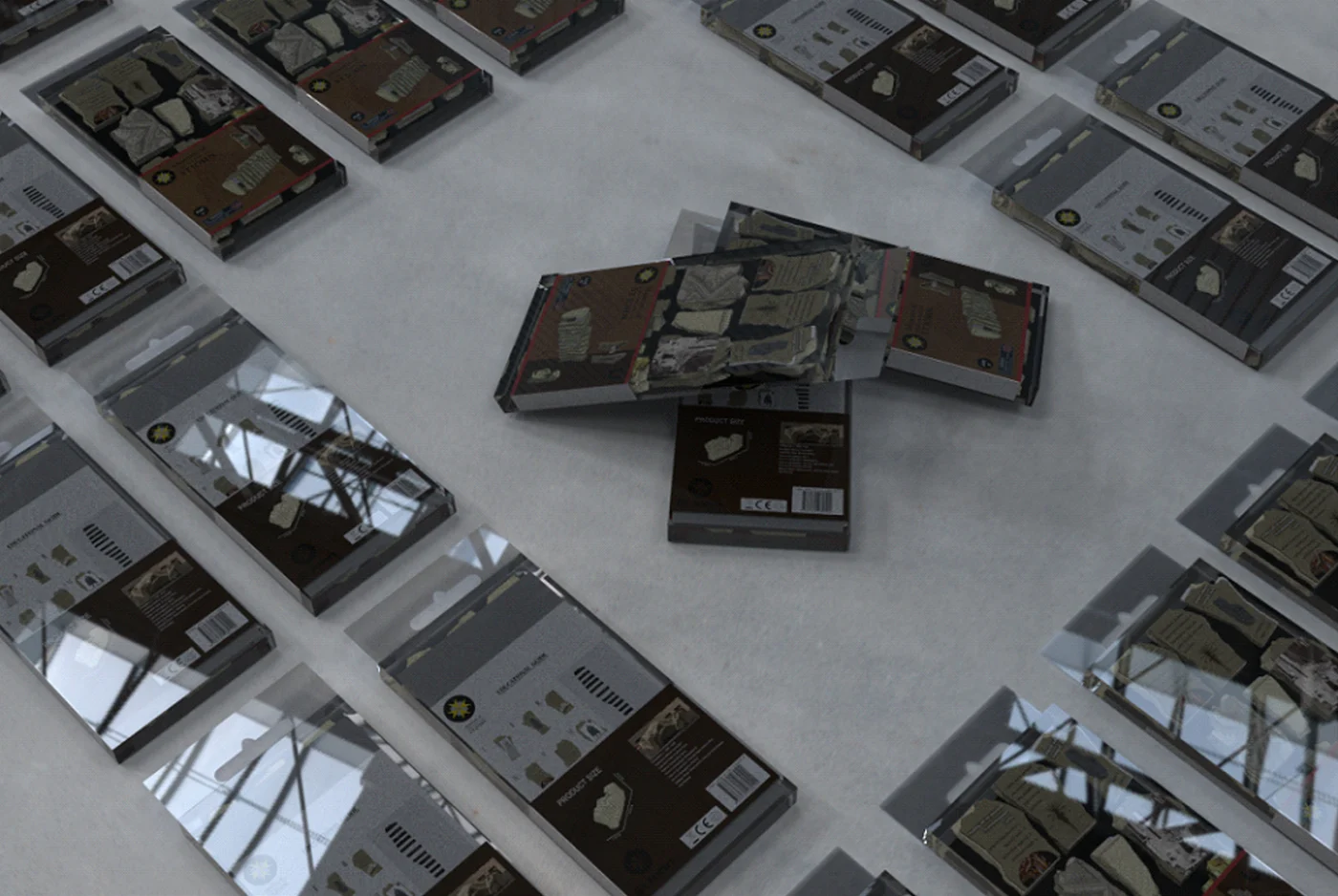
  • Clear box. Under £1 a unit, it shows exactly what is inside, and keeps the kit from looking like a toy.
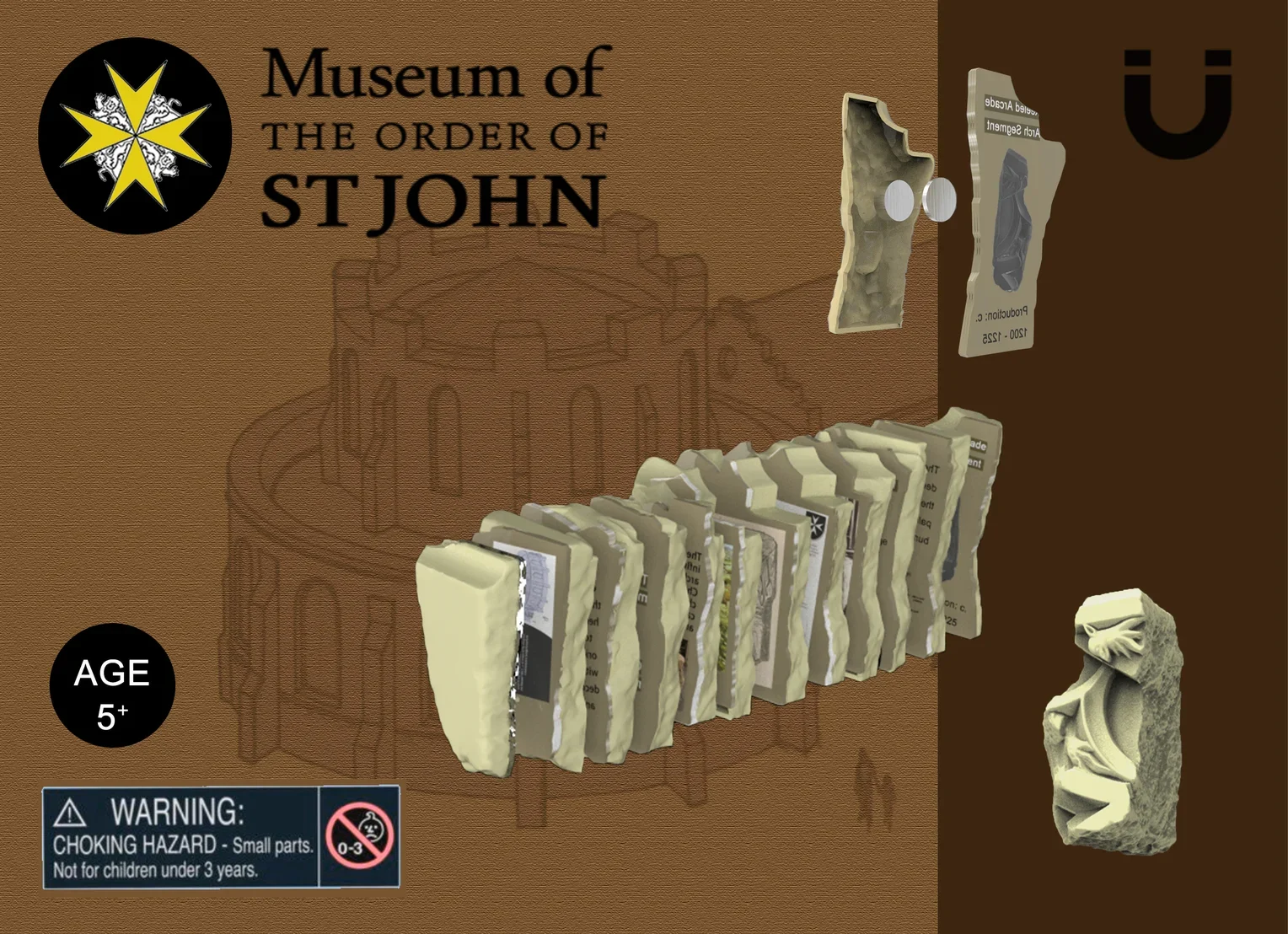
  • Packaging, front. The slices over a drawing of the round church, so the stone reads as part of it, with a magnet symbol, age 5+ and a safety warning.
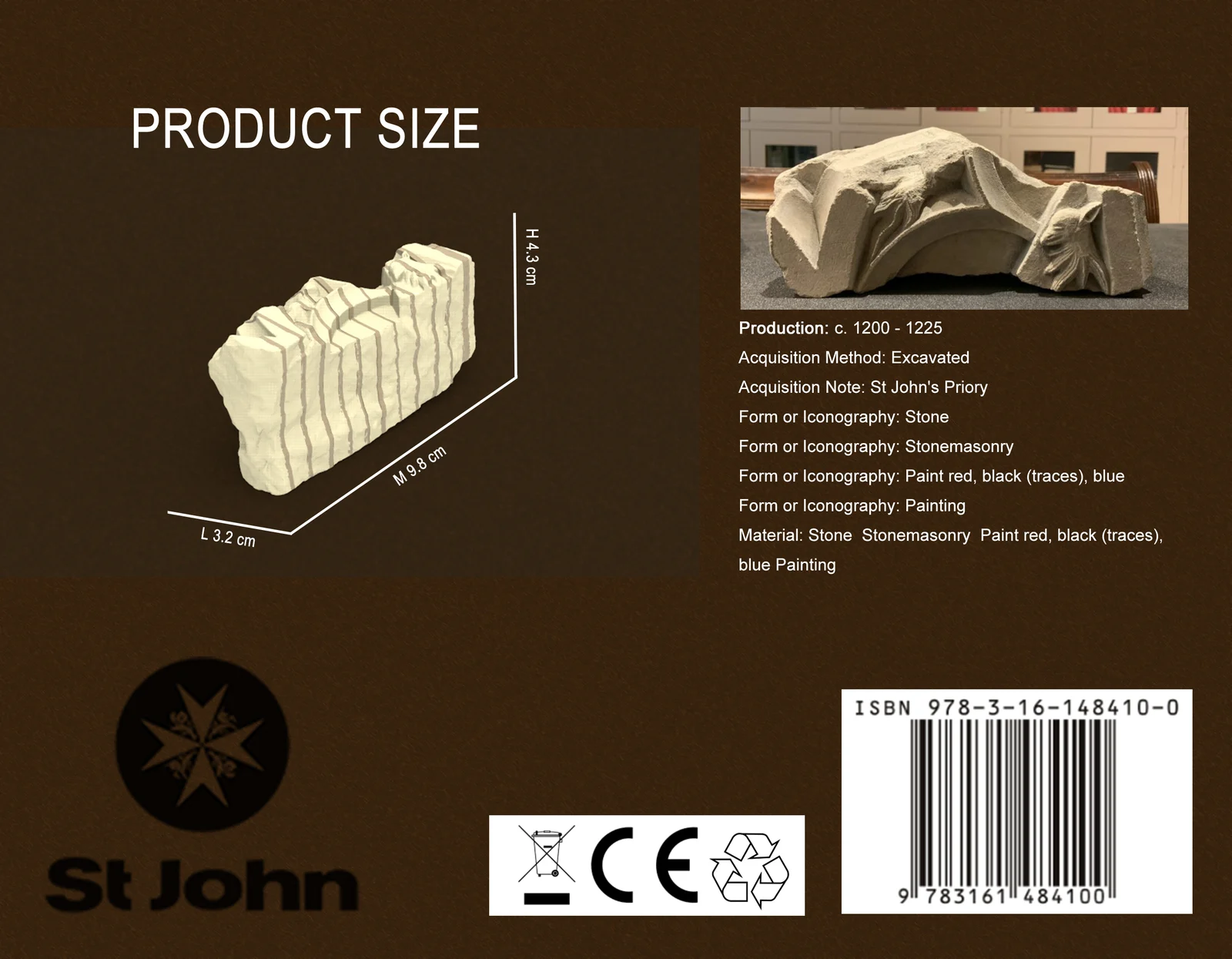
  • Packaging, back. The model's size, a photo and record of the real fragment, CE marks and barcode.
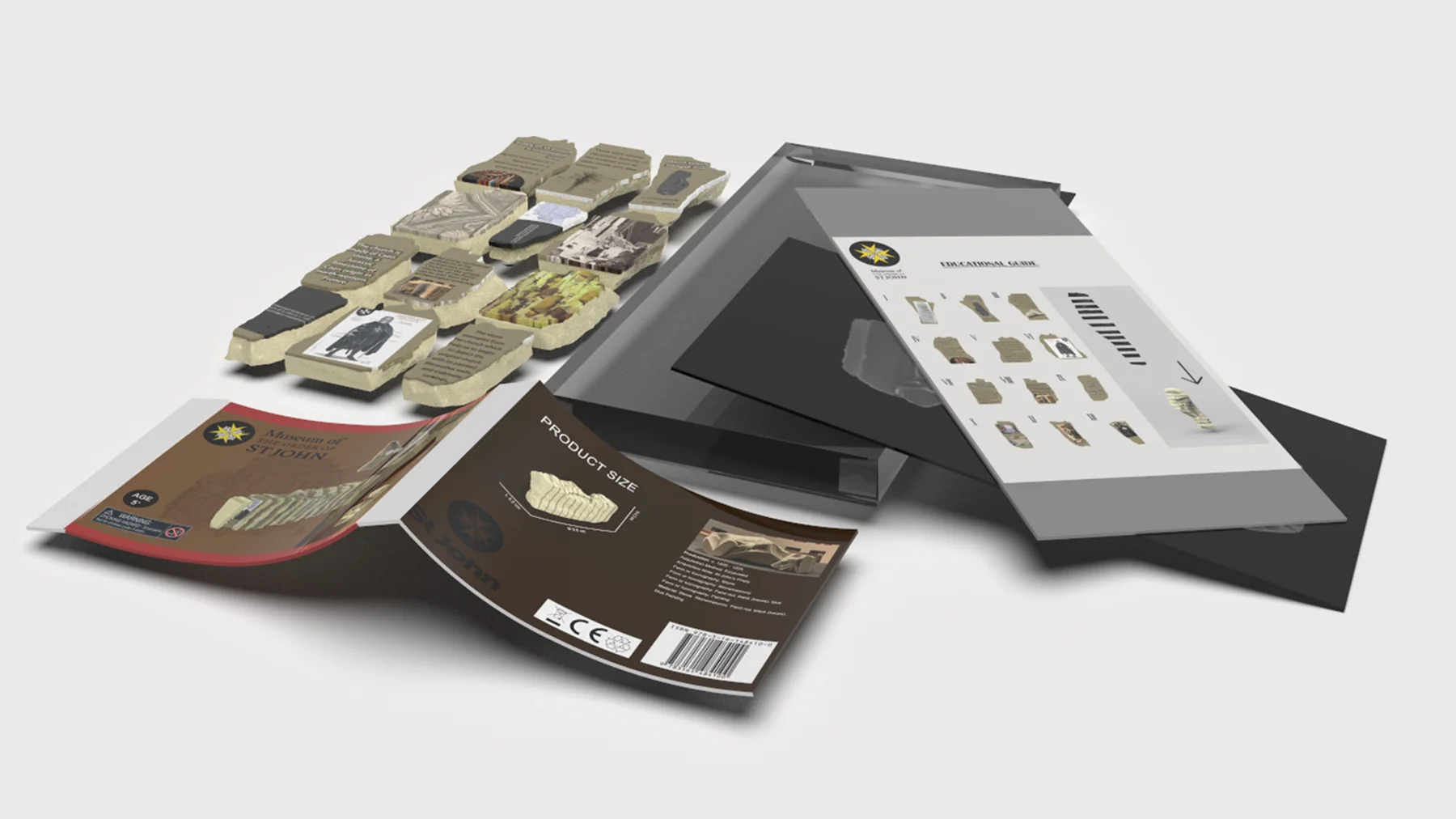
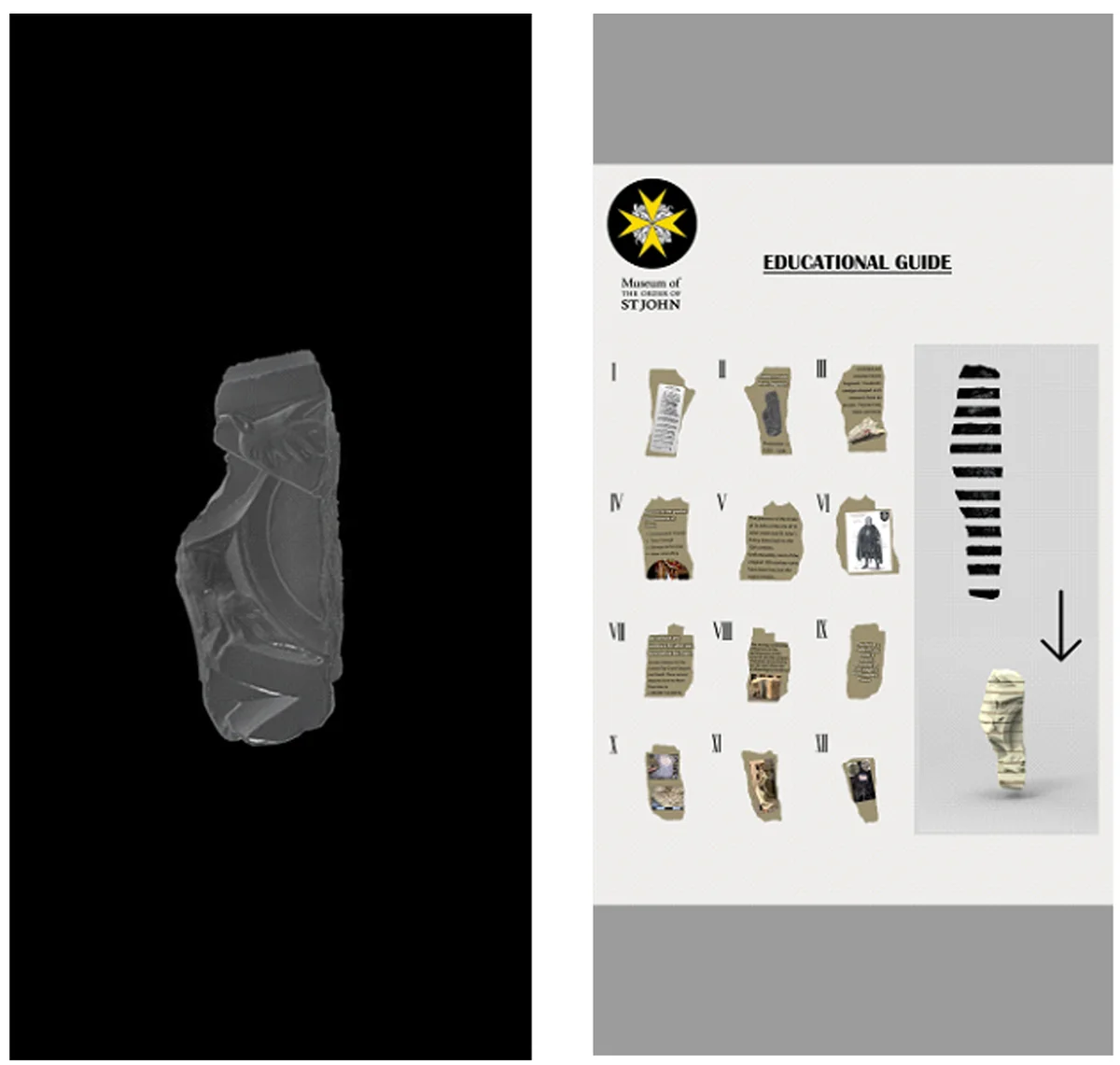
  • Guide sheet. The front is a black liner cut to the shape of the real stone, so the slices sit in its outline. The back numbers the slices I to XII, laid out from what testers struggled with when they had no instructions.

As a souvenir it keeps the museum in the visitor's home, and in a museum with free entry it also brings in income.

The kit laid out: printed slices, sleeve and box with the guide sheet
The kit Click to enlarge
The hanging retail pack, front and back, 15 cm high, 7.5 cm wide and 1.4 cm deep
The hanging pack, 15 × 7.5 × 1.4 cm
Close-up render of slices: one printed with text about the Caen stone, one with an engraving of the carved arch
Slices, close up
Packaging front: museum logo, the slices over a drawing of the round church, a magnet symbol, age 5+ and a choking hazard warning
Packaging, front
Packaging back: product size 9.8 × 3.2 × 4.3 cm, a photo and record of the real fragment, CE marks and barcode
Packaging, back
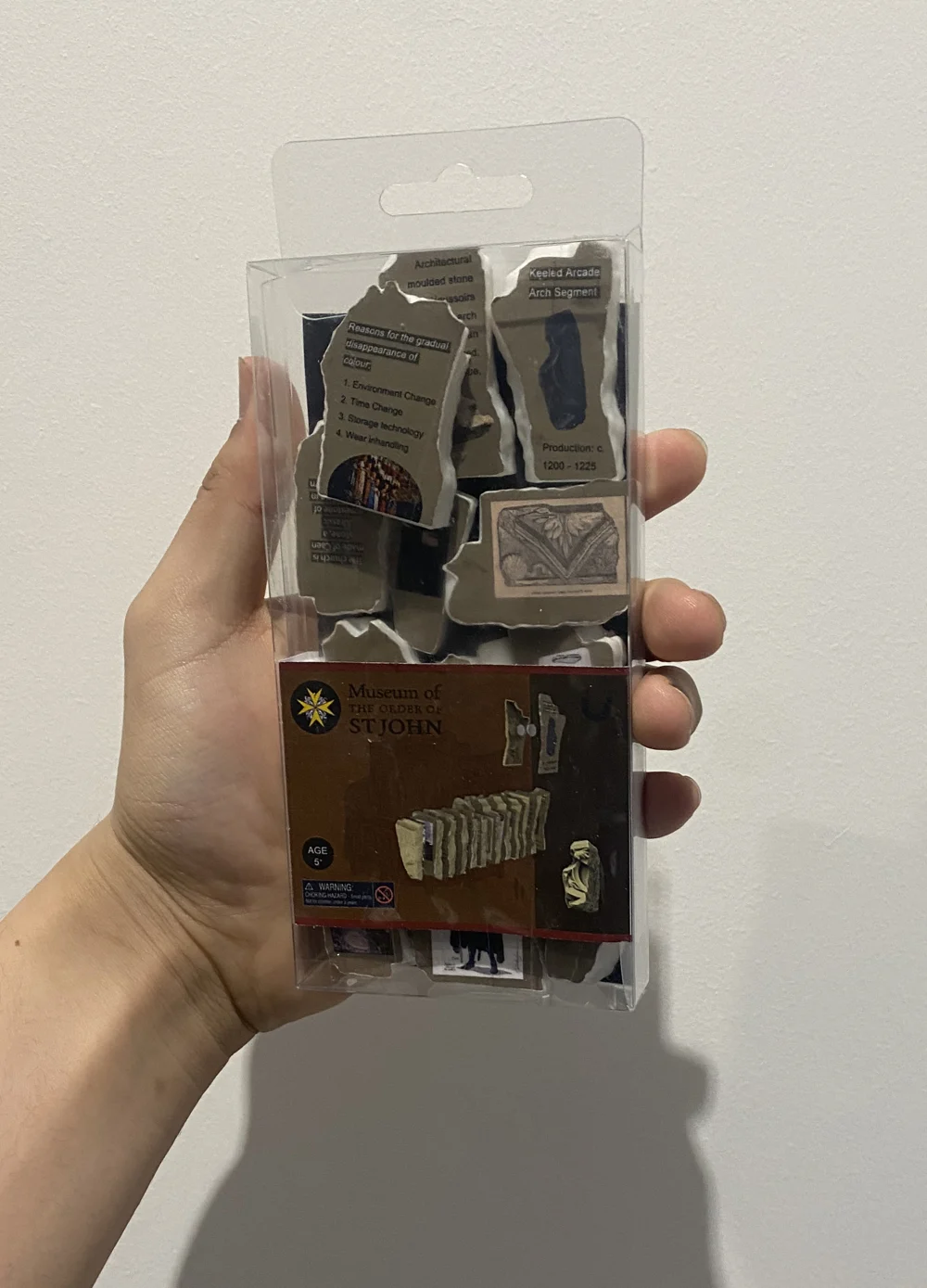
The finished prototype pack held in a hand: printed slices behind a clear box with the museum cover
The real prototype
Guide sheet front, a black liner shaped like the stone, and back, the educational guide
Guide sheet, front and back
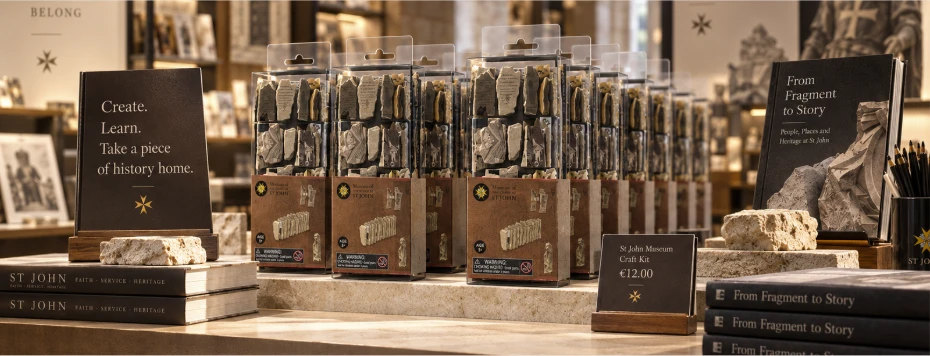
Visualisation of the kits on display in the museum shop
Museum shop (visualisation)
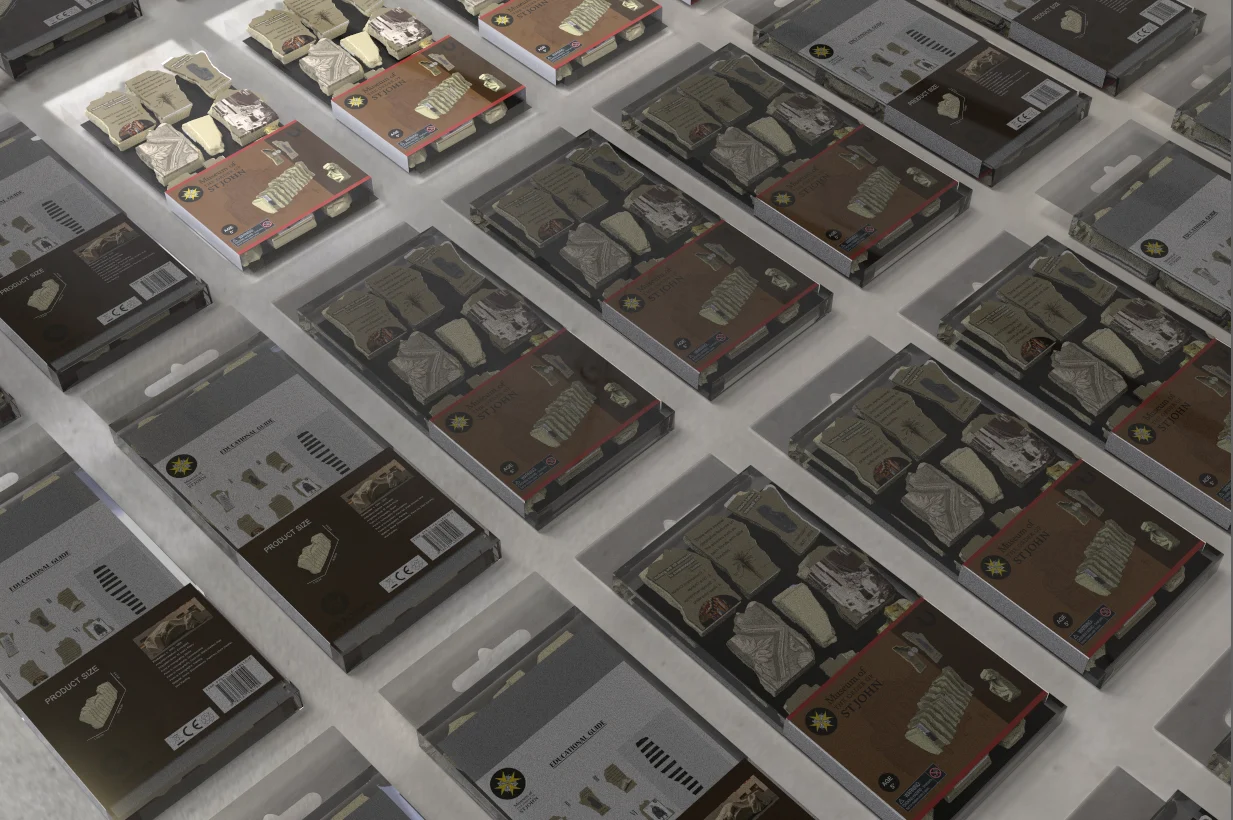
Visualisation: rows of packed kits seen from above, fronts and backs
Visualisation
Rows of packed kits
Visualisation

Next What came after

2023 · Physical access“Do not touch.”

Objects behind glass keep their meaning out of reach of the hands.

2025 · Cultural access“Do not understand.”

Even when you can see everything, a label in a second language may explain very little.

See MuseAI